


Dysregulated relationship of inflammation and oxidative stress in major depression
- PMID: 23201587
- PMCID: PMC3669232
- DOI: 10.1016/j.bbi.2012.11.011
Dysregulated relationship of inflammation and oxidative stress in major depression
Abstract
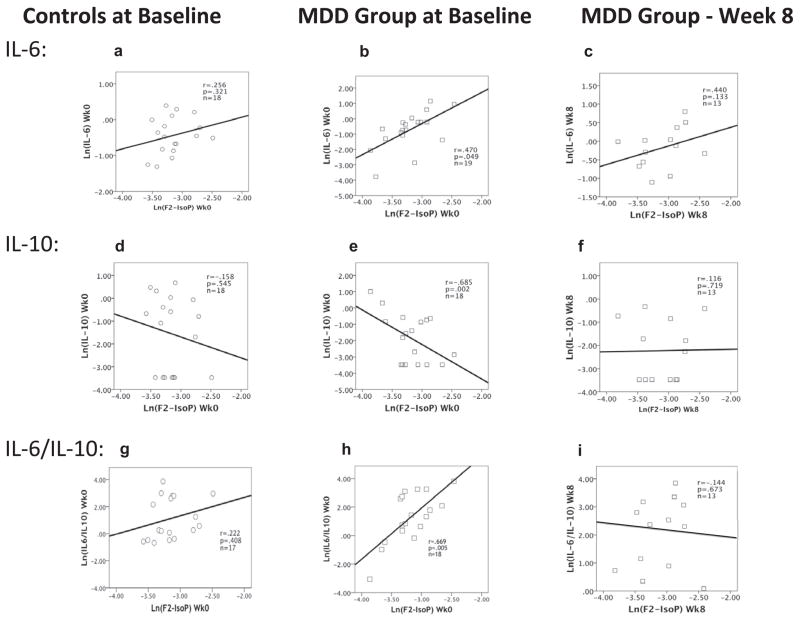
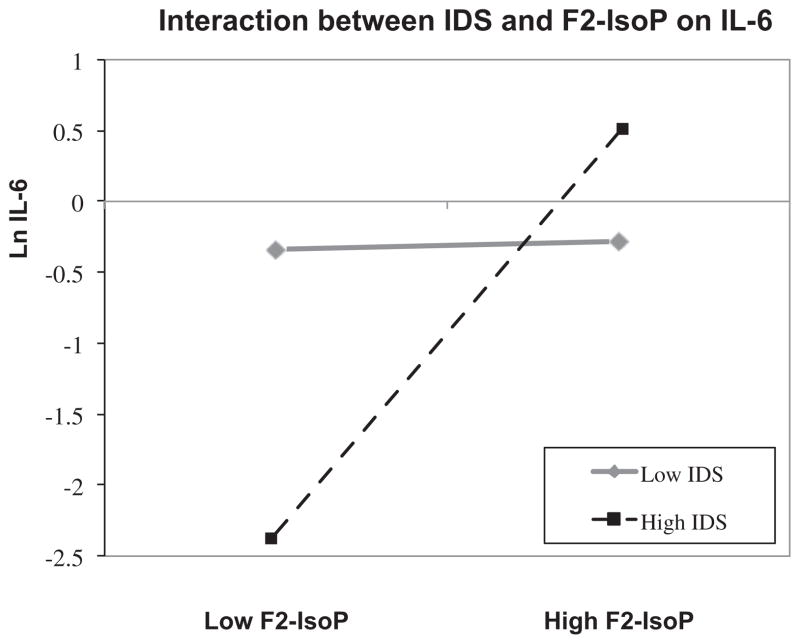
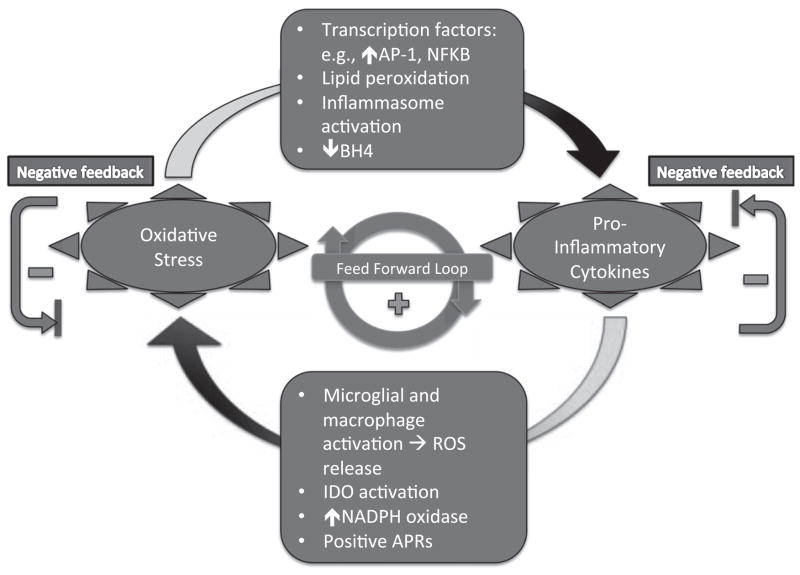
Chronic inflammation and oxidative stress have been implicated in the pathophysiology of Major Depressive Disorder (MDD), as well as in a number of chronic medical conditions. The aim of this study was to examine the relationship between peripheral inflammatory and oxidative stress markers in un-medicated subjects with MDD compared to non-depressed healthy controls and compared to subjects with MDD after antidepressant treatment. We examined the relationships between IL-6, IL-10, and the IL-6/IL-10 inflammatory ratio vs. F2-isoprostanes (F2-IsoP), a marker of oxidative stress, in un-medicated MDD patients (n=20) before and after 8 weeks of open-label sertraline treatment (n=17), compared to healthy non-depressed controls (n=20). Among the un-medicated MDD subjects, F2-IsoP concentrations were positively correlated with IL-6 concentrations (p<0.05) and were negatively correlated with IL-10 concentrations (p<0.01). Accordingly, F2-IsoP concentrations were positively correlated with the ratio of IL-6/IL-10 (p<0.01). In contrast, in the control group, there were no significant correlations between F2-IsoPs and either cytokine or their ratio. After MDD subjects were treated with sertraline for 8 weeks, F2-IsoPs were no longer significantly correlated with IL-6, IL-10 or the IL-6/IL-10 ratio. These data suggest oxidative stress and inflammatory processes are positively associated in untreated MDD. Our findings are consistent with the hypothesis that the homeostatic buffering mechanisms regulating oxidation and inflammation in healthy individuals become dysregulated in untreated MDD, and may be improved with antidepressant treatment. These findings may help explain the increased risk of comorbid medical illnesses in MDD.
Copyright © 2012 Elsevier Inc. All rights reserved.
Figures
References
-
- Abbasi SH, Hosseini F, Modabbernia A, Ashrafi M, Akhondzadeh S. Effect of celecoxib add-on treatment on symptoms and serum IL-6 concentrations in patients with major depressive disorder: randomized double-blind placebo-controlled study. J Affect Disord. 2012 http://dx.doi.org/10.1016/j.jad.2012.03.033. - DOI - PubMed
-
- Agrawal NK, Maiti R, Dash D, Pandey BL. Cilostazol reduces inflammatory burden and oxidative stress in hypertensive type 2 diabetes mellitus patients. Pharmacol Res. 2007;56(2):118–123. http://dx.doi.org/10.1016/j.phrs.2007.04.007. - DOI - PubMed
-
- Ambade A, Mandrekar P. Oxidative stress and inflammation: essential partners in alcoholic liver disease. Int J Hepatol. 2012;2012:853175. http://dx.doi.org/10.1155/2012/853175. - DOI - PMC - PubMed
-
- Anisman H, Ravindran AV, Griffiths J, Merali Z. Endocrine and cytokine correlates of major depression and dysthymia with typical or atypical features. Mol Psychiatry. 1999a;4 (2):182–188. - PubMed
-
- Anisman H, Ravindran AV, Griffiths J, Merali Z. Interleukin-1 beta production in dysthymia before and after pharmacotherapy. Biol Psychiatry. 1999b;46 (12):1649–1655. - PubMed
MeSH terms
Substances
Grants and funding
LinkOut - more resources
Full Text Sources
Other Literature Sources
Medical
Miscellaneous
