


Textile dye removal from wastewater effluents using bioflocculants produced by indigenous bacterial isolates
- PMID: 23201644
- PMCID: PMC6268395
- DOI: 10.3390/molecules171214260
Textile dye removal from wastewater effluents using bioflocculants produced by indigenous bacterial isolates
Abstract
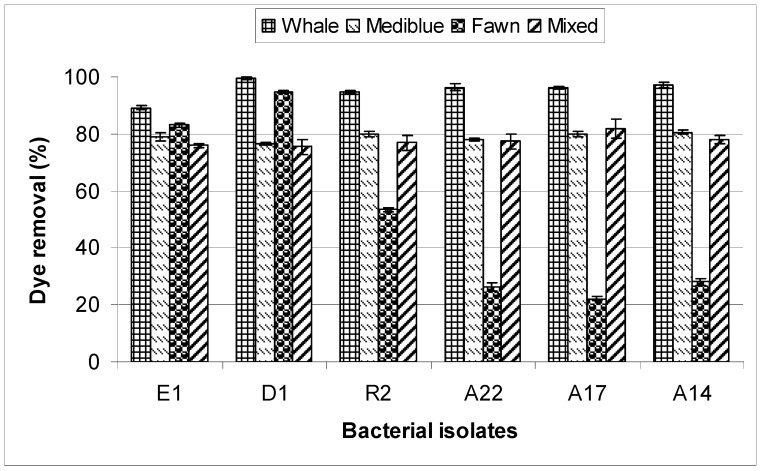
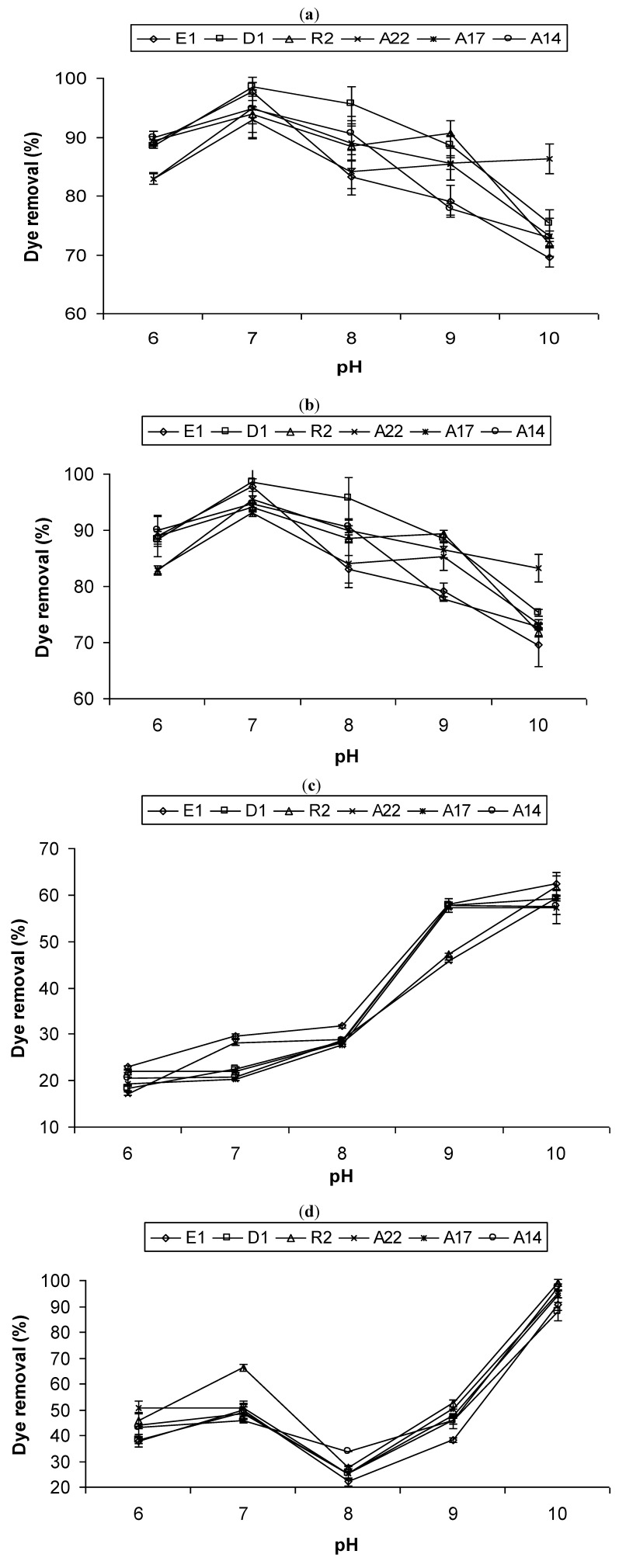
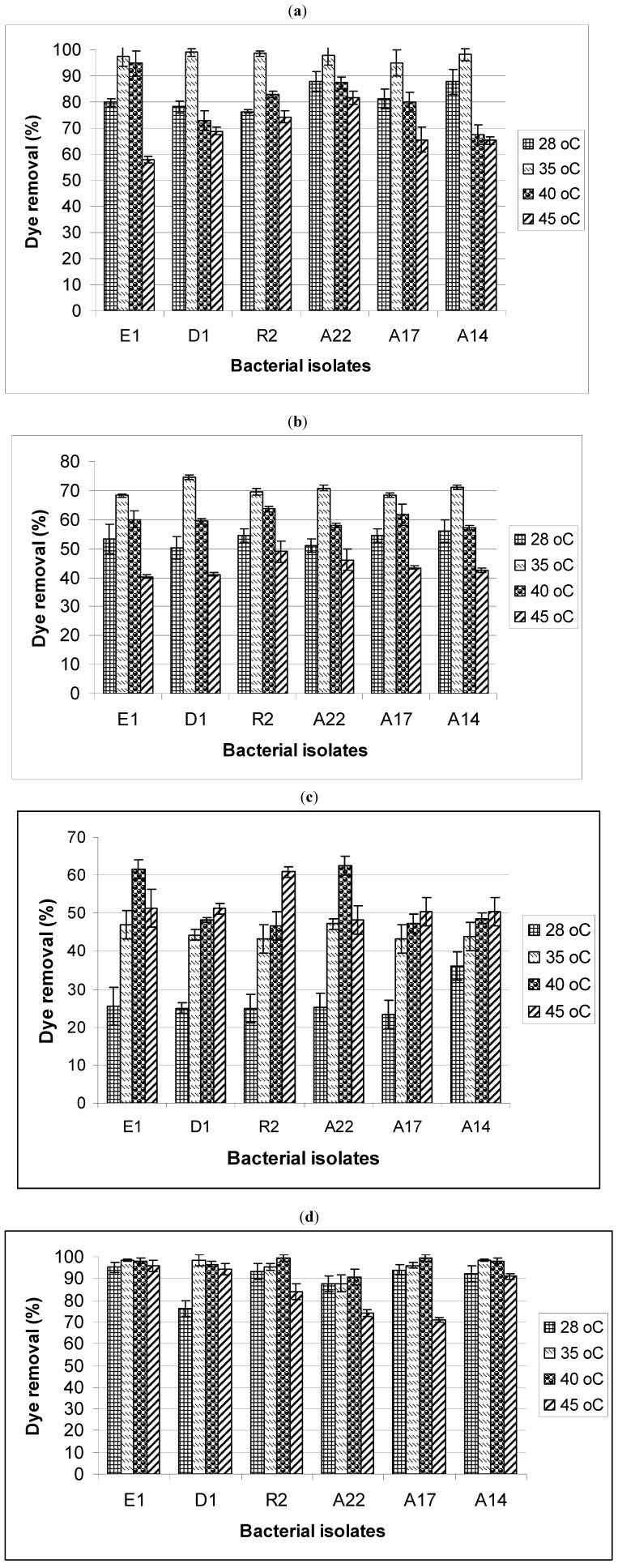
Bioflocculant-producing bacteria were isolated from activated sludge of a wastewater treatment plant located in Durban, South Africa, and identified using standard biochemical tests as well as the analysis of their 16S rRNA gene sequences. The bioflocculants produced by these organisms were ethanol precipitated, purified using 2% (w/v) cetylpyridinium chloride solution and evaluated for removal of wastewater dyes under different pH, temperature and nutritional conditions. Bioflocculants from these indigenous bacteria were very effective for decolourizing the different dyes tested in this study, with a removal rate of up to 97.04%. The decolourization efficiency was largely influenced by the type of dye, pH, temperature, and flocculant concentration. A pH of 7 was found to be optimum for the removal of both whale and mediblue dyes, while the optimum pH for fawn and mixed dye removal was found to be between 9 and 10. Optimum temperature for whale and mediblue dye removal was 35 °C, and that for fawn and mixed dye varied between 40–45 °C and 35–40 °C, respectively. These bacterial bioflocculants may provide an economical and cleaner alternative to replace or supplement present treatment processes for the removal of dyes from wastewater effluents, since they are biodegradable and easily sustainable.
Figures
References
-
- Aksu Z. Application of biosorption for the removal of organic pollutants: A review. Process Biochem. 2005;40:997–1026. doi: 10.1016/j.procbio.2004.04.008. - DOI
-
- Pagga U., Brown D. The degradation of dyestuffs. Chemosphere. 1986;15:479–491. doi: 10.1016/0045-6535(86)90542-4. - DOI
-
- Banat I.M., Nigam P., Singh D., Marchant R. Microbial decolourization of textile-dye-containing effluents. Bioresour. Technol. 1996;58:217–227. doi: 10.1016/S0960-8524(96)00113-7. - DOI
Publication types
MeSH terms
Substances
LinkOut - more resources
Full Text Sources
