Enterococci in the environment
- PMID: 23204362
- PMCID: PMC3510518
- DOI: 10.1128/MMBR.00023-12
Enterococci in the environment
Abstract
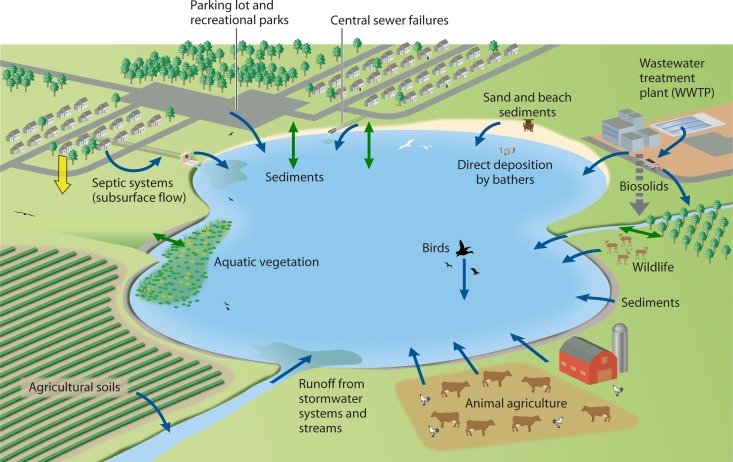
Enterococci are common, commensal members of gut communities in mammals and birds, yet they are also opportunistic pathogens that cause millions of human and animal infections annually. Because they are shed in human and animal feces, are readily culturable, and predict human health risks from exposure to polluted recreational waters, they are used as surrogates for waterborne pathogens and as fecal indicator bacteria (FIB) in research and in water quality testing throughout the world. Evidence from several decades of research demonstrates, however, that enterococci may be present in high densities in the absence of obvious fecal sources and that environmental reservoirs of these FIB are important sources and sinks, with the potential to impact water quality. This review focuses on the distribution and microbial ecology of enterococci in environmental (secondary) habitats, including the effect of environmental stressors; an outline of their known and apparent sources, sinks, and fluxes; and an overview of the use of enterococci as FIB. Finally, the significance of emerging methodologies, such as microbial source tracking (MST) and empirical predictive models, as tools in water quality monitoring is addressed. The mounting evidence for widespread extraenteric sources and reservoirs of enterococci demonstrates the versatility of the genus Enterococcus and argues for the necessity of a better understanding of their ecology in natural environments, as well as their roles as opportunistic pathogens and indicators of human pathogens.
Figures





References
-
- Aarestrup FM, Butaye P, Witte W. 2002. Nonhuman reservoirs of enterococci, p 55–99. In Gilmore MS. (ed), The enterococci: pathogenesis, molecular biology, and antibiotic resistance. ASM Press, Washington, DC
-
- Ahmed W, Katouli M. 2008. Phenotypic variations of enterococci in surface waters: analysis of biochemical fingerprinting data from multi-catchments. J. Appl. Microbiol. 105: 452–458 - PubMed
-
- Ahmed W, Stewart J, Gardner T, Powell D. 2008. A real-time polymerase chain reaction assay for quantitative detection of the human-specific enterococci surface protein marker in sewage and environmental waters. Environ. Microbiol. 10: 3255–3264 - PubMed
-
- Ahmed W, Stewart J, Powell D, Gardner T. 2008. Evaluation of the host-specificity and prevalence of enterococci surface protein (esp) marker in sewage and its application for sourcing human fecal pollution. J. Environ. Qual. 23: 1583–1588 - PubMed
Publication types
MeSH terms
Substances
LinkOut - more resources
Full Text Sources
Medical