


Brain networks underlying episodic memory retrieval
- PMID: 23206590
- PMCID: PMC3594562
- DOI: 10.1016/j.conb.2012.11.005
Brain networks underlying episodic memory retrieval
Abstract
The importance of the medial temporal lobe to episodic memory has been recognized for decades. Recent human fMRI findings have begun to delineate the functional roles of different MTL regions, most notably the hippocampus, for the retrieval of episodic memories. Importantly, these studies have also identified a network of cortical regions--each interconnected with the MTL--that are also consistently engaged during successful episodic retrieval. Along with the MTL these regions appear to constitute a content-independent network that acts in concert with cortical regions representing the contents of retrieval to support consciously accessible representations of prior experiences.
Copyright © 2012 Elsevier Ltd. All rights reserved.
Figures
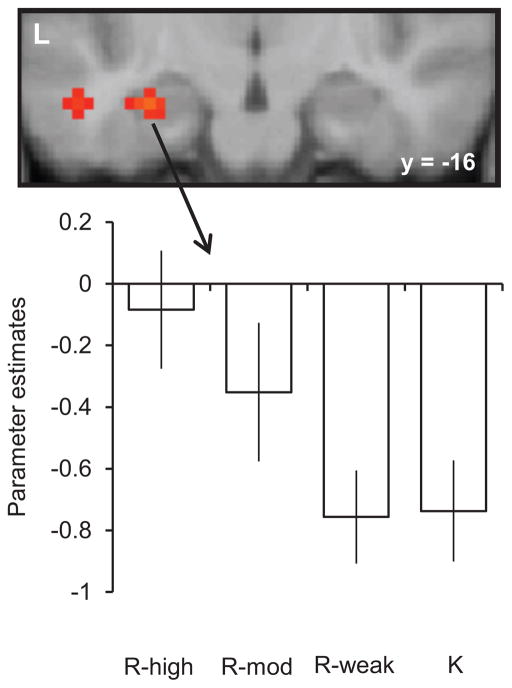
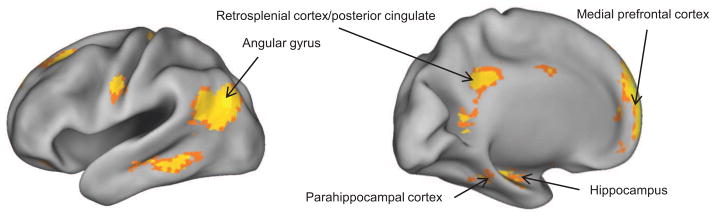
References
-
- Tulving E. Elements of episodic memory. Oxford University Press; 1983.
-
- Wixted JT, Mickes L. A continuous dual-process model of remember/know judgments. Psychol Rev. 2010;117:1025–54. - PubMed
-
- Yonelinas AP. The nature of recollection and familiarity: A review of 30 years of research. Journal of Memory and Language. 2002;46:441–517.
-
- Brown MW, Xiang JZ. Recognition memory: neuronal substrates of the judgement of prior occurrence. Prog Neurobiol. 1998;55:149–89. - PubMed
-
- Montaldi D, Spencer TJ, Roberts N, Mayes AR. The neural system that mediates familiarity memory. Hippocampus. 2006;16:504–20. - PubMed
Publication types
MeSH terms
Grants and funding
LinkOut - more resources
Full Text Sources
Other Literature Sources
