Review
. 2013 Mar 15;591(6):1409-32.
doi: 10.1113/jphysiol.2012.235382. Epub 2012 Dec 3.

Role of the Wnt-Frizzled system in cardiac pathophysiology: a rapidly developing, poorly understood area with enormous potential

Affiliations
Review

Role of the Wnt-Frizzled system in cardiac pathophysiology: a rapidly developing, poorly understood area with enormous potential

Kristin Dawson et al. J Physiol. .

Abstract

Abstract The Wnt-Frizzled (Fzd) G-protein-coupled receptor system, involving 19 distinct Wnt ligands and 10 Fzd receptors, plays key roles in the development and functioning of many organ systems. There is increasing evidence that Wnt-Fzd signalling is important in regulating cardiac function. Wnt-Fzd signalling primarily involves a canonical pathway, with dishevelled-1-dependent nuclear translocation of β-catenin that derepresses Wnt-sensitive gene transcription, but can also include non-canonical pathways via phospholipase-C/Ca(2+) mobilization and dishevelled-protein activation of small GTPases. Wnt-Fzd effects vary with specific ligand/receptor interactions and associated downstream pathways. This paper reviews the biochemistry and physiology of the Wnt-Fzd complex, and presents current knowledge of Wnt signalling in cardiac remodelling processes such as hypertrophy and fibrosis, as well as disease states such as myocardial infarction (MI), heart failure and arrhythmias. Wnt signalling is activated during hypertrophy; inhibiting Wnt signalling by activating glycogen synthase kinase attenuates the hypertrophic response. Wnt signalling has complex and time-dependent actions post-MI, so that either beneficial or harmful effects might result from Wnt-directed interventions. Stem cell biology, a promising area for therapeutic intervention, is highly regulated by Wnt signalling. The Wnt system regulates fibroblast function, and is prominently altered in arrhythmogenic ventricular cardiomyopathy, a familial disease involving excess deposition of fibroadipose tissue. Wnt signalling controls connexin43 expression, thereby contributing to the regulation of cardiac electrical stability and arrhythmia generation. Although much has been learned about Wnt-Fzd signalling in hypertrophy and infarction, its role is poorly understood for a broad range of other heart disorders. Much more needs to be learned for its contributions to be fully appreciated, and to permit more effective exploitation of its enormous potential in therapeutic development.


Figures
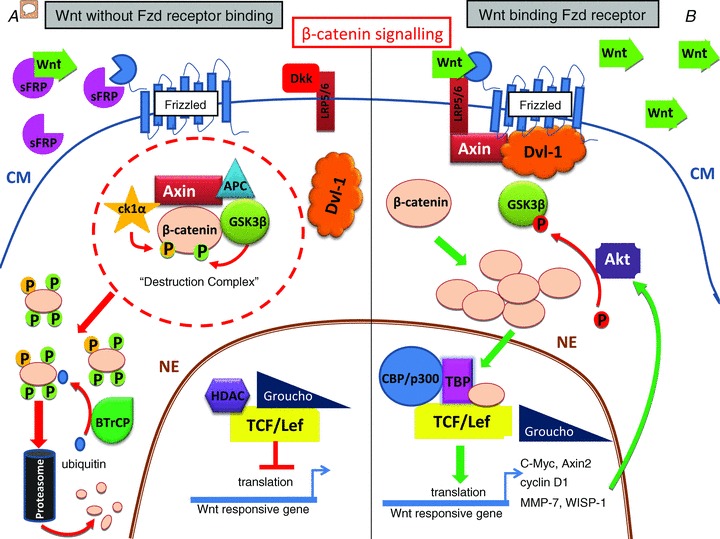
Figure 1
Figure 1. β-Catenin-mediated canonical signalling
A, when sFRP inhibits Wnt or Frizzled or Dkk binds LRP5/6, Wnt signalling is suppressed. The destruction complex (composed of Axin, APC, CK1α, GSK-3β and β-catenin) is assembled. CK1α phosphorylates β-catenin at Ser45, which is followed by phosphorylation at Ser33, Ser37 and Thr41 by GSK-3β. The phosphorylation sites are recognized by the E3-ligase BTrCP and β-catenin is ubiquitinated and targeted to proteasomes for degradation. Transcription of Wnt-responsive genes is repressed by HDAC and Groucho binding to TCF/Lef. B, when Wnt binds to the Frizzled receptor, Wnt signalling is activated. Axin and Dvl-1 are recruited to the membrane and free cytosolic β-catenin accumulates. Non-phosphorylated β-catenin translocates into the nucleus, where it binds TCF/Lef (displacing Groucho) and activates transcription. Among the Wnt-responsive genes that are activated, WISP-1 activates Akt. Akt phosphorylates GSK-3β at Ser9, enhancing its inhibition. Abbreviations: APC, adenomatous polyposis coli; BTrCP, β-transducin repeat containing protein; CK1α, casein kinase 1α; CM, cell membrane; GSK-3β, glycogen synthase kinase 3β; Dkk, Dickkopf; Dvl-1; Dishevelled-1; HDAC, histone deacetylase; NP, nuclear pore; sFRP, secreted frizzled related protein; TCF/Lef, T-cell factor/lymphoid enhancer-binding factor; WISP-1, wnt1 inducible signalling pathway protein 1; TBP, TATA-binding protein.
Figure 2
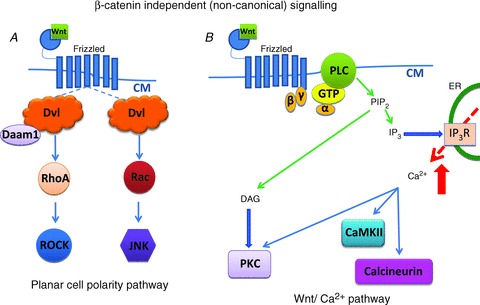
Figure 2. β-Catenin-independent signalling
A, the planar cell polarity (PCP) pathway is activated by Fzd receptors independent of LPR5/6. Upon Fzd activation, Dvl-1 transduces the signal through small GTPases. Daam1 forms a complex with Dvl-1, which activates Rho and ROCK. In a second pathway independent of Daam1, activated Dvl-1 stimulates Rac1, which regulates JNK. B, Wnt/Ca2+ pathway. Activation of Fzd receptors recruits heteromeric G-proteins that activate phospholipase C (PLC), producing DAG and IP3. DAG directly activates PKC. IP3 increases intracellular [Ca2+], activating Ca2+-sensitive enzymes such as CaMKII, calcineurin and PKC. Abbreviations: CaMKII, Ca2+/calmodulin-dependent protein kinases II; Daam-1, Dishevelled associated activator of morphogenesis-1; Fzd, Frizzled; JNK, c-Jun terminal kinase; PKC, protein kinase C; PLC, phospholipase C; ROCK, Rho-associated kinase.
Figure 3
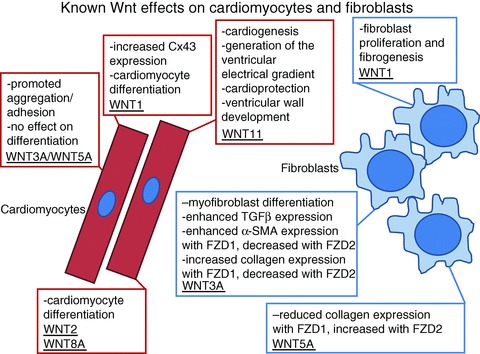
Figure 3. Known Wnt effects on fibroblast and cardiomyocyte behaviour
Cardiomyocytes are depicted on the left side of the figure, with recognized Wnt effects outlined in red boxes. Fibroblasts are depicted on the right side of the figure, with Wnt effects outlined in blue boxes. For references please refer to Table 1, which lists Wnt ligands and how they are involved in cardiac function.
Figure 4
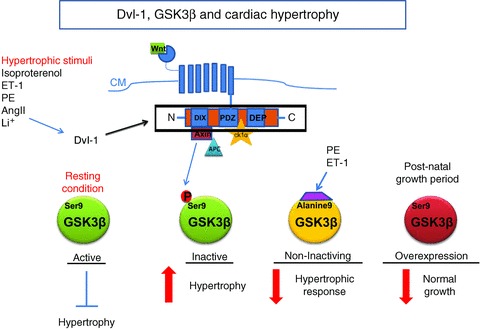
Figure 4. Role of Dvl-1 and GSK-3β in cardiac hypertrophy
Top: Dvl-1 is a multimodule protein that is composed of three domains (DIX, PDZ and DEP). Upon Wnt stimulation, DIX and PDZ domains allow formation of the Axin/APC/LRP complex, binding GSK-3β and ck1α and inhibiting their ability to phosphorylate β-catenin. This allows non-phosphorylated β-catenin to displace to the nucleus and effect canonical signalling. Bottom: under resting conditions, GSK-3β is active and suppresses hypertrophy. GSK-3β is inactivated by hypertrophic stimuli, which cause serine-9 phosphorylation, and by Li+. Replacement of serine with alanine prevents inactivation of GSK-3β via PE and ET-1 and reduces the hypertrophic response. Postnatal overexpression of wild-type GSK-3β interferes with normal growth. Abbreviations: AngII, angiotensin-II; DEP, dishevelled, EGL-10, pleckstrin; DIX, dishevelled/axin; ET-1, endothelin-1; GSK-3β, glycogen synthase kinase 3β; PDZ, PSD-95, DLG, ZO1; PE, phenylephrine.
Figure 5
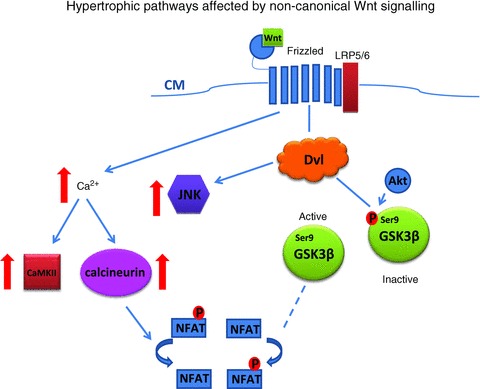
Figure 5. Role of non-canonical (β-catenin-independent) Wnt signalling in hypertrophy
JNK, calcineurin and CaMKII increase hypertrophy (upward red arrows). Activated calcineurin can dephosphorylate NFAT, which leads to the translocation of NFAT transcription factor to the nucleus. Active GSK-3β can counteract the effect of calcineurin by phosphorylating NFAT. Abbreviations: CaMKII, Ca2+/calmodulin-dependent protein kinases II; GSK-3β, glycogen synthase kinase 3β; JNK, c-Jun terminal kinase; NFAT, nuclear factor of activated T cell.
Figure 6
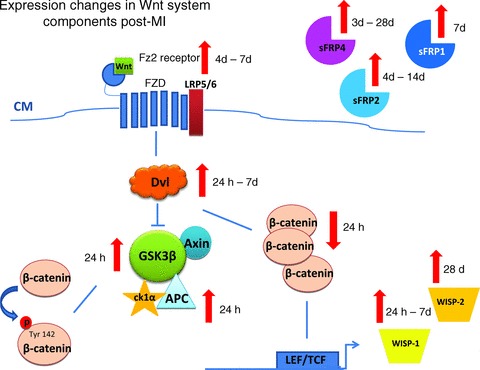
Figure 6. Expression changes in Wnt system components post-MI
Red arrows indicate which direction individual Wnt components change in response to MI, and the time point post-MI when these changes occur are shown next to the arrows.
Figure 7
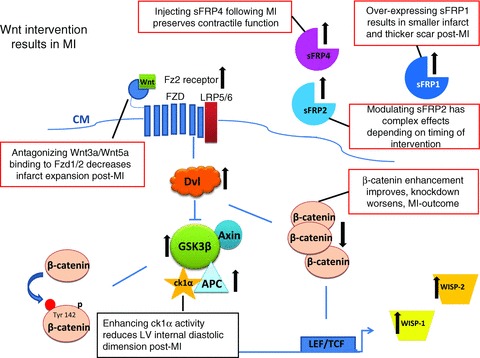
Figure 7. The results of Wnt signalling interventions in MI
Red text boxes illustrate how modulating Wnt signalling affects the outcome of MI. Overall, inhibiting Wnt signalling appears to be beneficial; however, one study suggests a beneficial role of enhanced canonical Wnt signalling via β-catenin overexpression post-MI.

References

    1. Ai Z, Fischer A, Spray DC, Brown AM, Fishman GI. Wnt-1 regulation of connexin43 in cardiac myocytes. J Clin Invest. 2000;105:161–171. - PMC - PubMed
    1. Aisagbonhi O, Rai M, Ryzhov S, Atria N, Feoktistov I, Hatzopoulos AK. Experimental myocardial infarction triggers canonical Wnt signaling and endothelial-to-mesenchymal transition. Dis Model Mech. 2011;4:469–483. - PMC - PubMed
    1. Akhmetshina A, Palumbo K, Dees C, Bergmann C, Venalis P, Zerr P, Horn A, Kireva T, Beyer C, Zwerina J, Schneider H, Sadowski A, Riener MO, MacDougald OA, Distler O, Schett G, Distler JH. Activation of canonical Wnt signalling is required for TGF-β-mediated fibrosis. Nat Commun. 2012;3:735. - PMC - PubMed
    1. Antos CL, McKinsey TA, Frey N, Kutschke W, McAnally J, Shelton JM, Richardson JA, Hill JA, Olson EN. Activated glycogen synthase-3 β suppresses cardiac hypertrophy in vivo. Proc Natl Acad Sci U S A. 2002;99:907–912. - PMC - PubMed
    1. Ashton-Rickardt PG, Dunlop MG, Nakamura Y, Morris RG, Purdie CA, Steel CM, Evans HJ, Bird CC, Wyllie AH. High frequency of APC loss in sporadic colorectal carcinoma due to breaks clustered in 5q21–22. Oncogene. 1989;4:1169–1174. - PubMed

Substances