Review
. 2012 Dec 3;4(12):1898-944.
doi: 10.3390/nu4121898.

Molecular nutrition research: the modern way of performing nutritional science

Affiliations
Review

Molecular nutrition research: the modern way of performing nutritional science

Frode Norheim et al. Nutrients. .

Abstract

In spite of amazing progress in food supply and nutritional science, and a striking increase in life expectancy of approximately 2.5 months per year in many countries during the previous 150 years, modern nutritional research has a great potential of still contributing to improved health for future generations, granted that the revolutions in molecular and systems technologies are applied to nutritional questions. Descriptive and mechanistic studies using state of the art epidemiology, food intake registration, genomics with single nucleotide polymorphisms (SNPs) and epigenomics, transcriptomics, proteomics, metabolomics, advanced biostatistics, imaging, calorimetry, cell biology, challenge tests (meals, exercise, etc.), and integration of all data by systems biology, will provide insight on a much higher level than today in a field we may name molecular nutrition research. To take advantage of all the new technologies scientists should develop international collaboration and gather data in large open access databases like the suggested Nutritional Phenotype database (dbNP). This collaboration will promote standardization of procedures (SOP), and provide a possibility to use collected data in future research projects. The ultimate goals of future nutritional research are to understand the detailed mechanisms of action for how nutrients/foods interact with the body and thereby enhance health and treat diet-related diseases.


Figures
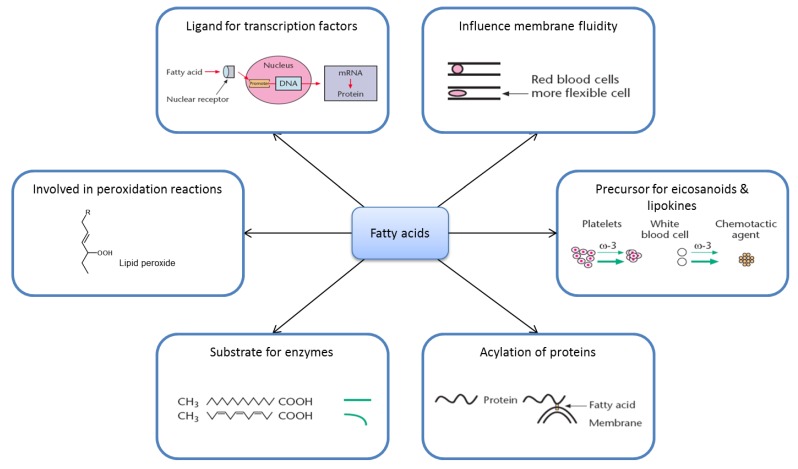
Figure 1
Figure 1
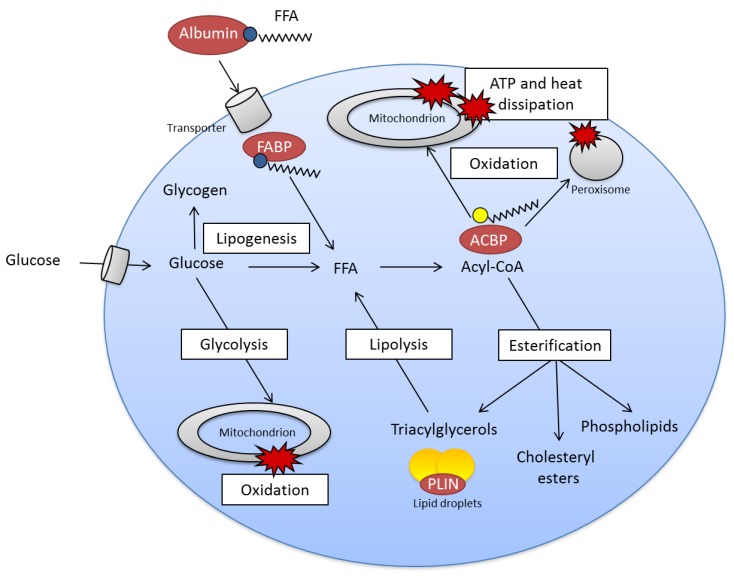
Molecular mechanisms of nutrients exemplified by fatty acids.
Figure 2
Figure 2
Simplified view of fatty acid metabolism.
Figure 3
Figure 3
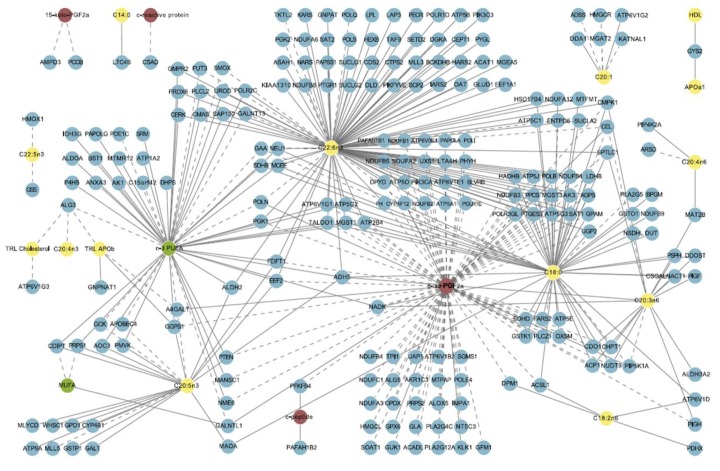
Network of associations between dietary intake, adipose gene expression, and phenotypic markers. Green nodes: nutrients; yellow: lipid, fatty acid, and apolipoprotein variables in blood; red: inflammatory and oxidative stress markers in blood; blue: gene expression (enzyme) in adipose tissue. Solid line: positive correlation/covariance; dashed line: negative correlation/covariance. Note: This figure is adapted with permission from [24], Copyright © 2011 Morine et al.
Figure 4
Figure 4
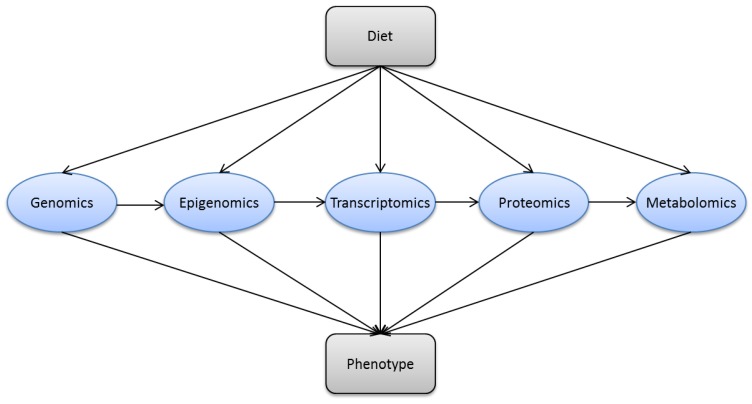
Dietary factors may interact with multiple biological processes. (Genomics) nutrients interact with genes and alter functional outcomes like dietary treatment of phenylketonuria; (epigenomics) nutrients may induce epigenetic changes like fatty acids promote methylation of the PGC-1α promoter; (transcriptomics) nutrients may influence gene expression as ligands for nuclear hormone receptors; (proteomics) nutrients may post-translationally modify proteins, e.g., protein-energy malnutrition leads to post-translational modifications of transthyretin; and (metabolomics) nutrients may change the metabolomic signature in the blood, e.g., carotenoids are biomarkers of fruit and vegetable intake.
Figure 5
Figure 5
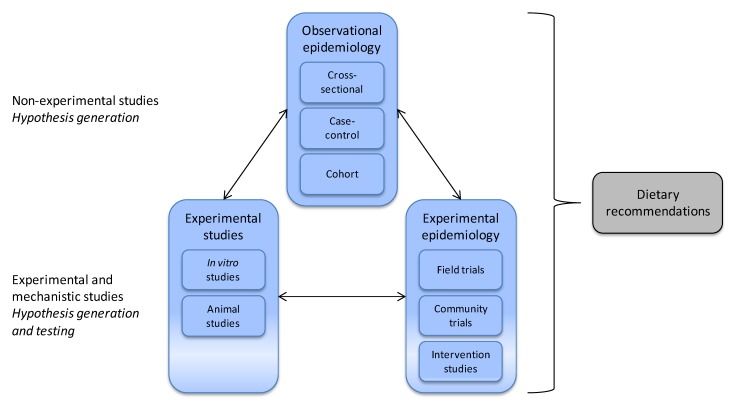
Epidemiological methods related to other studies in nutritional science. Observational epidemiology includes cohort, case-control and cross-sectional studies, whereas experimental epidemiology includes field trials, community trials and intervention studies. Observational studies help formulate hypothesis to be tested in subsequent experimental studies. Mechanistic studies are important for understanding physiological and biological mechanisms at cellular, tissue, and whole body level. When evidence is supported by a large number of data from in vitro, animal, and epidemiological studies dietary recommendations can be made.
Figure 6
Figure 6
A common workflow in a proteomic experiment. Protein samples can be derived from tissues, plasma, cultured cells or organelle fractions. Proteins are digested (1) and the resulting peptides are separated by chromatography (2), ionized (3) and the mass-to-charge ratio (m/z) is measured in an initial scan (4). To identify the amino acid sequence, peptides are selected for fragmentation and subjected to MS/MS (5). Finally, bioinformatics tools are used to identify and/or quantify the proteins in the sample (6).
Figure 7
Figure 7
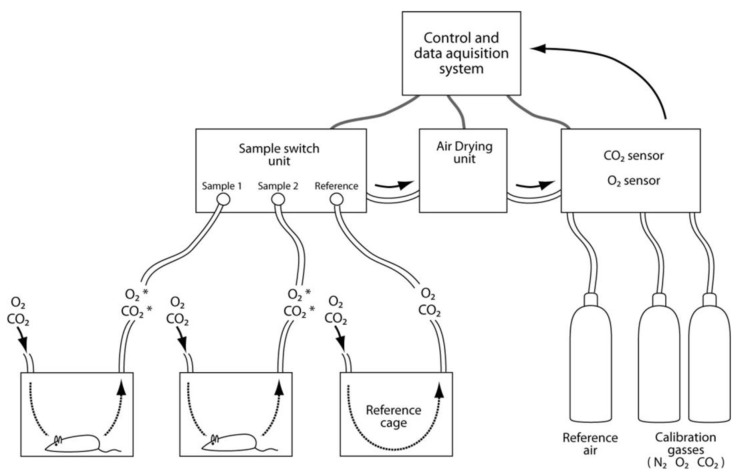
Indirect calorimetry. The typical indirect calorimetric system includes several gas-tight chambers (here illustrated by two housing cages and a reference cage), control units, control system and gas bottles. During the experiment, air of similar origin is delivered simultaneously to all chambers via the sample switch unit. Gas from each container is sequentially sent to the air-drying unit prior to CO2 and O2 measurements. The reduction in O2 and production of CO2 in chambers housing mice is calculated against the measured values of these gasses coming from the reference cage. Modern O2 and CO2 sensors have fast response times of minutes, which enable measurements of 10–20 cages several times per hour. The calorimetric chambers can be combined with devices for measurements like food and liquid intake, body weight, movement, voluntary exercise (e.g., running wheels), temperature in the cage, body temperature, and collection of feces and urine.

References

    1. Karkanas P., Shahack-Gross R., Ayalon A., Bar-Matthews M., Barkai R., Frumkin A., Gopher A., Stiner M.C. Evidence for habitual use of fire at the end of the Lower Paleolithic: Site-formation processes at Qesem Cave, Israel. J. Hum. Evol. 2007;53:197–212. - PubMed
    1. Weiner S., Xu Q., Goldberg P., Liu J., Bar-Yosef O. Evidence for the use of fire at Zhoukoudian, China. Science. 1998;281:251–253. doi: 10.1126/science.281.5374.251. - DOI - PubMed
    1. Gupta A.K. Origin of agriculture and domestication of plants and animals linked to early Holocene climate amelioration. Curr. Sci. 2004;87:54–59.
    1. Bloom D.E. 7 billion and counting. Science. 2011;333:562–569. doi: 10.1126/science.1209290. - DOI - PubMed
    1. Bocquet-Appel J.P. When the world’s population took off: The springboard of the Neolithic demographic transition. Science. 2011;333:560–561. - PubMed

LinkOut - more resources