


Cotinine in human placenta predicts induction of gene expression in fetal tissues
- PMID: 23209192
- PMCID: PMC3558855
- DOI: 10.1124/dmd.112.049999
Cotinine in human placenta predicts induction of gene expression in fetal tissues
Abstract
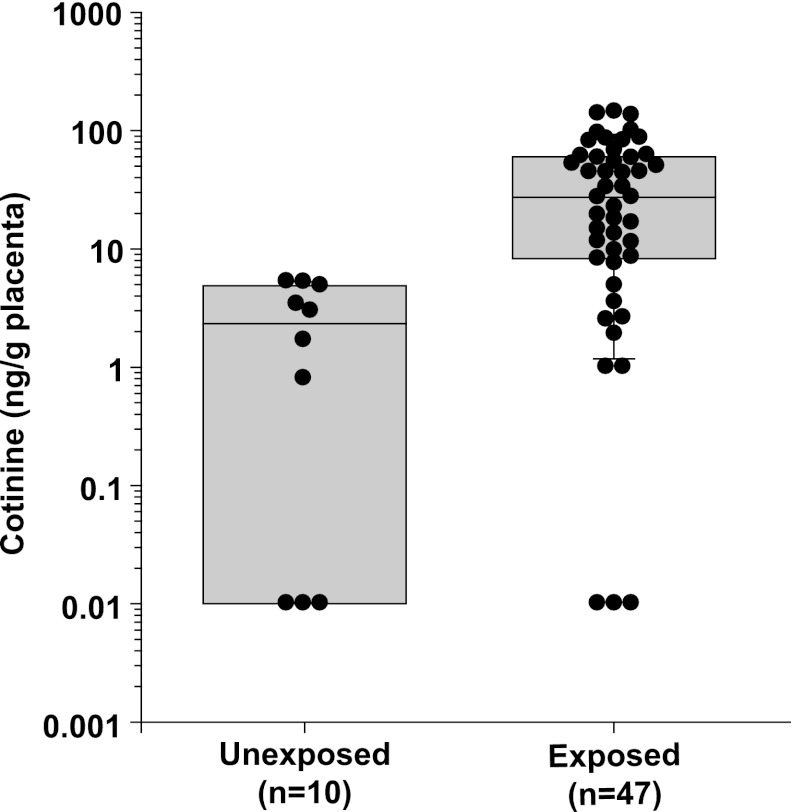
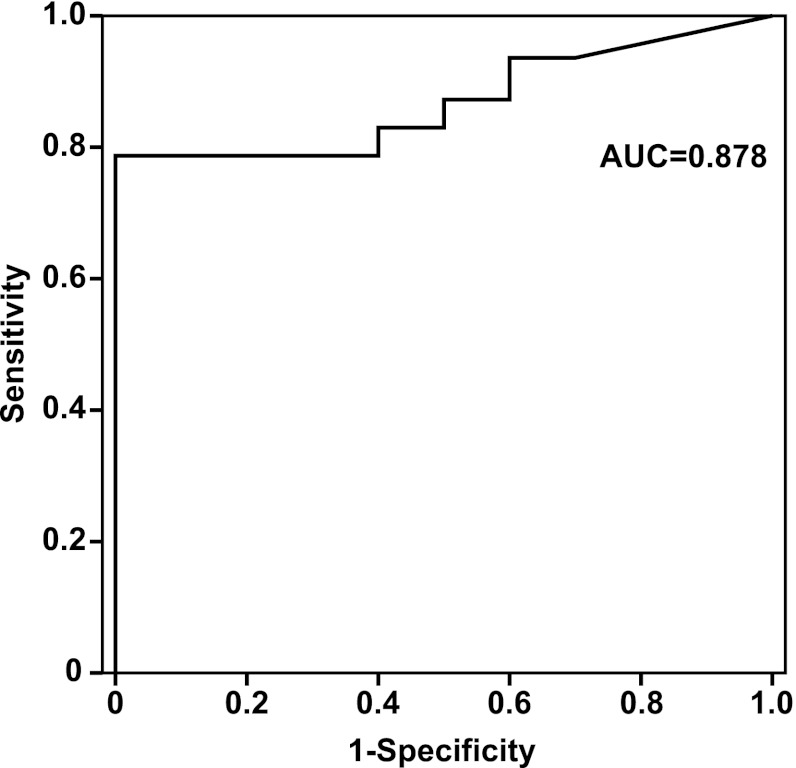
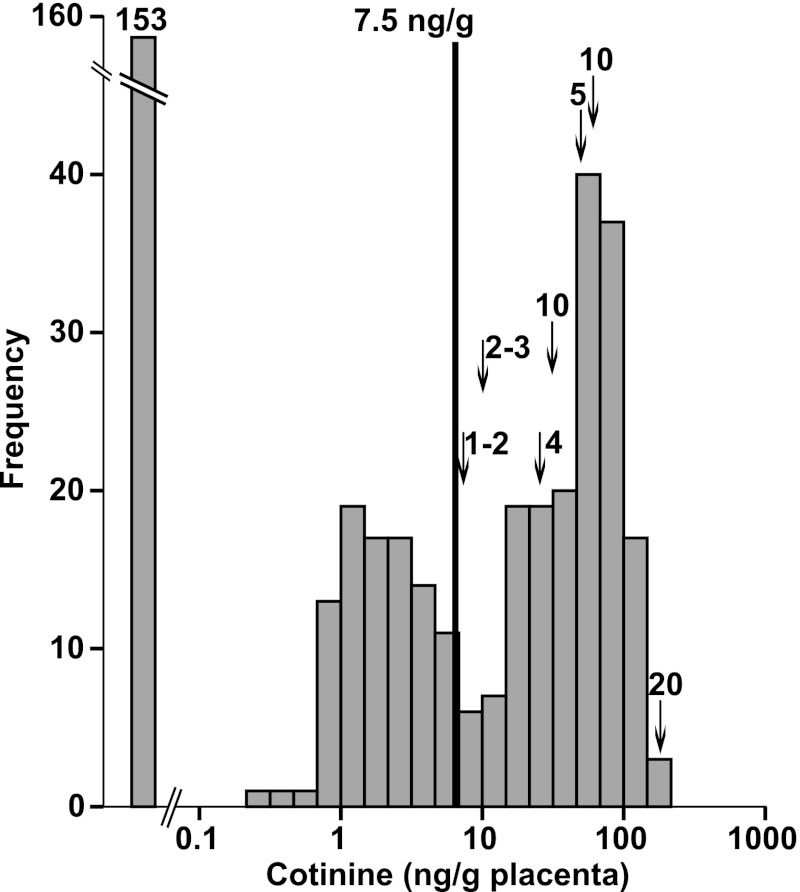
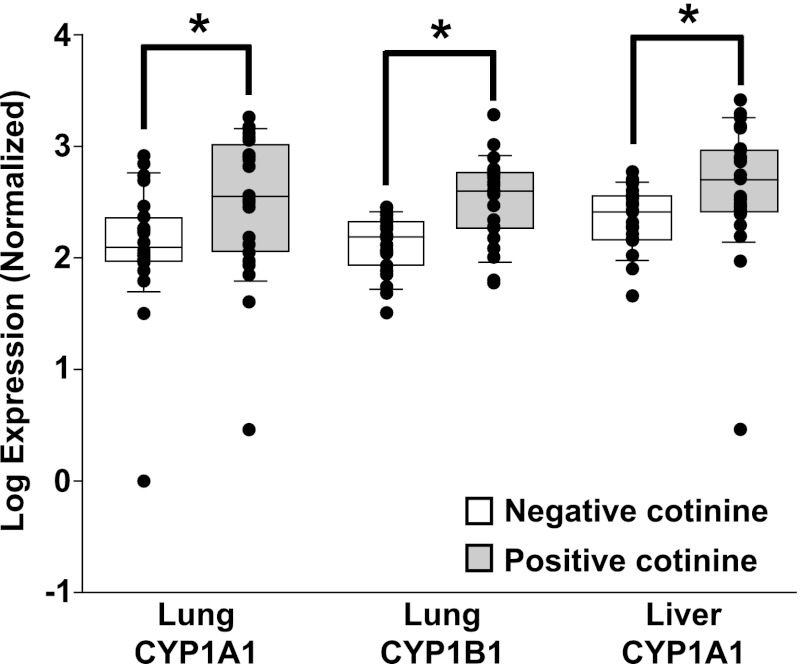
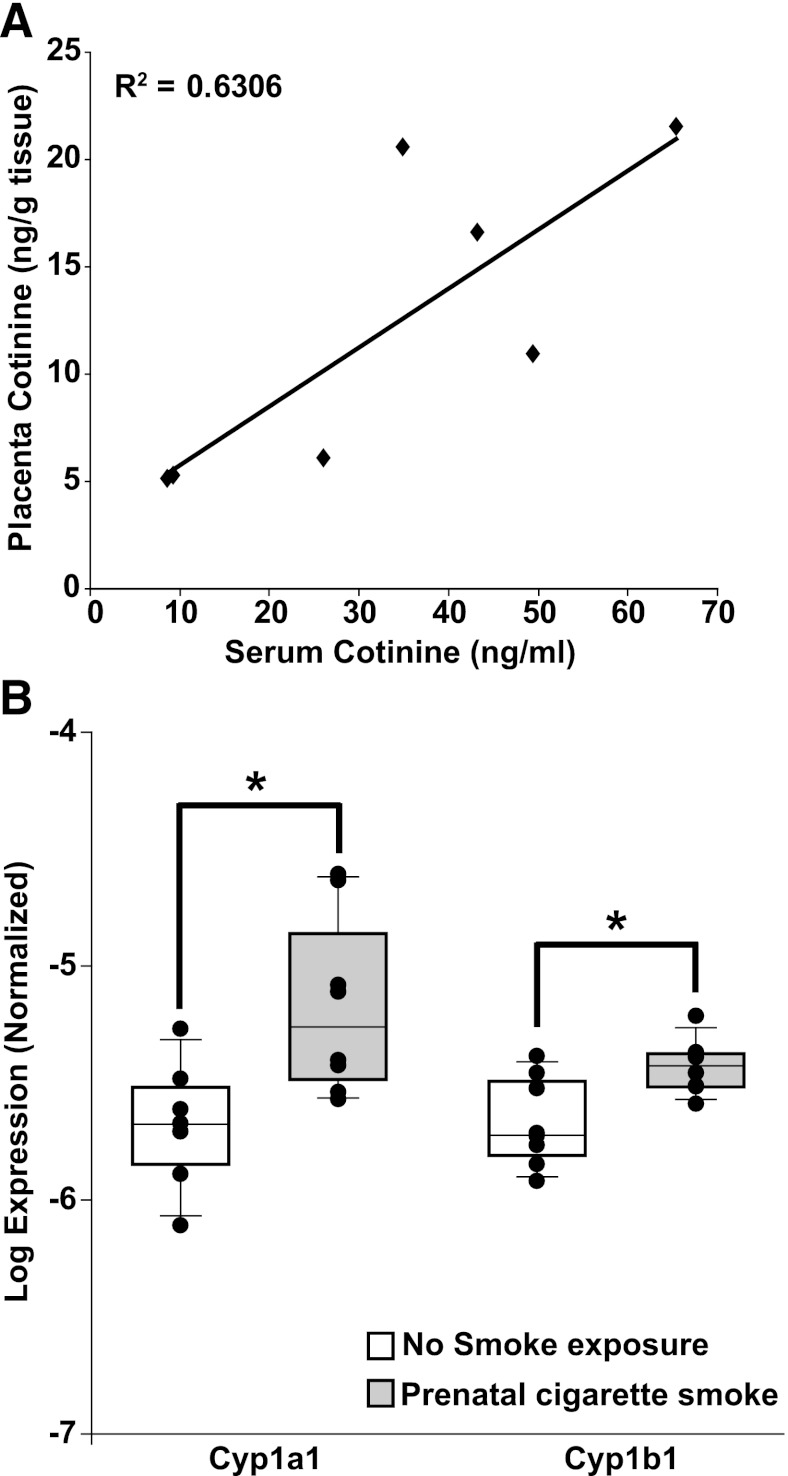
Maternal cigarette smoking during pregnancy is associated with increased risk of perinatal morbidity and mortality. However, the mechanisms underlying adverse birth outcomes following prenatal exposure to cigarette smoke remain unknown due, in part, to the absence or unreliability of information regarding maternal cigarette smoke exposure during pregnancy. Our goal was to determine if placental cotinine could be a reliable biomarker of fetal cigarette smoke exposure during pregnancy. Cotinine levels were determined in placentas from 47 women who reported smoking during pregnancy and from 10 women who denied cigarette smoke exposure. Cotinine levels were significantly higher in placentas from women reporting cigarette smoking (median = 27.2 ng/g) versus women who reported no smoke exposure (2.3 ng/g, P < 0.001). Receiver operating characteristic curve analysis identified an optimal cut point of 7.5 ng/g (sensitivity = 78.7%, specificity = 100%) to classify placenta samples from mothers who smoked versus those from mothers who did not. Among 415 placentas for which maternal cigarette smoking status was unavailable, 167 had cotinine levels > 7.5 ng/g and would be considered positive for cigarette smoke exposure. Data from quantitative reverse-transcription polymerase chain reaction analyses demonstrated that in utero cigarette smoke exposure predicted by cotinine in placenta is associated with changes in the expression of xenobiotic-metabolizing enzymes in fetal tissues. CYP1A1 mRNA in fetal lung and liver tissue and CYP1B1 mRNA in fetal lung tissue were significantly induced when cotinine was detected in placenta. These findings indicate that cotinine in placenta is a reliable biomarker for fetal exposure and response to maternal cigarette smoking during pregnancy.
Figures
Comment in
-
Drug metabolism and transport during pregnancy: how does drug disposition change during pregnancy and what are the mechanisms that cause such changes?Drug Metab Dispos. 2013 Feb;41(2):256-62. doi: 10.1124/dmd.112.050245. Drug Metab Dispos. 2013. PMID: 23328895 Free PMC article.
References
-
- Baheiraei A, Banihosseini SZ, Heshmat R, Mota A, Mohsenifar A. (2012) Association of self-reported passive smoking in pregnant women with cotinine level of maternal urine and umbilical cord blood at delivery. Paediatr Perinat Epidemiol 26:70–76 - PubMed
-
- Benowitz NL, Bernert JT, Caraballo RS, Holiday DB, Wang J. (2009a) Optimal serum cotinine levels for distinguishing cigarette smokers and nonsmokers within different racial/ethnic groups in the United States between 1999 and 2004. Am J Epidemiol 169:236–248 - PubMed
-
- Berlin I, Heilbronner C, Georgieu S, Meier C, Spreux-Varoquaux O. (2010) Newborns’ cord blood plasma cotinine concentrations are similar to that of their delivering smoking mothers. Drug Alcohol Depend 107:250–252 - PubMed
Publication types
MeSH terms
Substances
Grants and funding
LinkOut - more resources
Full Text Sources
