


doi: 10.3762/bjoc.8.229.
Epub 2012 Nov 21.
Flow photochemistry: Old light through new windows
Affiliations
- PMID: 23209538
- PMCID: PMC3511038
- DOI: 10.3762/bjoc.8.229
Item in Clipboard
Flow photochemistry: Old light through new windows
Beilstein J Org Chem.
2012.
Abstract
Synthetic photochemistry carried out in classic batch reactors has, for over half a century, proved to be a powerful but under-utilised technique in general organic synthesis. Recent developments in flow photochemistry have the potential to allow this technique to be applied in a more mainstream setting. This review highlights the use of flow reactors in organic photochemistry, allowing a comparison of the various reactor types to be made.
Keywords: cycloaddition; flow chemistry; photocatalysis; photochemistry; photooxygenation.
Figures
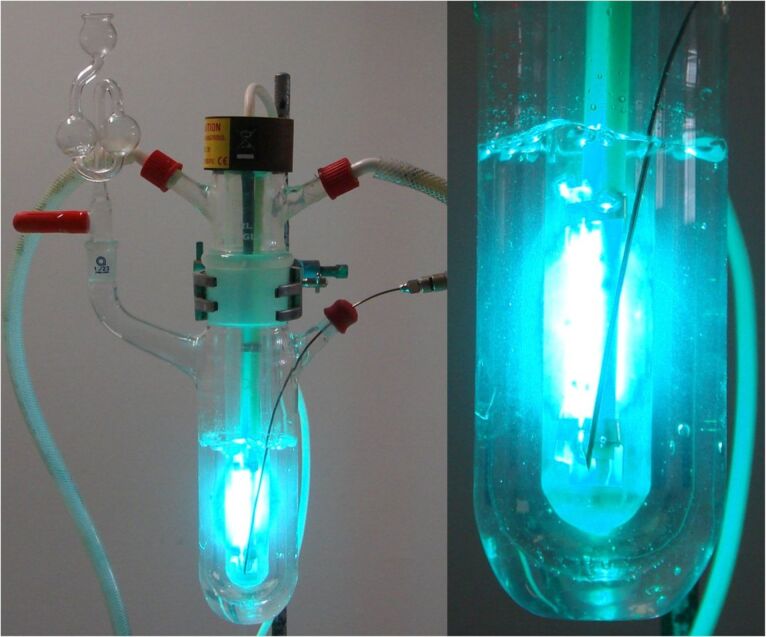
An immersion-well batch reactor with 125 W medium pressure Hg lamp.
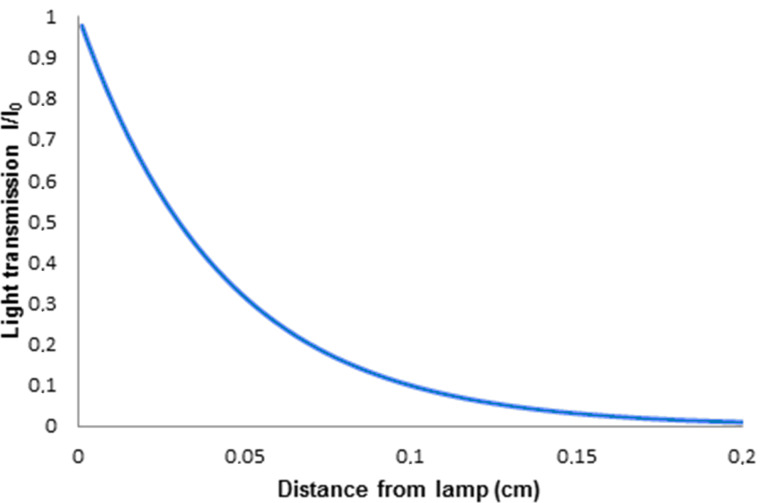
Transmission profile of a 0.05 M solution, ε = 200 M−1 cm−1.
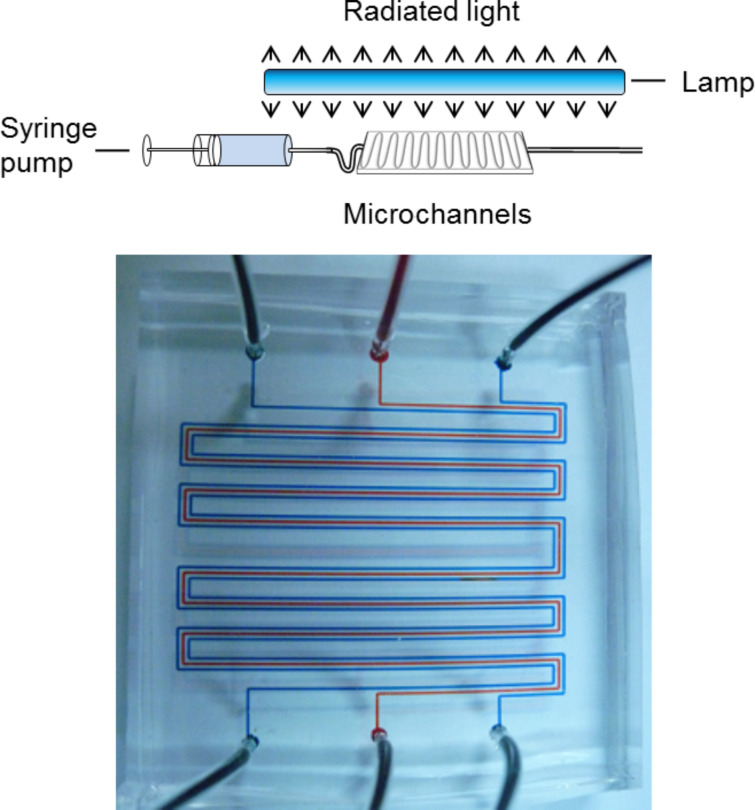
Schematic of a typical microflow photochemical reactor (above) and detail of a triple-channel microflow reactor (below) used for the photooxygenation of citronellol [20].
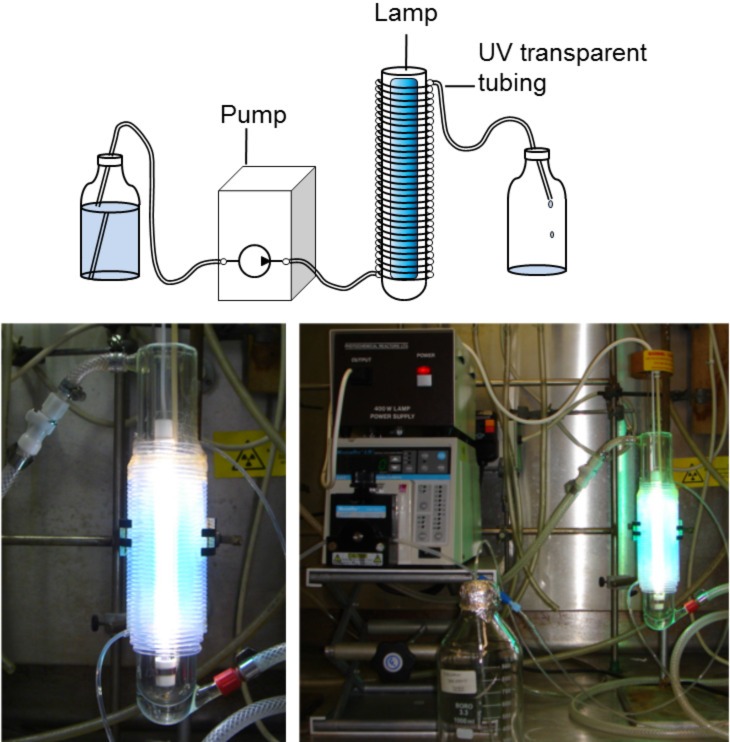
Schematic of a typical macroflow photochemical reactor (above) and images of the FEP photochemical flow reactor developed by Booker-Milburn and Berry [21].
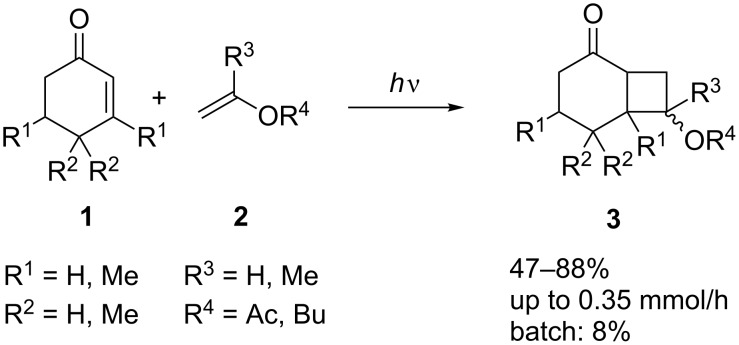
[2 + 2] photocycloadditions of enones with enol derivatives.

Competing reactions in an intramolecular [2 + 2] photocycloaddition.

Diastereocontrolled cycloaddition of a cyclic enone with cyclopentene.
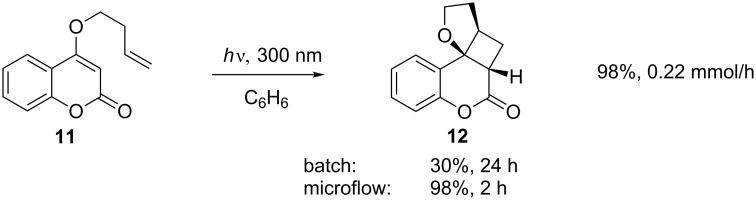
Comparison of yields and reaction times for a batch reactor with a microflow system.
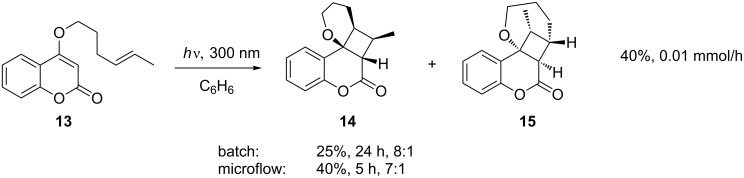
Intramolecular [2 + 2] photocycloaddition.

Paterno–Büchi reaction of benzophenone with an allylic alcohol.

Photooxygenation of cyclopentadiene.
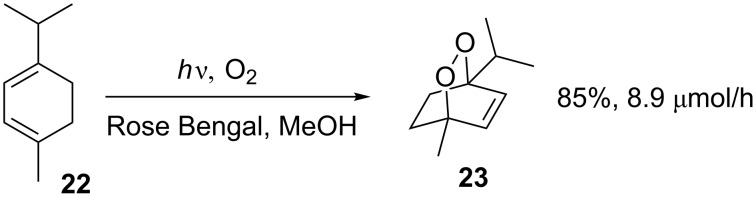
Preparation of the anthelmintic ascaridole 23.

Production of rose oxide 27 from (−)-β-citronellol (24).

Photocatalytic alkylation of benzylamine.

Photocatalytic reduction of 4-nitroacetophenone.

Conversion of L-lysine to L-pipecolinic acid.
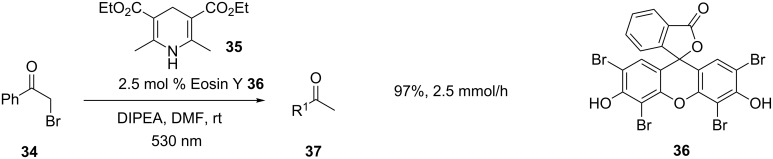
Photocatalytic hydrodehalogenation.

Photocatalytic aza-Henry reactions.

Photocatalytic α-alkylation of aliphatic ketones.
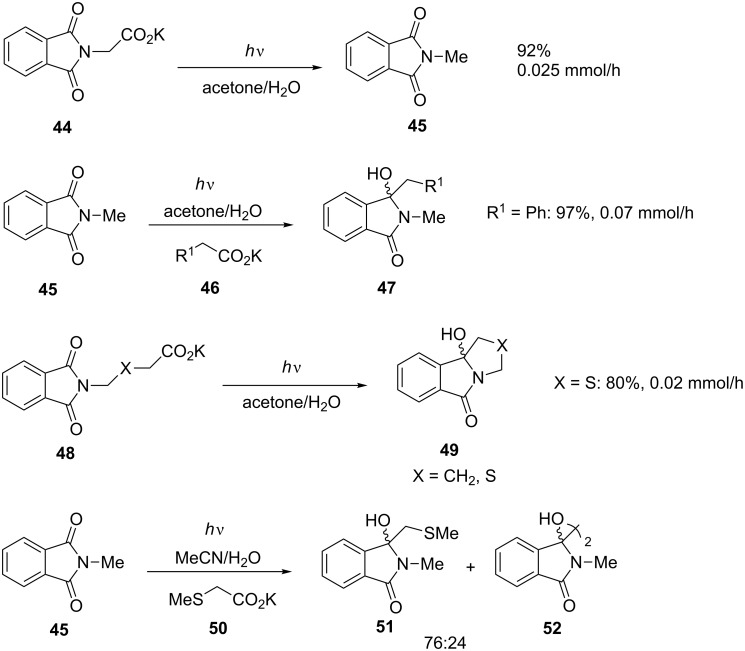
Decarboxylative photochemical additions.
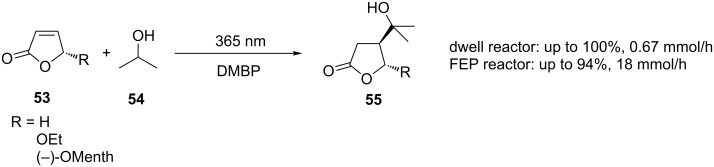
Photochemical addition of isopropanol to furanones.
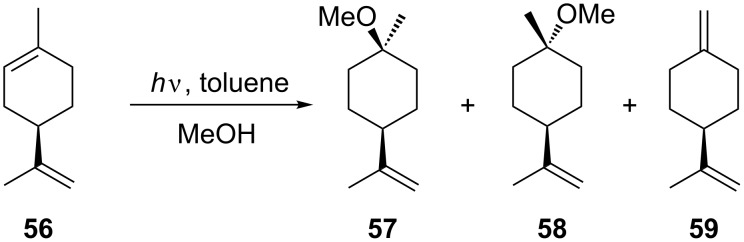
Photochemical addition of methanol to limonene.

Light-promoted reduction of flavone.

Photoreduction of benzophenone with benzhydrol.

Barton reaction in a microflow system.
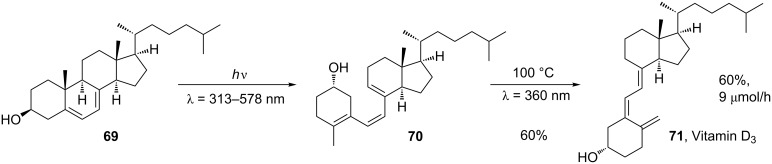
Microflow synthesis of vitamin D3.

photochemical chlorination of cyclohexane.

photochemical cyanation of pyrene.

Intermolecular [2 + 2] cycloaddition of maleimide (76) and intramolecular [2 + 2] cycloaddition of dimethylmaleimide derivative 78 under flow conditions.
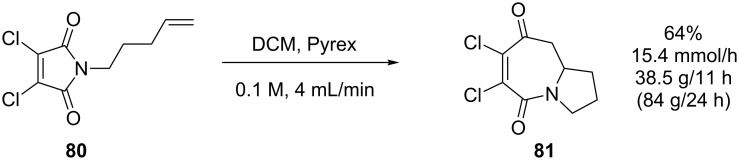
Intramolecular [5 + 2] cycloaddition of maleimide under flow conditions.
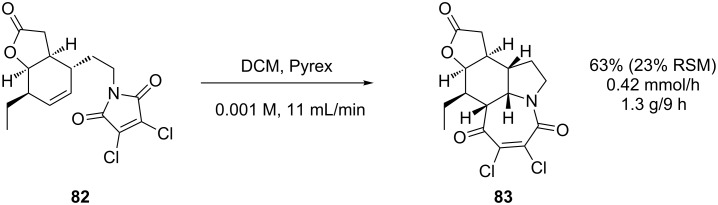
Intramolecular [5 + 2] cycloaddition as a key step in the synthesis of (±)-neostenine.
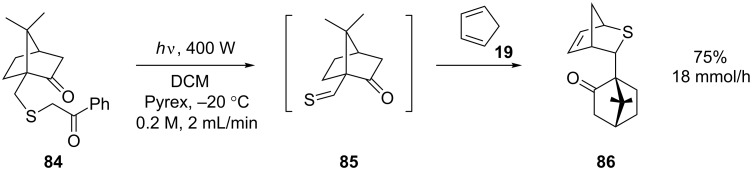
In situ generation of a thioaldehyde by photolysis of a phenacyl sulfide.
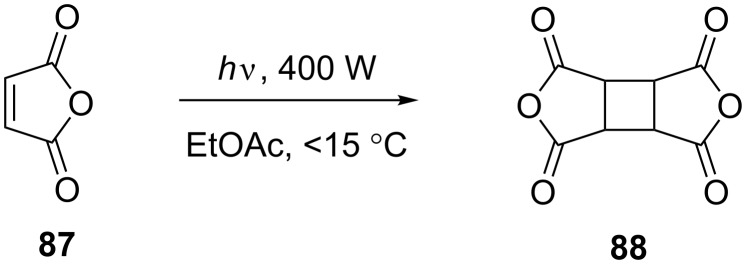
Photodimerisation of maleic anhydride.

[2 + 2] cycloaddition of a chiral enone with ethylene.
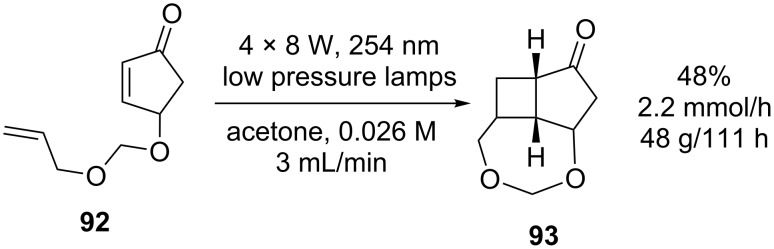
Intramolecular [2 + 2] cycloaddition of a cyclopentenone.

Photochemical Wolff rearrangement and cyclisation to β-lactams.
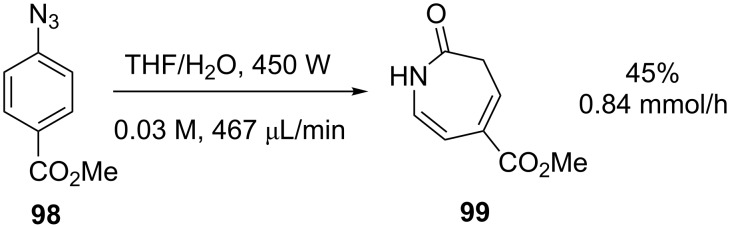
Photochemical rearrangement of aryl azides.
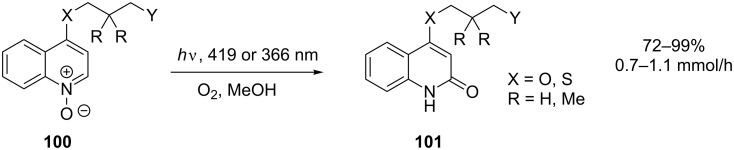
Rearrangement of quinoline N-oxides to quinolones.
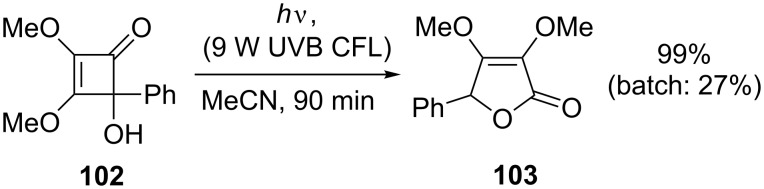
Photochemical rearrangement of cyclobutenones.
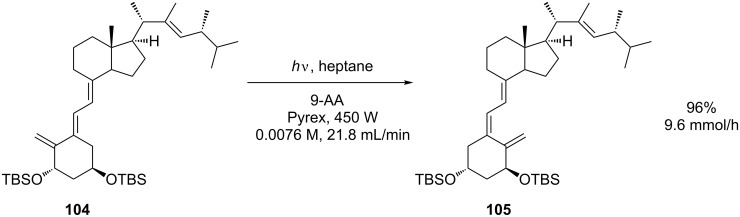
Photoisomerisation en route to a vitamin-D derivative.
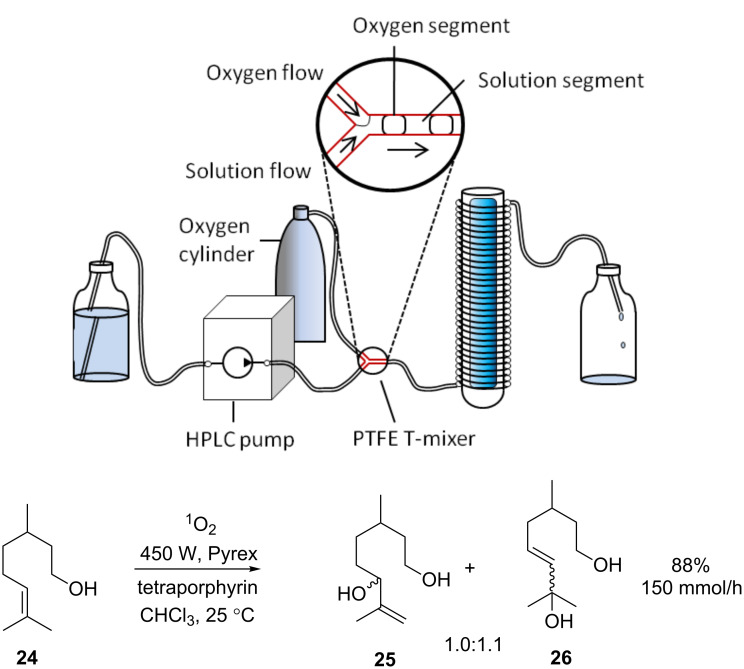
Schematic of the Seeberger photooxygenation apparatus and sensitised photooxygenation of citronellol.
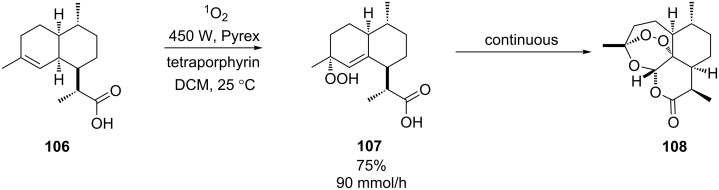
Sensitised photooxygenation of dihydroartemisinic acid.
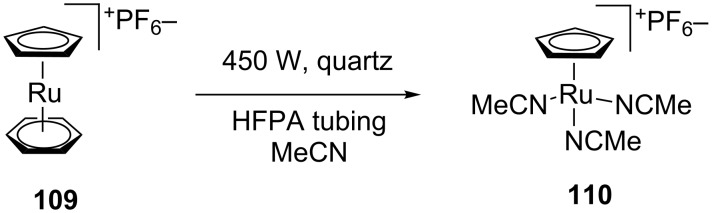
Photochemical preparation of CpRu(MeCN)3PF6.

In situ photochemical generation and reaction of a [CpRu]+ catalyst.

Intermolecular alkene–alkyne coupling with photogenerated catalyst.
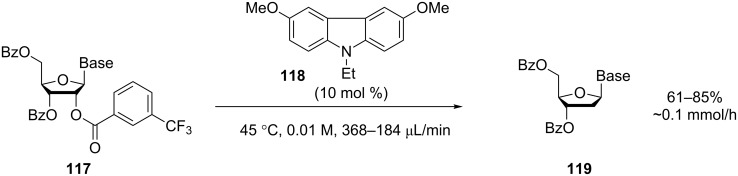
PET deoxygenation of nucleosides.
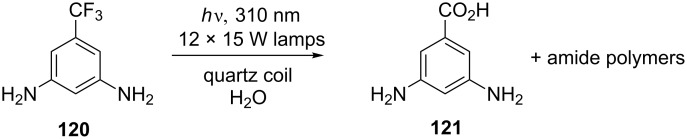
Photochemical defluorination of DABFT.
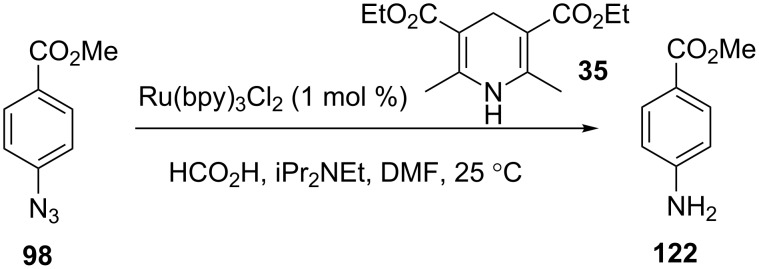
Aromatic azide reduction by visible-light-mediated photocatalysis.
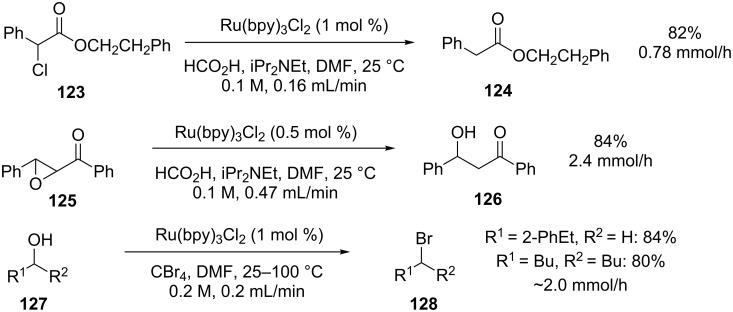
Examples of visible-light-mediated reactions.

Visible-light-mediated formation of iminium ions.
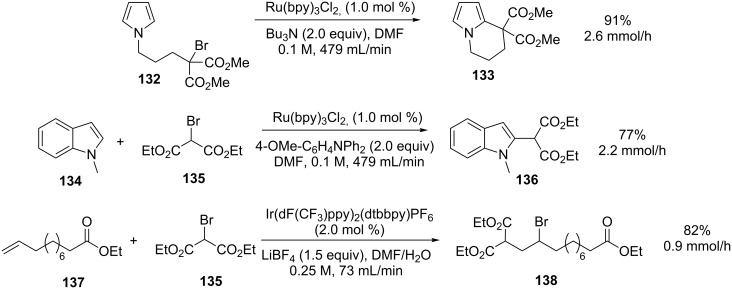
Examples of visible-light-mediated photocatalytic reactions.

Anhydride formation from a visible-light-mediated process.

Light-mediated conjugate addition of glycosyl bromide 141 to acrolein.
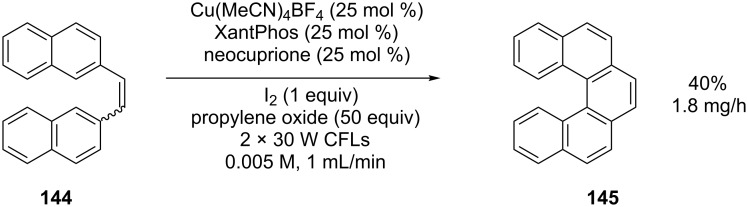
Visible-light-mediated photocyclisation to [5]helicene.
References
-
- Trommsdorf H. Ann Chem Pharm. 1834:11.
-
- Cannizzaro S, Sestini F. Gazz Chim Ital. 1873;3:241–251.
-
- Ciamician G, Silber P. Ber Dtsch Chem Ges. 1901;34:2040–2046. doi: 10.1002/cber.190103402118. - DOI
-
- Eaton P E, Cole T W., Jr J Am Chem Soc. 1964;86:3157–3158. doi: 10.1021/ja01069a041. - DOI
-
- Corey E J, Nozoe S. J Am Chem Soc. 1964;86:1652–1653. doi: 10.1021/ja01062a052. - DOI
LinkOut - more resources
Full Text Sources
Other Literature Sources