


Patient engagement as an emerging challenge for healthcare services: mapping the literature
- PMID: 23213497
- PMCID: PMC3504449
- DOI: 10.1155/2012/905934
Patient engagement as an emerging challenge for healthcare services: mapping the literature
Abstract
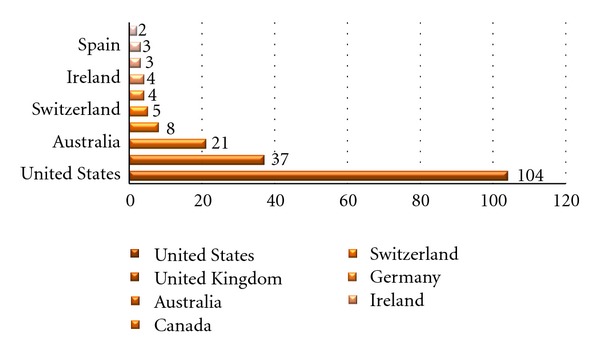
Patients' engagement in healthcare is at the forefront of policy and research practice and is now widely recognized as a critical ingredient for high-quality healthcare system. This study aims to analyze the current academic literature (from 2002 to 2012) about patient engagement by using bibliometric and qualitative content analyses. Extracting data from the electronic databases more likely to cover the core research publications in health issues, the number of yearly publications, the most productive countries, and the scientific discipline dealing with patient engagement were quantitatively described. Qualitative content analysis of the most cited articles was conducted to distinguish the core themes. Our data showed that patient engagement is gaining increasing attention by all the academic disciplines involved in health research with a predominance of medicine and nursing. Engaging patients is internationally recognized as a key factor in improving health service delivery and quality. Great attention is up to now paid to the clinical and organizational outcomes of engagement, whereas there is still a lack of an evidence-based theoretical foundation of the construct as well as of the organizational dimensions that foster it.
Figures
References
-
- Coulter A. The Autonomous Patient: Ending Paternalism in Medical Care. London, UK: The Nuffield Trust; 2002.
-
- Forbat L, Cayless S, Knighting K, Cornwell J, Kearney N. Engaging patients in health care: an empirical study of the role of engagement on attitudes and action. Patient Education and Counseling. 2009;74(1):84–90. - PubMed
-
- Mockford C, Staniszewska S, Griffiths F, Herron-Marxs S. The impact of patient and public involvement in UK NHS health care: a systematic review. International Journal for Quality in Health Care Advance. 2011;22:1–11. - PubMed
-
- Graffigna G, Vegni E, Barello S, Olson K, Bosio CA. Studying the social construction of cancer-related fatigue experience: the heuristic value of Ethnoscience. Patient Education and Counseling. 2011;82(3):402–409. - PubMed
-
- Executive NHS. Patient and Public Involvement in the New NHS. Leeds, UK: Department of Health; 1999.
LinkOut - more resources
Full Text Sources
