


Use of three-dimensional computed tomography to classify filling of alveolar bone grafting
- PMID: 23213501
- PMCID: PMC3503285
- DOI: 10.1155/2012/259419
Use of three-dimensional computed tomography to classify filling of alveolar bone grafting
Abstract
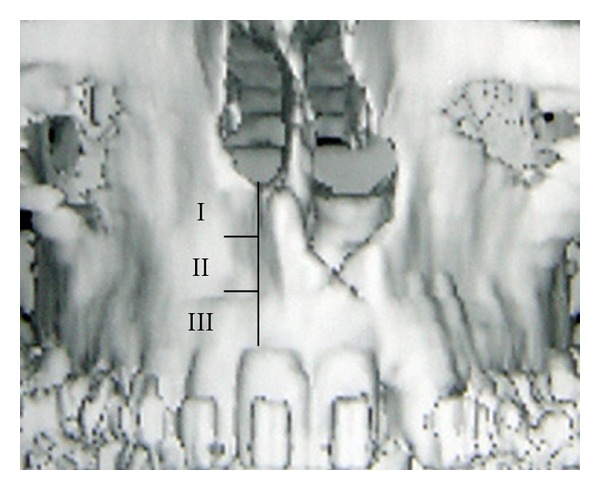
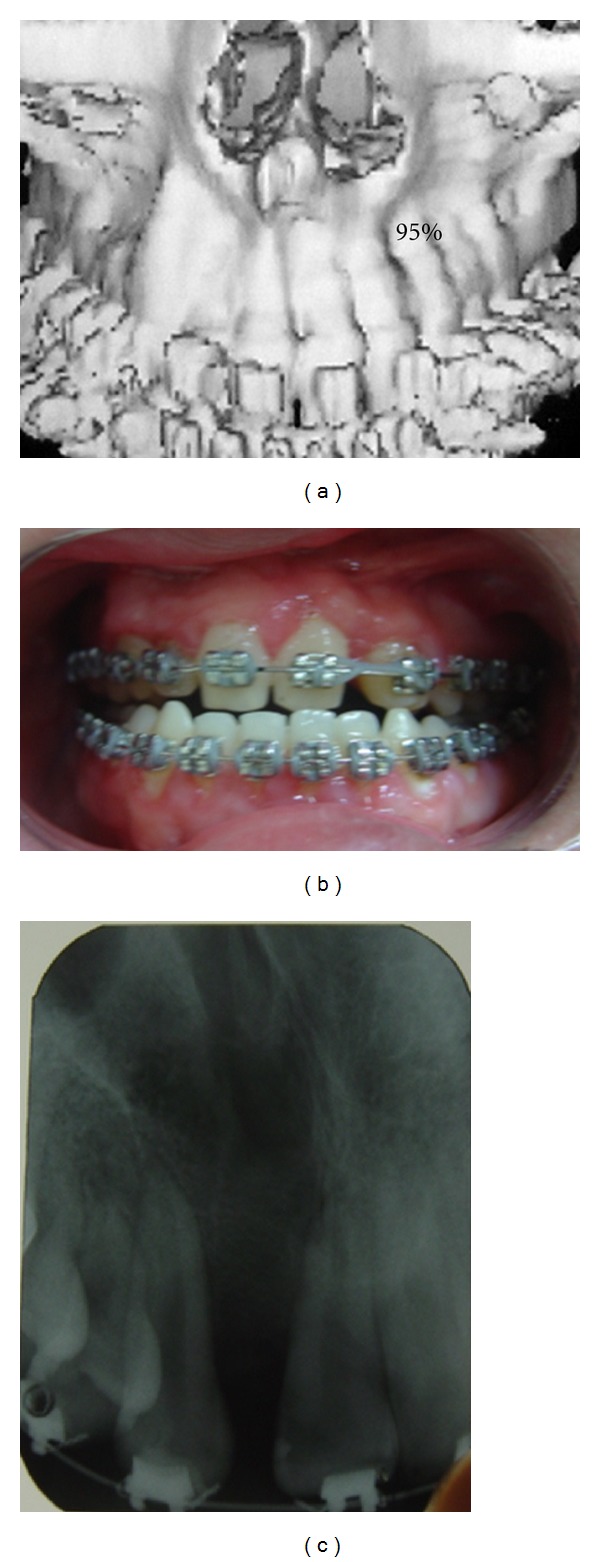
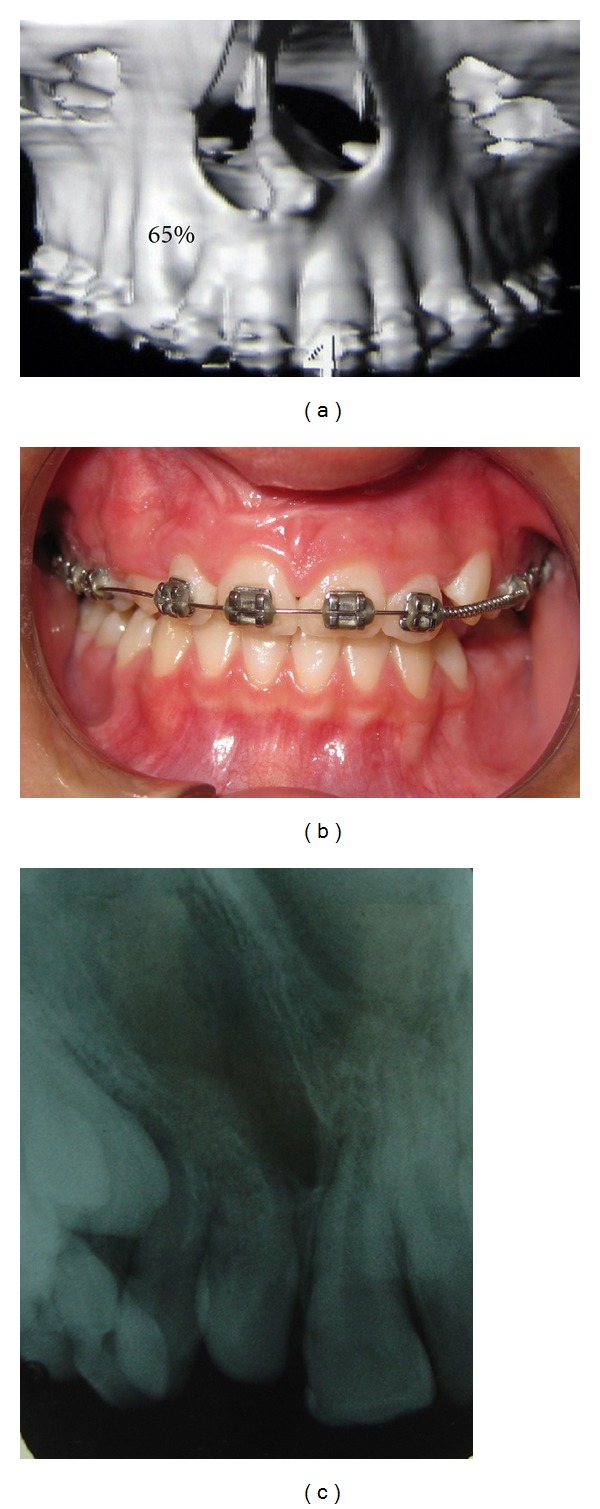
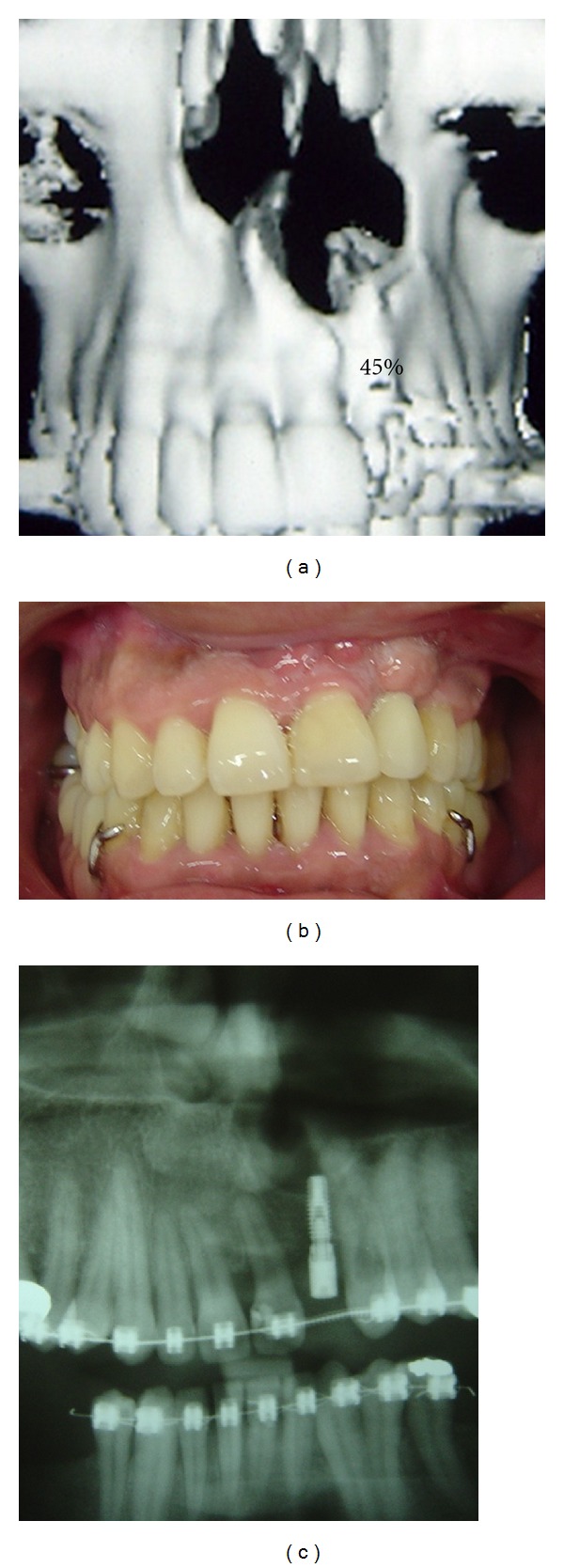
Several authors have proposed classifications to analyze the quality over time of secondary alveolar bone grafting. However, little discussion has been held to quantitatively measure the secondary bone grafting for correction of nasal deformity associated to cleft palate and lip. Twenty patients with unilateral alveolar cleft, who underwent secondary alveolar bone grafting, were studied with 3D computer tomography. The height between the inferior portion of the pyriform aperture and the incisal border of the unaffected side (height A) and the affected side (height B) was measured using a software Mirror. A percentage was then obtained dividing the height B by the height A and classified into grades I, II, and III if the value was greater than 67%, between 34% and 66%, or less than 33%. Age, time of followup, initial operation, and age of canine eruption were also recorded. All patients presented appropriate occlusion and function. Mean time of followup was 7 years, and mean initial age for operation was 10 years old. 16 patients were rated as grade I and 4 patients as grade II. No cases had grade III. We present a new grading system that can be used to assess the success of secondary bone grafting in patients who underwent alveolar cleft repair.
Figures
References
-
- Abyholm FE, Bergland O, Semb G. Secondary bone grafting of alveolar clefts. A surgical/orthodontic treatment enabling a non-prosthodontic rehabilitation in cleft lip and palate patients. Scandinavian Journal of Plastic and Reconstructive Surgery. 1981;15(2):127–140. - PubMed
-
- Bergland O, Semb G, Aabyholm FE. Elimination of the residual alveolar cleft by secondary bone grafting and subsequent orthodontic treatment. Cleft Palate Journal. 1986;23(3):175–205. - PubMed
-
- Hynes PJ, Earley MJ. Assessment of secondary alveolar bone grafting using a modification of the Bergland grading system. British Journal of Plastic Surgery. 2003;56(7):630–636. - PubMed
-
- Kindelan JD, Nashed RR, Bromige MR. Radiographic assessment of secondary autogenous alveolar bone grafting in cleft lip and palate patients. The Cleft Palate-Craniofacial Journal. 1997;34:195–198. - PubMed
-
- Long Jr RE, Spangler BE, Yow M. Cleft width and secondary alveolar bone graft success. The Cleft Palate-Craniofacial Journal. 1995;32:420–427. - PubMed
LinkOut - more resources
Full Text Sources
