


Human leukocyte antigen profiles of latin american populations: differential admixture and its potential impact on hematopoietic stem cell transplantation
- PMID: 23213535
- PMCID: PMC3506882
- DOI: 10.1155/2012/136087
Human leukocyte antigen profiles of latin american populations: differential admixture and its potential impact on hematopoietic stem cell transplantation
Abstract
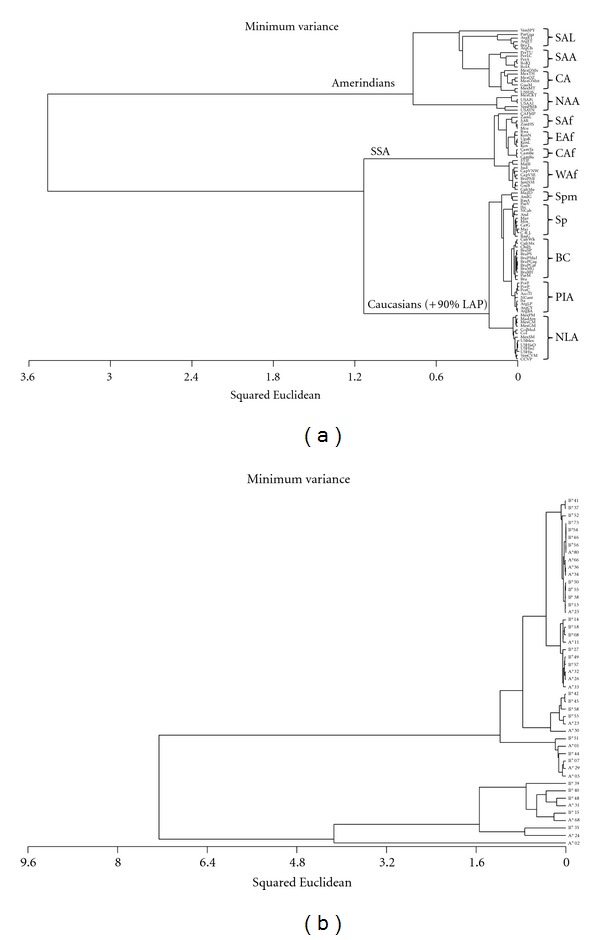
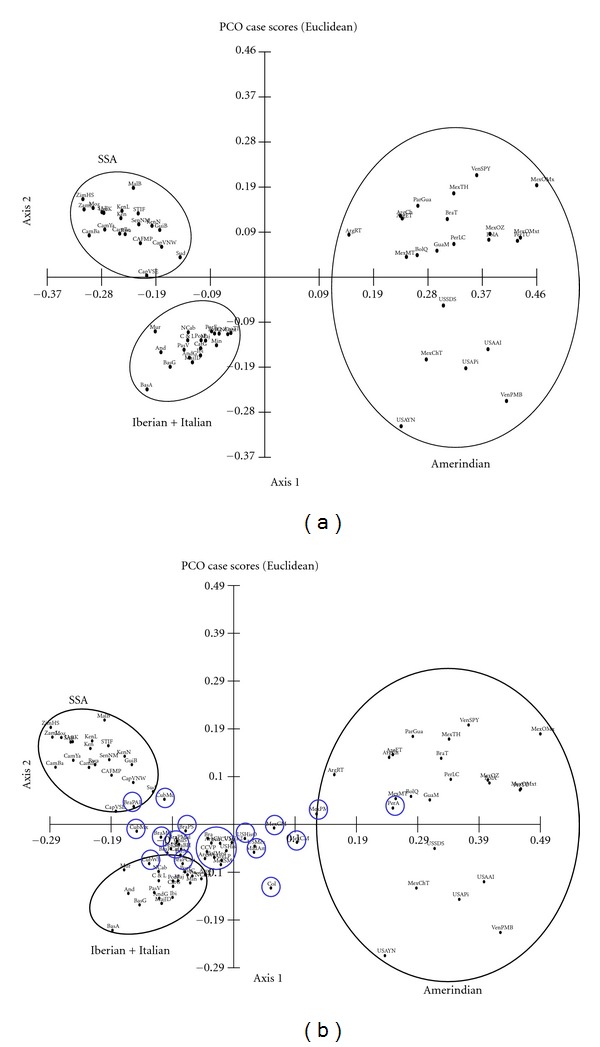
The outcome of hematopoietic stem cell transplantation (HSCT) is shaped by both clinical and genetic factors that determine its success. Genetic factors including human leukocyte antigen (HLA) and non-HLA genetic variants are believed to influence the risk of potentially fatal complications after the transplant. Moreover, ethnicity has been proposed as a factor modifying the risk of graft-versus-host disease. The populations of Latin America are a complex array of different admixture processes with varying degrees of ancestral population proportions that came in different migration waves. This complexity makes the study of genetic risks in this region complicated unless the extent of this variation is thoroughly characterized. In this study we compared the HLA-A and HLA-B allele group profiles for 31 Latin American populations and 61 ancestral populations from Iberia, Italy, Sub-Saharan Africa, and America. Results from population genetics comparisons show a wide variation in the HLA profiles from the Latin American populations that correlate with different admixture proportions. Populations in Latin America seem to be organized in at least three groups with (1) strong Amerindian admixture, (2) strong Caucasian component, and (3) a Caucasian-African gradient. These results imply that genetic risk assessment for HSCT in Latin America has to be adapted for different population subgroups rather than as a pan-Hispanic/Latino analysis.
Figures

References
-
- Ljungman P, Bregni M, Brune M, et al. Allogeneic and autologous transplantation for haematological diseases, solid tumours and immune disorders: current practice in Europe 2009. Bone Marrow Transplantation. 2010;45(2):219–234. - PubMed
-
- Dickinson AM. Risk assessment in haematopoietic stem cell transplantation: pre-transplant patient and donor factors: non-HLA genetics. Best Practice and Research: Clinical Haematology. 2007;20(2):189–207. - PubMed
-
- Lee SJ, Klein J, Haagenson M, et al. High-resolution donor-recipient HLA matching contributes to the success of unrelated donor marrow transplantation. Blood. 2007;110(13):4576–4583. - PubMed
-
- Shaw BE, Arguello R, Garcia-Sepulveda CA, Madrigal JA. The impact of HLA genotyping on survival following unrelated donor haematopoietic stem cell transplantation: review. British Journal of Haematology. 2010;150(3):251–258. - PubMed
LinkOut - more resources
Full Text Sources
Research Materials
