


Minocycline reduces reactive gliosis in the rat model of hydrocephalus
- PMID: 23217034
- PMCID: PMC3529686
- DOI: 10.1186/1471-2202-13-148
Minocycline reduces reactive gliosis in the rat model of hydrocephalus
Abstract
Background: Reactive gliosis had been implicated in injury and recovery patterns associated with hydrocephalus. Our aim is to determine the efficacy of minocycline, an antibiotic known for its anti-inflammatory properties, to reduce reactive gliosis and inhibit the development of hydrocephalus.
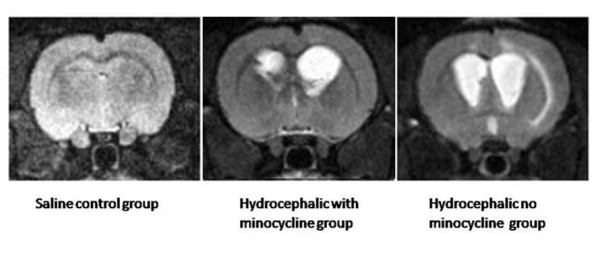
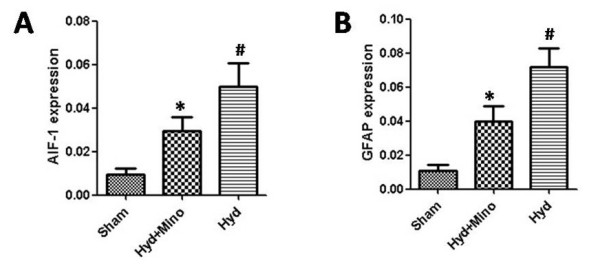
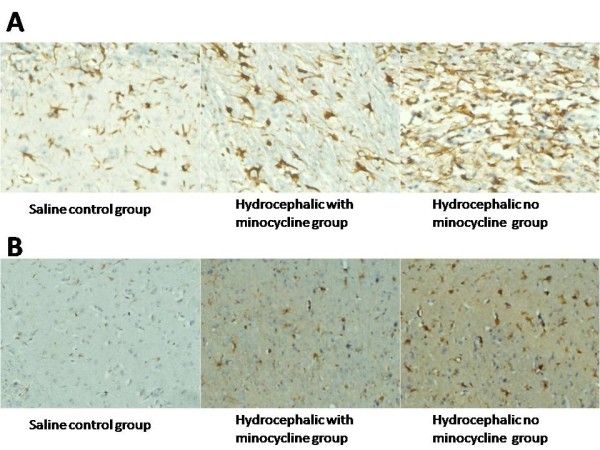
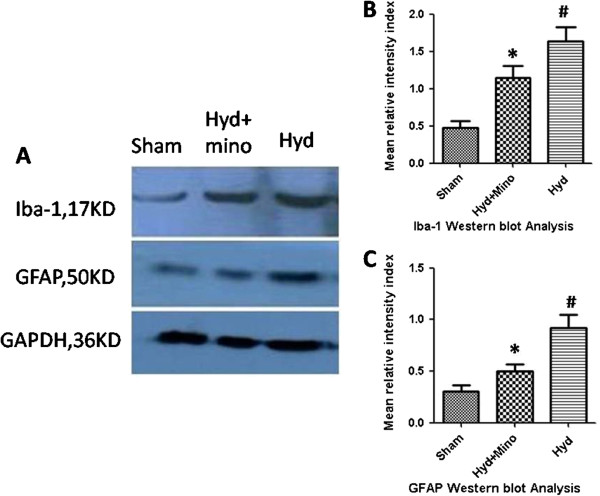
Results: The ventricular dilatation were evaluated by MRI at 1-week post drugs treated, while GFAP and Iba-1were detected by RT-PCR, Immunohistochemistry and Western blot. The expression of GFAP and Iba-1 was significantly higher in hydrocephalic group compared with saline control group (p < 0.05). Minocycline treatment of hydrocephalic animals reduced the expression of GFAP and Iba-1 significantly (p < 0.05). Likewise, the severity of ventricular dilatation is lower in minocycline treated hydrocephalic animals compared with the no minocycline group (p < 0.05).
Conclusion: Minocycline treatment is effective in reducing the gliosis and delaying the development of hydrocephalus with prospective to be the auxiliary therapeutic method of hydrocephalus.
Figures
References
-
- Mangano FT, McAllister JP, Jones HC, Johnson MJ, Kriebel RM. The microglial response to progressive hydrocephalus in a model of inherited aqueductal stenosis. Neurol Res. 1998;20:697–704. - PubMed
-
- Khan OH, Enno TL, Del Bigio MR. Brain damage in neonatal rats following kaolin induction of hydrocephalus. ExpNeurol. 2006;200(2):311–320. - PubMed
Publication types
MeSH terms
Substances
LinkOut - more resources
Full Text Sources
Medical
Miscellaneous
