


An interdomain energetic tug-of-war creates the allosterically active state in Hsp70 molecular chaperones
- PMID: 23217711
- PMCID: PMC3521165
- DOI: 10.1016/j.cell.2012.11.002
An interdomain energetic tug-of-war creates the allosterically active state in Hsp70 molecular chaperones
Abstract
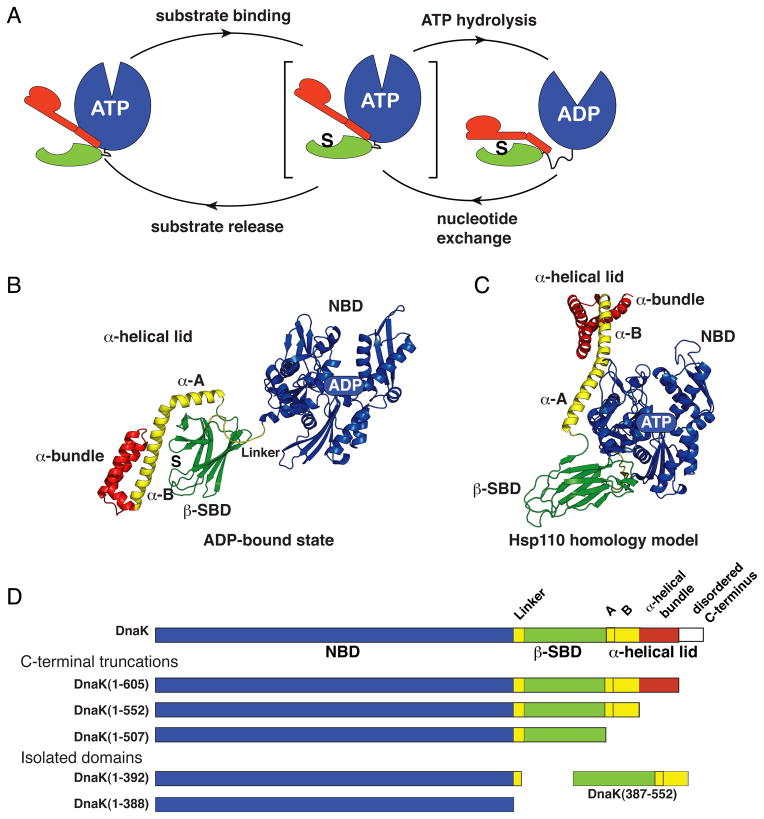
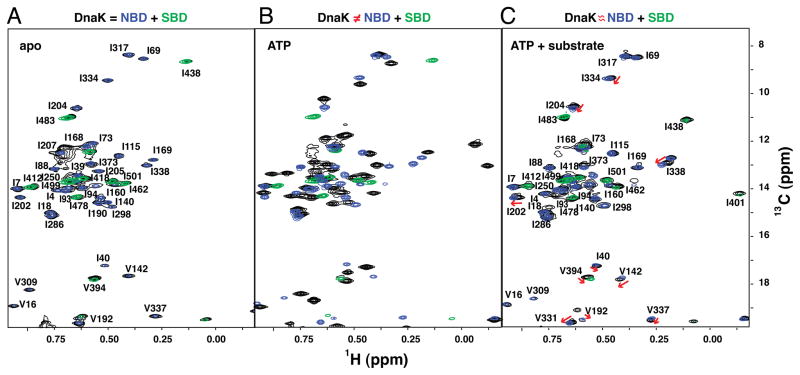
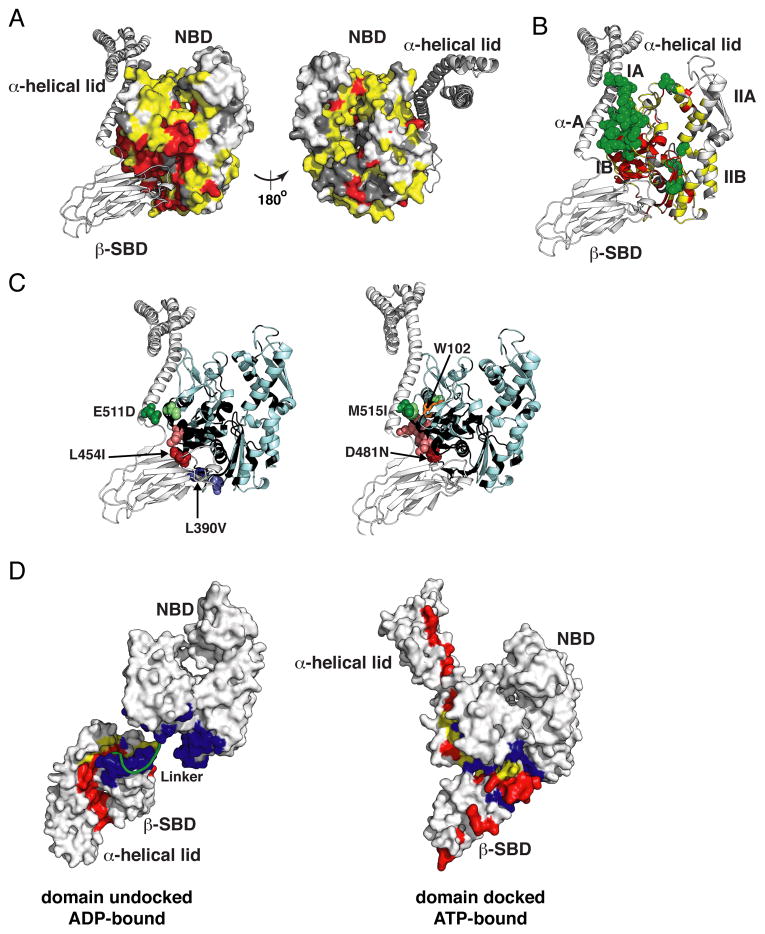
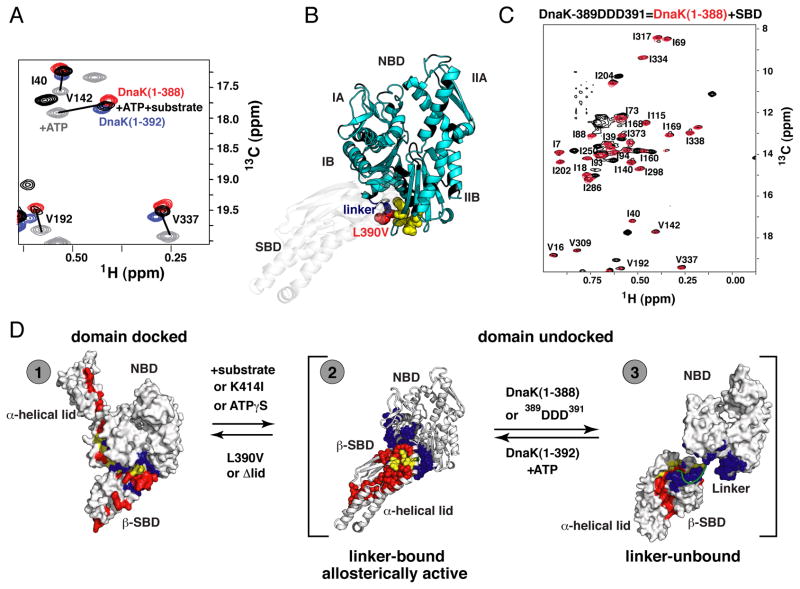
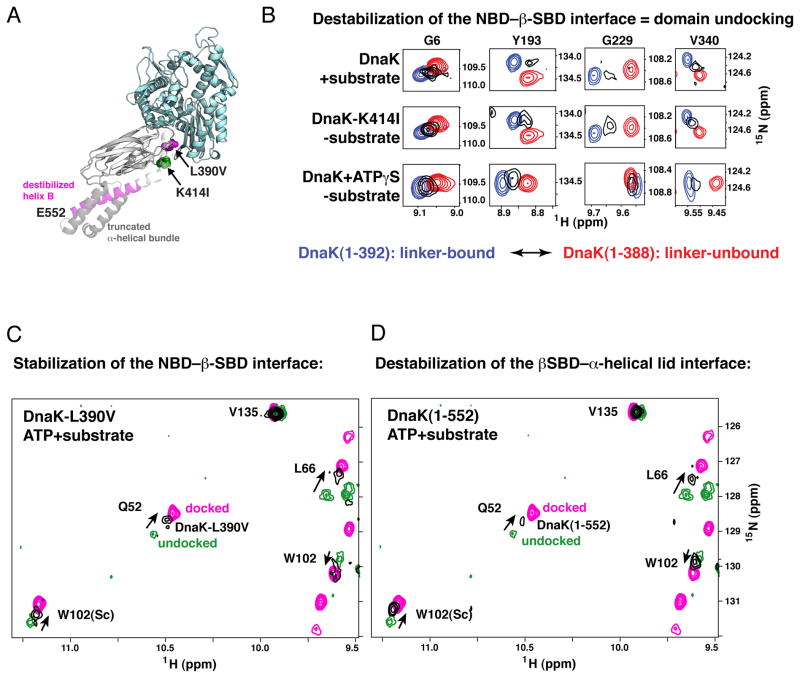
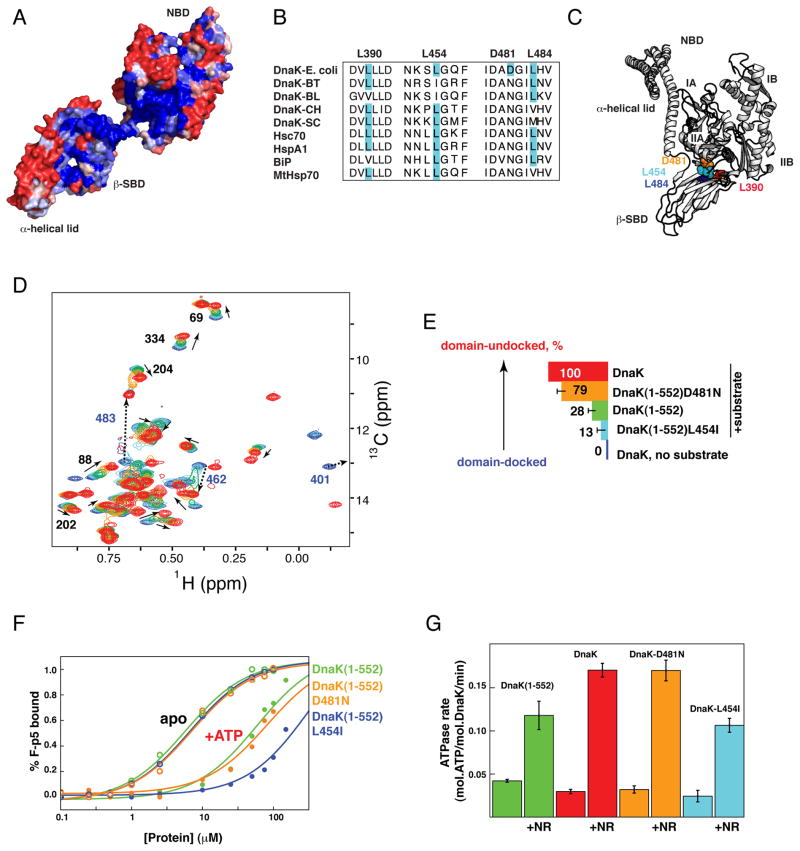
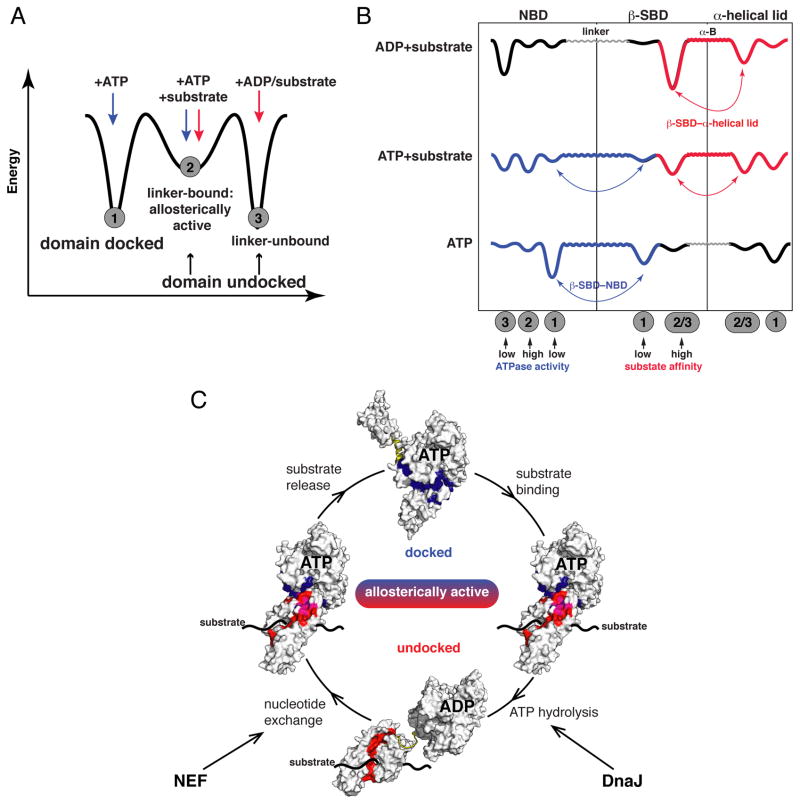
The allosteric mechanism of Hsp70 molecular chaperones enables ATP binding to the N-terminal nucleotide-binding domain (NBD) to alter substrate affinity to the C-terminal substrate-binding domain (SBD) and substrate binding to enhance ATP hydrolysis. Cycling between ATP-bound and ADP/substrate-bound states requires Hsp70s to visit a state with high ATPase activity and fast on/off kinetics of substrate binding. We have trapped this "allosterically active" state for the E. coli Hsp70, DnaK, and identified how interactions among the NBD, the β subdomain of the SBD, the SBD α-helical lid, and the conserved hydrophobic interdomain linker enable allosteric signal transmission between ligand-binding sites. Allostery in Hsp70s results from an energetic tug-of-war between domain conformations and formation of two orthogonal interfaces: between the NBD and SBD, and between the helical lid and the β subdomain of the SBD. The resulting energetic tension underlies Hsp70 functional properties and enables them to be modulated by ligands and cochaperones and "tuned" through evolution.
Copyright © 2012 Elsevier Inc. All rights reserved.
Figures
References
-
- Buchberger A, Theyssen H, Schroder H, McCarty JS, Virgallita G, Milkereit P, Reinstein J, Bukau B. Nucleotide-induced conformational-changes in the ATPase and substrate-binding domains of the DnaK chaperone provide evidence for interdomain communication. J Biol Chem. 1995;270:16903–16910. - PubMed
Publication types
MeSH terms
Substances
Grants and funding
LinkOut - more resources
Full Text Sources
Other Literature Sources
Molecular Biology Databases
