


Emerging strategies for spatiotemporal control of stem cell fate and morphogenesis
- PMID: 23219200
- PMCID: PMC3557560
- DOI: 10.1016/j.tibtech.2012.11.001
Emerging strategies for spatiotemporal control of stem cell fate and morphogenesis
Abstract
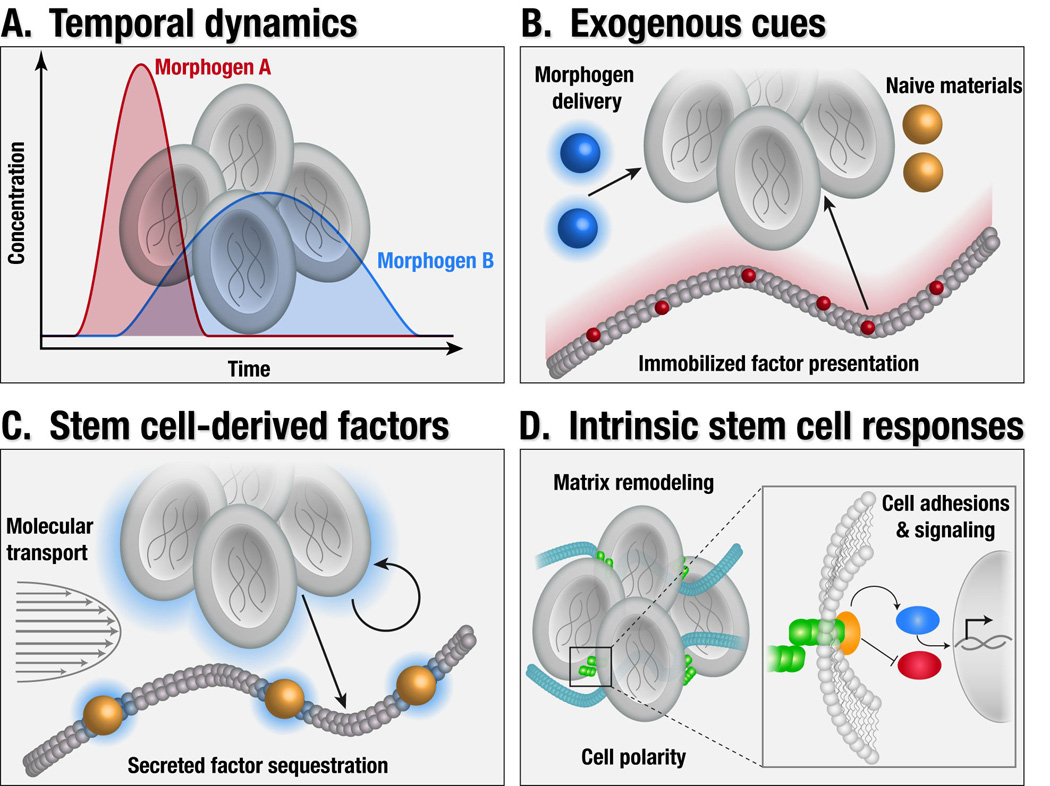
Stem cell differentiation is regulated by the complex interplay of multiple parameters, including adhesive intercellular interactions, cytoskeletal and extracellular matrix remodeling, and gradients of agonists and antagonists that individually and collectively vary as a function of spatial locale and temporal stages of development. Current approaches to direct stem cell differentiation focus on systematically understanding the relative influences of microenvironmental perturbations and simultaneously engineering platforms aimed at recapitulating physicochemical aspects of tissue morphogenesis. This review focuses on novel approaches to control the spatiotemporal dynamics of stem cell signaling and morphogenic remodeling to direct the differentiation of stem cells and develop functional tissues for in vitro screening and regenerative medicine technologies.
Copyright © 2012 Elsevier Ltd. All rights reserved.
Figures

References
-
- Jensen J, et al. Human embryonic stem cell technologies and drug discovery. Journal of cellular physiology. 2009;219:513–519. - PubMed
-
- Copelan EA. Hematopoietic stem-cell transplantation. N Engl J Med. 2006;354:1813–1826. - PubMed
-
- Scadden DT. The stem-cell niche as an entity of action. Nature. 2006;441:1075–1079. - PubMed
Publication types
MeSH terms
Grants and funding
LinkOut - more resources
Full Text Sources
Other Literature Sources
Medical
