


Exposure profiling of reactive compounds in complex mixtures
- PMID: 23219592
- PMCID: PMC4868061
- DOI: 10.1016/j.tox.2012.11.012
Exposure profiling of reactive compounds in complex mixtures
Abstract
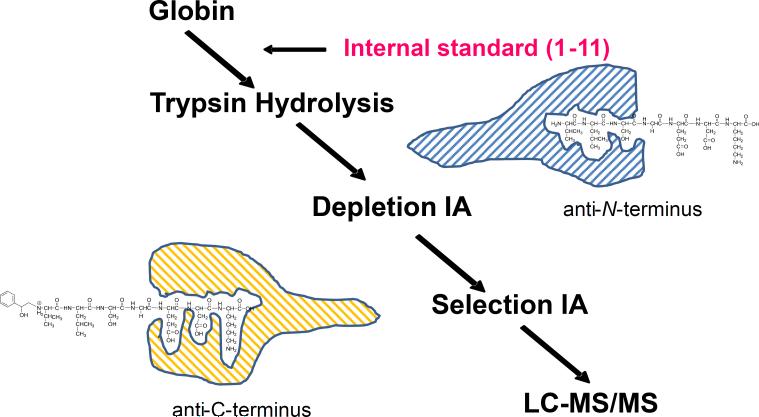
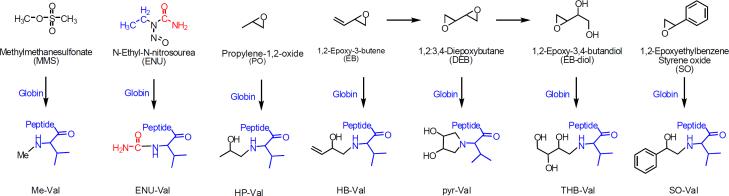
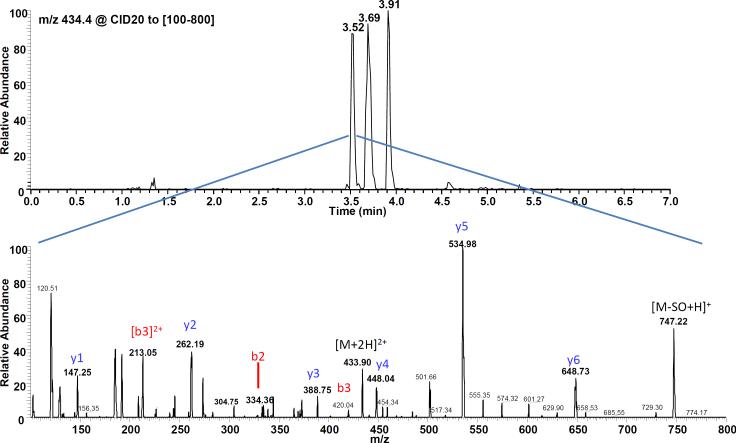
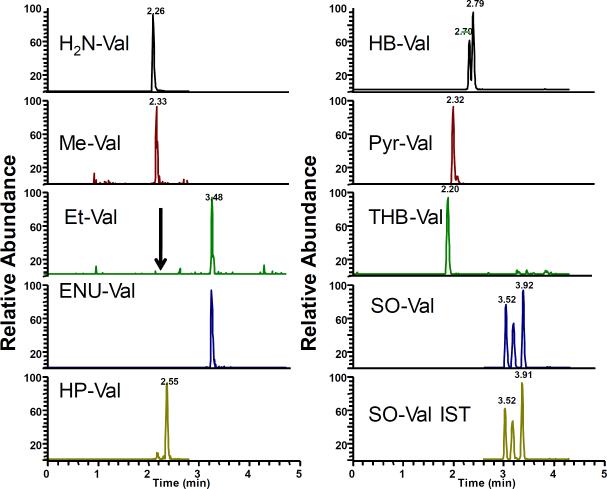
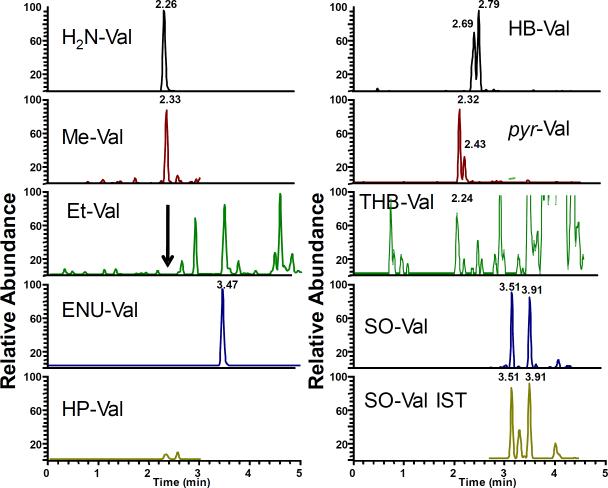
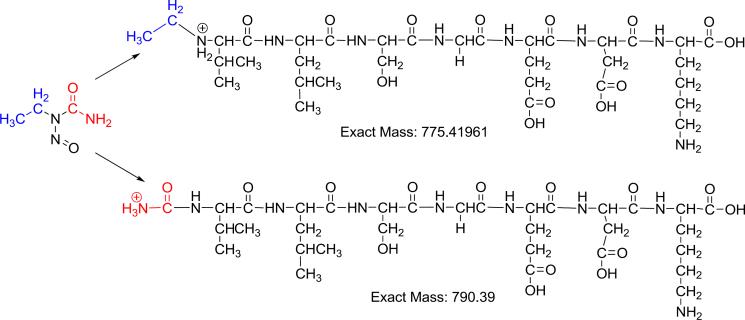
Humans are constantly exposed to mixtures, such as tobacco smoke, exhaust from diesel, gasoline or new bio-fuels, containing several 1000 compounds, including many known human carcinogens. Covalent binding of reactive compounds or their metabolites to DNA and formation of stable adducts is believed to be the causal link between exposure and carcinogenesis. DNA and protein adducts are well established biomarkers for the internal dose of reactive compounds or their metabolites and are an integral part of science-based risk assessment. However, technical limitations have prevented comprehensive detection of a broad spectrum of adducts simultaneously. Therefore, most studies have focused on measurement of abundant individual adducts. These studies have produced valuable insight into the metabolism of individual carcinogens, but they are insufficient for risk assessment of exposure to complex mixtures. To overcome this limitation, we present herein proof-of-principle for comprehensive exposure assessment, using N-terminal valine adduct profiles as a biomarker. The reported method is based on our previously established immunoaffinity liquid chromatography-tandem mass spectrometry (LC-MS/MS) method with modification to enrich all N-terminal valine alkylated peptides. The method was evaluated using alkylated peptide standards and globin reacted in vitro with alkylating agents (1,2-epoxy-3-butene, 1,2:3,4-diepoxybutane, propylene oxide, styrene oxide, N-ethyl-N-nitrosourea and methyl methanesulfonate), known to form N-terminal valine adducts. To demonstrate proof-of-principle, the method was successfully applied to globin from mice treated with four model compounds. The results suggest that this novel approach might be suitable for in vivo biomonitoring.
Keywords: 1,2 epoxy-3-butene; 1,2:3,4-diepoxybutane; 1,3-butadiene; 1-hydroxy (or 2-hydroxy)-propyl-valine; 1-phenyl-2-hydroxyethyl-valine or 2-phenyl-2-hydroxyethyl-valine; 2,3,4-trihydroxybutyl-valine; 3,4-epoxy-1,2-butanediol; BD; Biomarkers; Biomonitoring; DEB; EB; EB-diol; ENU; ENU-Val; Et-Val; FA; H(2)N-Val; HB-Val; HP-Val; Hb; IA; LC–MS/MS; MMS; Me-Val; Mixtures; Multiple exposure detection; N,N-(2,3-dihydroxy-1,4-butadiyl)-valine; N-(2-hydroxy-3-buten-1-yl)-valine; N-ethyl-N-nitrosourea; N-terminal valine adducts; PO; SO; SO-Val; THB-Val; carbamoylated-valine; ethyl-valine; formic acid; hemoglobin; immunoaffinity; liquid chromatography–tandem mass spectrometry; methyl-methanesulfonate; methyl-valine; non-alkylated-valine; propylene oxide; pyr-Val; styrene oxide.
Copyright © 2013. Published by Elsevier Ireland Ltd.
Figures
References
-
- Basile A, Ferranti P, Mamone G, Manco I, Pocsfalvi G, Malorni A, Acampora A, Sannolo N. Structural analysis of styrene oxide/haemoglobin adducts by mass spectrometry: identification of suitable biomarkers for human exposure evaluation. Rapid Commun. Mass Spectrom. 2002;16(9):871–878. - PubMed
-
- Basile A, Ferranti P, Pocsfalvi G, Mamone G, Miraglia N, Caira S, Ambrosi L, Soleo L, Sannolo N, Malorni A. A novel approach for identification and measurement of hemoglobin adducts with 1,2,3,4-diepoxybutane by liquid chromatography/electrospray ionisation mass spectrometry and matrix-assisted laser desorption/ionisation tandem mass spectrometry. Rapid Commun. Mass Spectrom. 2001;15(8):527–540. - PubMed
-
- Boysen G, Georgieva NI, Upton PB, Walker VE, Swenberg JA. N-terminal globin adducts as biomarkers for formation of butadiene derived epoxides. Chem Biol Interact. 2007;166(1-3):84–92. - PubMed
-
- Boysen G, Georgieva NI, Upton PB, Jayaraj K, Li Y, Walker VE, Swenberg JA. Analysis of diepoxide-specific cyclic N-terminal globin adducts in mice and rats after inhalation exposure to 1,3-butadiene. Cancer Res. 2004;64(23):8517–8520. - PubMed
Publication types
MeSH terms
Substances
Grants and funding
LinkOut - more resources
Full Text Sources
Other Literature Sources
Research Materials
Miscellaneous
