Piecing it together: infants' neural responses to face and object structure
- PMID: 23220577
- PMCID: PMC3587016
- DOI: 10.1167/12.13.6
Piecing it together: infants' neural responses to face and object structure
Abstract
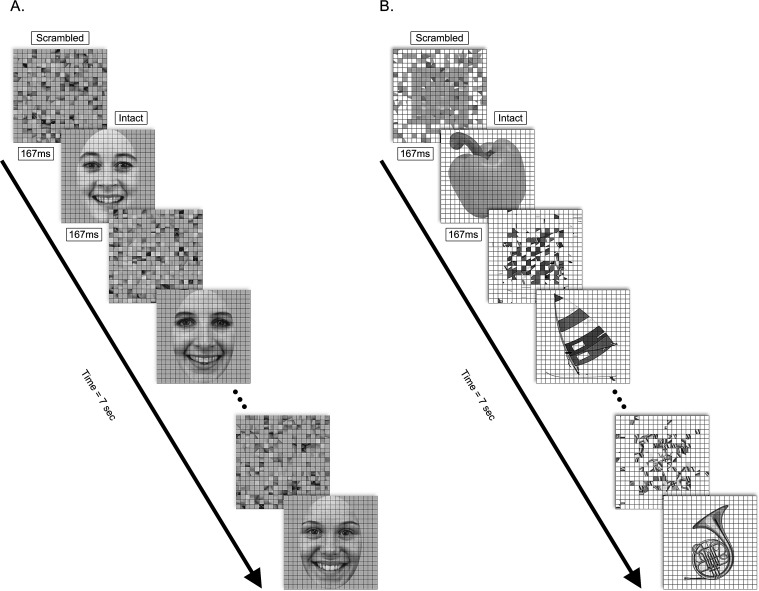
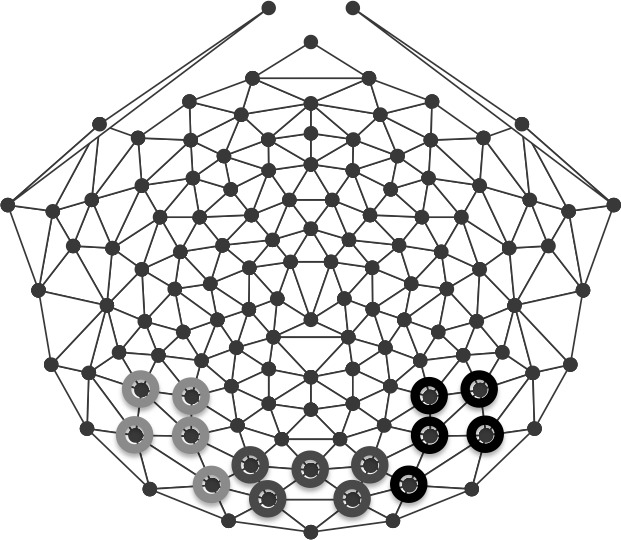
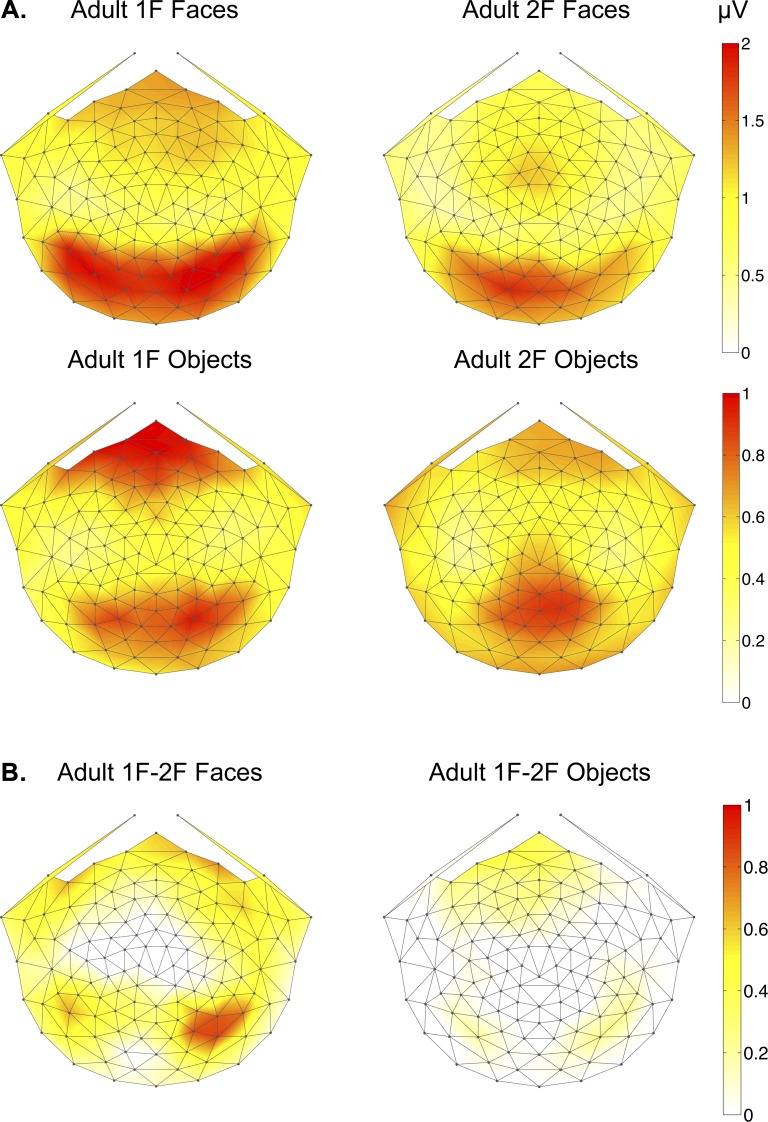
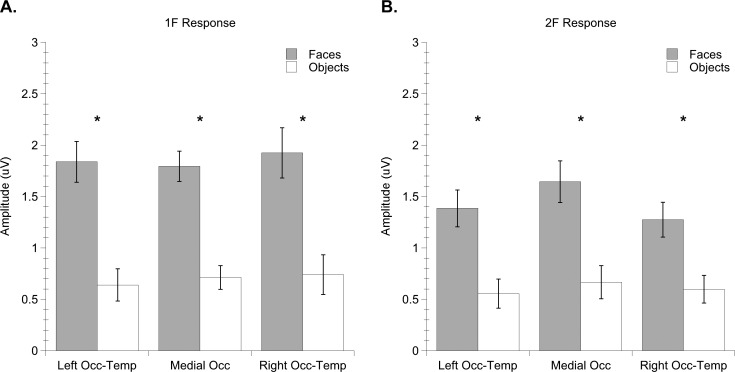
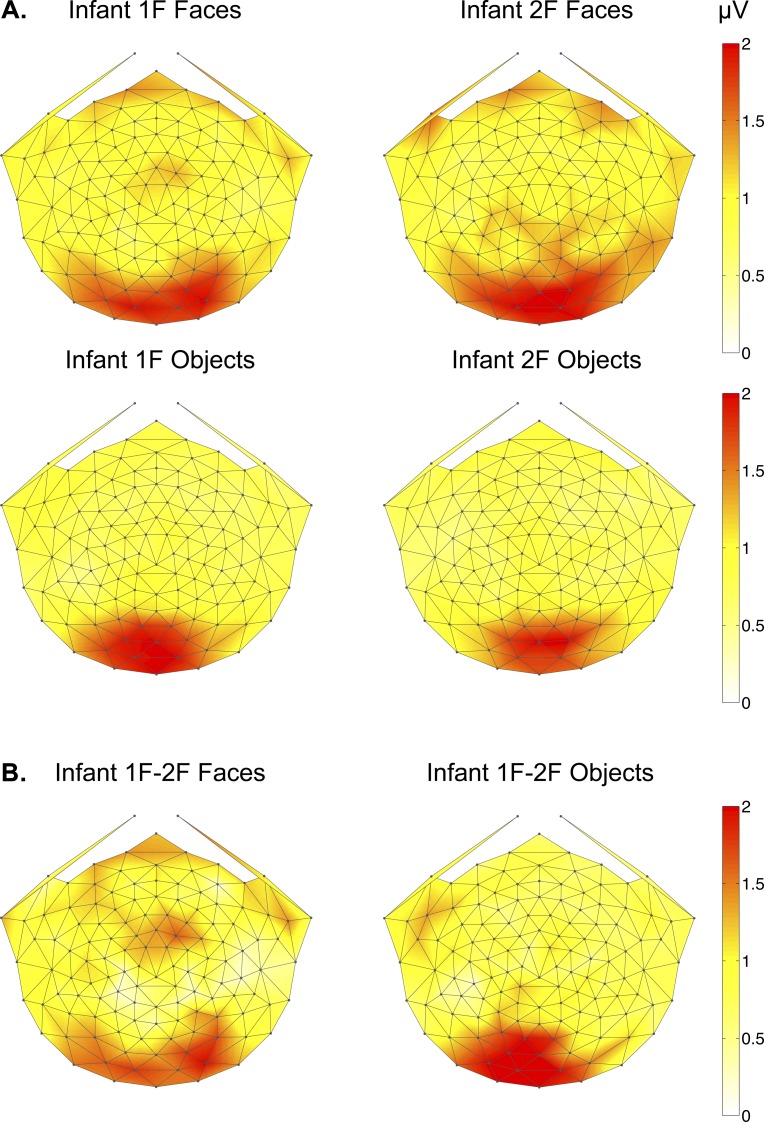
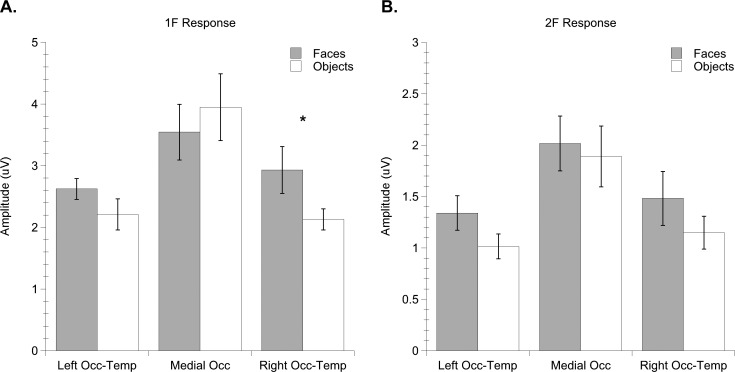
Integration of local elements into a coherent global form is a fundamental aspect of visual object recognition. How the different hierarchically organized stages of visual analysis develop in order to support object representation in infants remains unknown. The aim of this study was to investigate structural encoding of natural images in 4- to 6-month-old infants and adults. We used the steady-state visual evoked potential (ssVEP) technique to measure cortical responses specific to the global structure present in object and face images, and assessed whether differential responses were present for these image categories. This study is the first to apply the ssVEP method to high-level vision in infants. Infants and adults responded to the structural relations present in both image categories, and topographies of the responses differed based on image category. However, while adult responses to face and object structure were localized over occipitotemporal scalp areas, only infant face responses were distributed over temporal regions. Therefore, both infants and adults show object category specificity in their neural responses. The topography of the infant response distributions indicates that between 4 and 6 months of age, structure encoding of faces occurs at a higher level of processing than that of objects.
Figures
References
-
- Ales J. M., Norcia A. M. (2009). Assessing direction-specific adaptation using the steady-state visual evoked potential: Results from EEG source imaging. Journal of Vision , 9(7):8, 1–13, http://www.journalofvision.org/content/9/7/8, doi:10.1167/9.7.8 [PubMed] [Article] - PubMed
-
- Ales J. M., Farzin F., Rossion B., Norcia A. M. (2012). An objective method for measuring face detection thresholds using the sweep steady-state visual evoked response. Journal of Vision , 12(10):18, 1–18, http://www.journalofvision.org/content/12/10/18, doi:10.1167/12.10.18 [PubMed] [Article] - PMC - PubMed
Publication types
MeSH terms
Grants and funding
LinkOut - more resources
Full Text Sources