


Constitutively active 5-HT2/α1 receptors facilitate muscle spasms after human spinal cord injury
- PMID: 23221402
- PMCID: PMC3602940
- DOI: 10.1152/jn.00821.2012
Constitutively active 5-HT2/α1 receptors facilitate muscle spasms after human spinal cord injury
Abstract
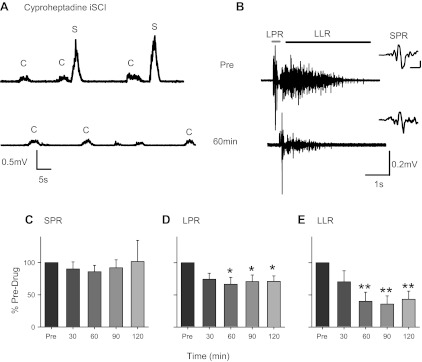
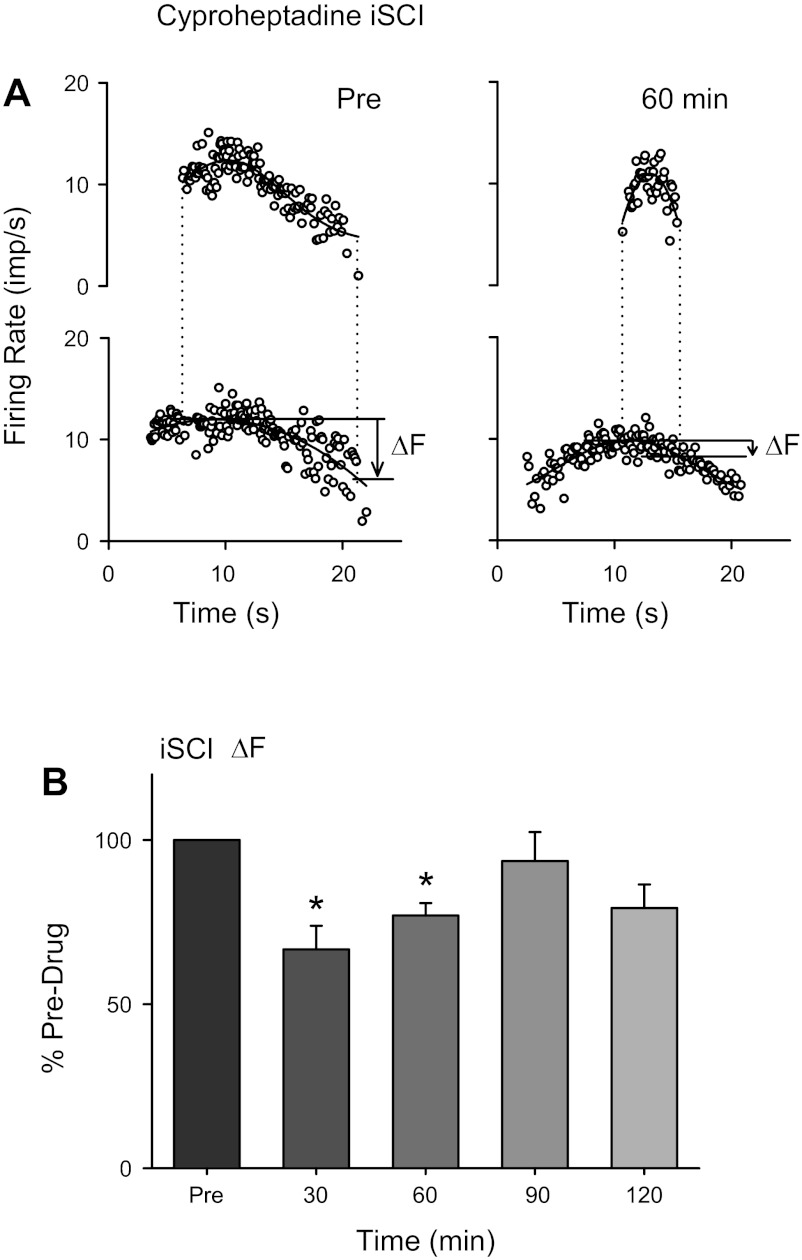
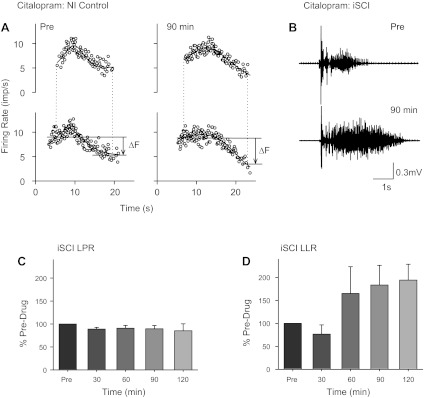
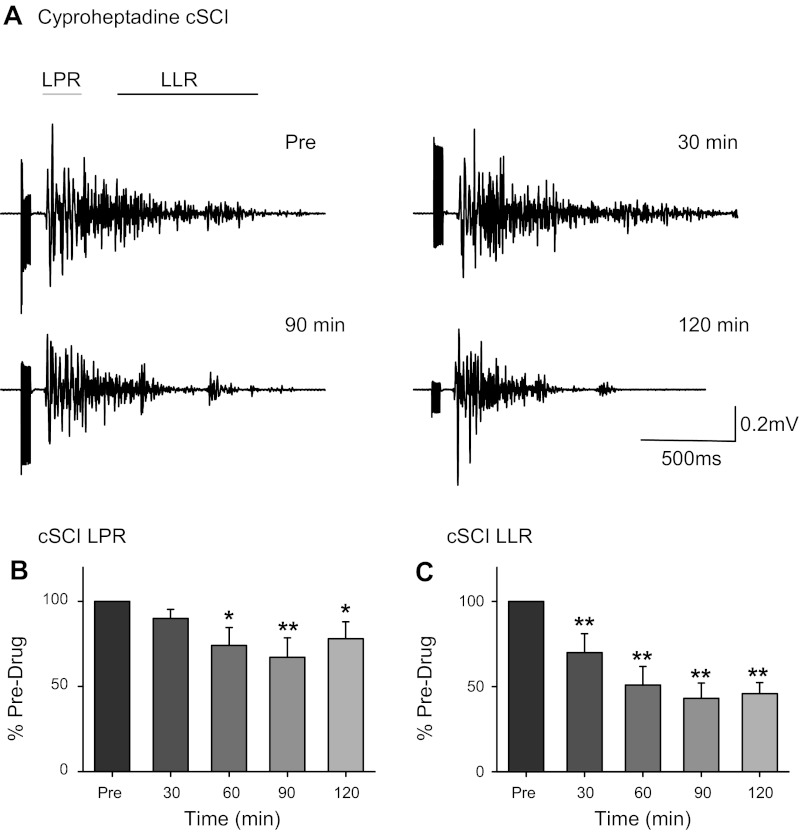
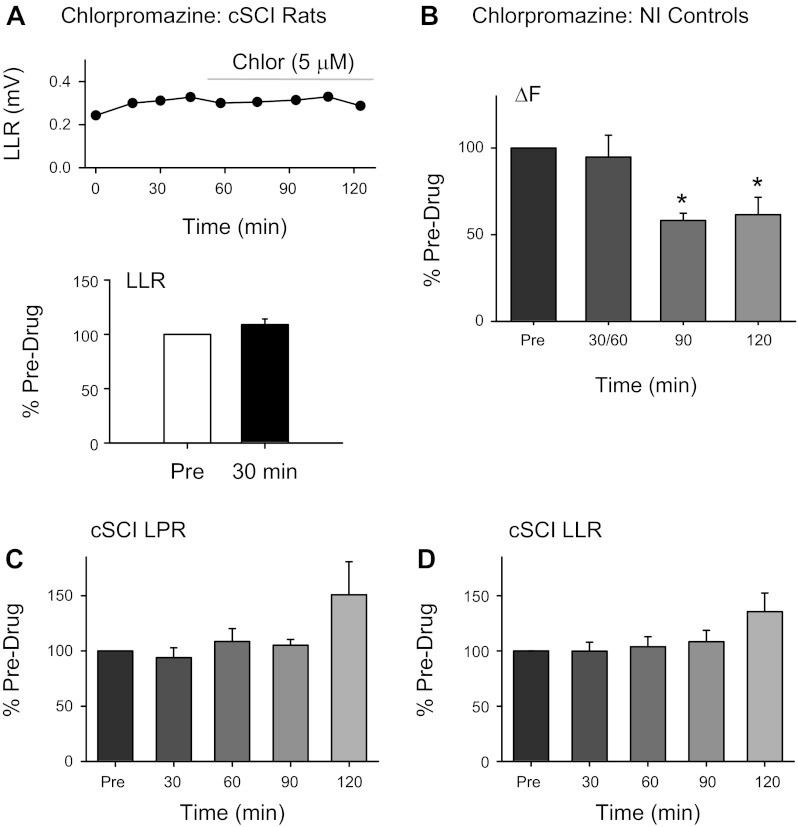
In animals, the recovery of motoneuron excitability in the months following a complete spinal cord injury is mediated, in part, by increases in constitutive serotonin (5-HT2) and norepinephrine (α1) receptor activity, which facilitates the reactivation of calcium-mediated persistent inward currents (CaPICs) without the ligands serotonin and norepinephrine below the injury. In this study we sought evidence for a similar role of constitutive monoamine receptor activity in the development of spasticity in human spinal cord injury. In chronically injured participants with partially preserved sensory and motor function, the serotonin reuptake inhibitor citalopram facilitated long-lasting reflex responses (spasms) previously shown to be mediated by CaPICs, suggesting that in incomplete spinal cord injury, functional descending sources of monoamines are present to activate monoamine receptors below the lesion. However, in participants with motor or motor/sensory complete injuries, the inverse agonist cyproheptadine, which blocks both ligand and constitutive 5-HT2/α1 receptor activity, decreased long-lasting reflexes, whereas the neutral antagonist chlorpromazine, which only blocks ligand activation of these receptors, had no effect. When tested in noninjured control participants having functional descending sources of monoamines, chlorpromazine was effective in reducing CaPIC-mediated motor unit activity. On the basis of these combined results, it appears that in severe spinal cord injury, facilitation of persistent inward currents and muscle spasms is mainly mediated by the activation of constitutive 5-HT2 and α1 receptor activity. Drugs that more selectively block these constitutively active monoamine receptors may provide better oral control of spasticity, especially in motor complete spinal cord injury where reducing motoneuron excitability is the primary goal.
Figures
References
-
- Baker LL, Chandler SH. Characterization of postsynaptic potentials evoked by sural nerve stimulation in hindlimb motoneurons from acute and chronic spinal cats. Brain Res 420: 340–350, 1987 - PubMed
-
- Barbeau H, Filion M, Bedard P. Effects of agonists and antagonists of serotonin on spontaneous hindlimb EMG activity in chronic spinal rats. Neuropharmacology 20: 99–107, 1981 - PubMed
-
- Basmajian JV, Szatmari A. Effect of Largactil (chlorpromazine) on human spasticity and electromyogram. Arch Neurol Psychiatry 73A: 224–231, 1955 - PubMed
-
- Bennett DJ, Li Y, Siu M. Plateau potentials in sacrocaudal motoneurons of chronic spinal rats, recorded in vitro. J Neurophysiol 86: 1955–1971, 2001 - PubMed
Publication types
MeSH terms
Substances
Grants and funding
LinkOut - more resources
Full Text Sources
Other Literature Sources
Medical
