


Feasibility and safety of ALVAC-HIV vCP1521 vaccine in HIV-exposed infants in Uganda: results from the first HIV vaccine trial in infants in Africa
- PMID: 23221981
- PMCID: PMC3625520
- DOI: 10.1097/QAI.0b013e31827f1c2d
Feasibility and safety of ALVAC-HIV vCP1521 vaccine in HIV-exposed infants in Uganda: results from the first HIV vaccine trial in infants in Africa
Abstract
Background: The development of a safe and effective vaccine against HIV type 1 for the prevention of mother-to-child transmission of HIV would significantly advance the goal of eliminating HIV infection in children. Safety and feasibility results from phase 1, randomized, double-blind, placebo-controlled trial of ALVAC-HIV vCP1521 in infants born to HIV type 1-infected women in Uganda are reported.
Methods: HIV-exposed infants were enrolled at birth and randomized (4:1) to receive vaccine or saline placebo intramuscular injections at birth, 4, 8, and 12 weeks of age. Vaccine reactogenicity was assessed at vaccination and days 1 and 2 postvaccination. Infants were followed until 24 months of age. HIV infection status was determined by HIV DNA polymerase chain reaction.
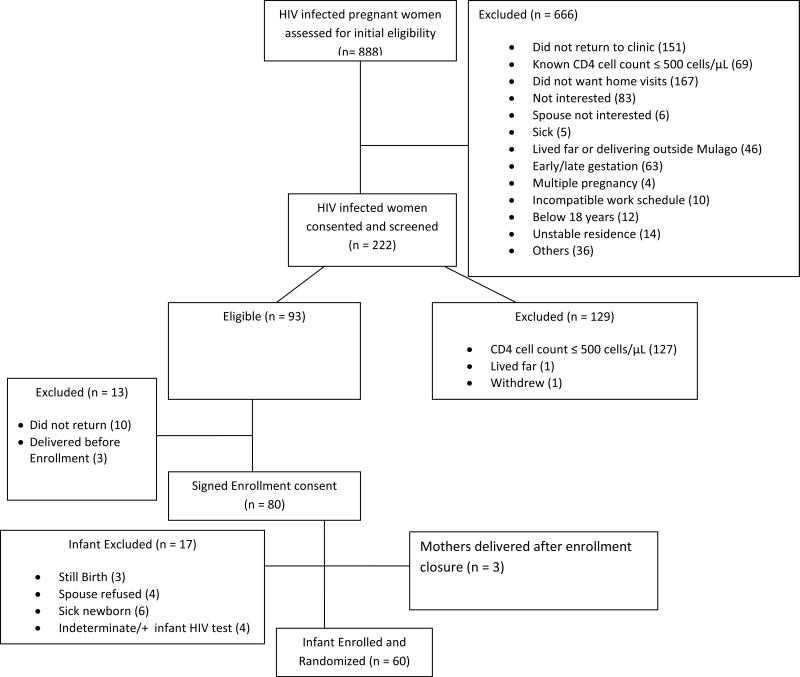
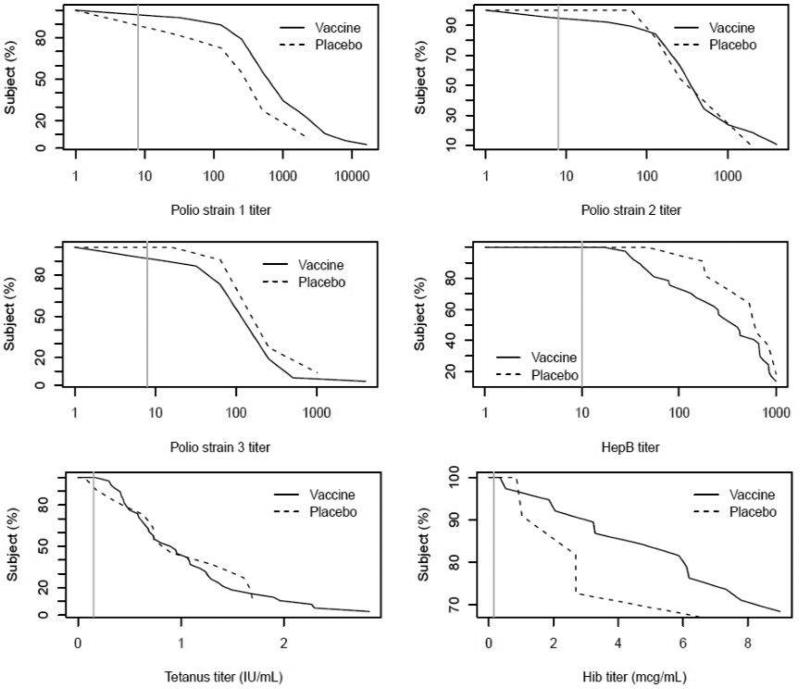
Results: From October 2006 to May 2007, 60 infants (48 vaccine and 12 placebo) were enrolled with 98% retention at 24 months. One infant was withdrawn, but there were no missed visits or vaccinations among the 59 infants retained. Immune responses elicited by diphtheria, polio, hepatitis B, haemophilus influenzae type B, and measles vaccination were similar in the 2 arms. The vaccine was well tolerated with no severe or life-threatening reactogenicity events. Adverse events were equally distributed across both study arms. Four infants were diagnosed as HIV infected [3 at birth (2 vaccine and 1 placebo) and 1 in vaccine arm at 2 weeks of age].
Conclusion: The ALVAC-HIV vCP1521 vaccination was feasible and safe in infants born to HIV-infected women in Uganda. The conduct of high-quality infant HIV vaccine trials is achievable in Africa.
Trial registration: ClinicalTrials.gov NCT00098163.
Figures
References
-
- UNAIDS UNAIDS Report on the global AIDS epidemic 2010. 2010.
-
- Kourtis AP, Jamieson DJ, de Vincenzi I, et al. Prevention of human immunodeficiency virus-1 transmission to the infant through breastfeeding: new developments. American journal of obstetrics and gynecology. 2007 Sep;197(3 Suppl):S113–122. - PubMed
-
- Coutsoudis A, Dabis F, Fawzi W, et al. Late postnatal transmission of HIV-1 in breast-fed children: an individual patient data meta-analysis. The Journal of infectious diseases. 2004 Jun 15;189(12):2154–2166. - PubMed
-
- WHO Collaborative Study Team on the Role of Breastfeeding on the Prevention of Infant Mortality Effect of breastfeeding on infant and child mortality due to infectious diseases in less developed countries: a pooled analysis. Lancet. 2000 Feb 5;355(9202):451–455. - PubMed
-
- Smith MM, Kuhn L. Exclusive breast-feeding: does it have the potential to reduce breast-feeding transmission of HIV-1? Nutrition reviews. 2000 Nov;58(11):333–340. - PubMed
Publication types
MeSH terms
Substances
Associated data
Grants and funding
LinkOut - more resources
Full Text Sources
Other Literature Sources
Medical
