


Telomere length reflects phenotypic quality and costs of reproduction in a long-lived seabird
- PMID: 23222450
- PMCID: PMC3574312
- DOI: 10.1098/rspb.2012.2540
Telomere length reflects phenotypic quality and costs of reproduction in a long-lived seabird
Abstract
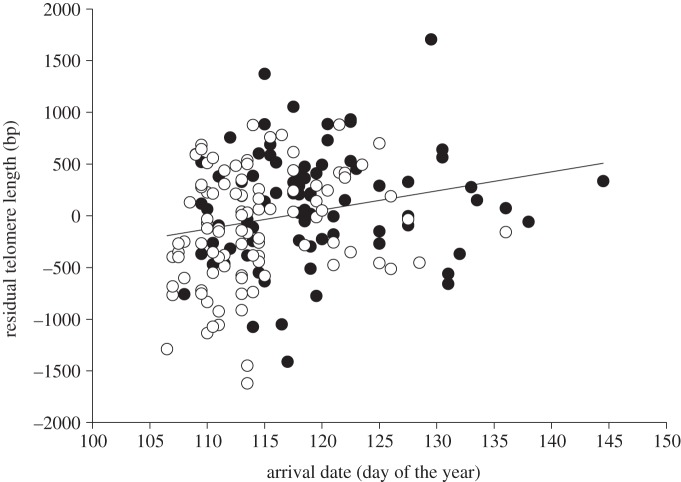
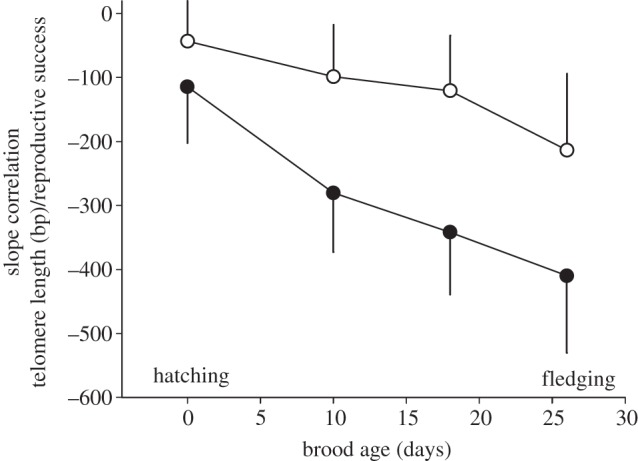
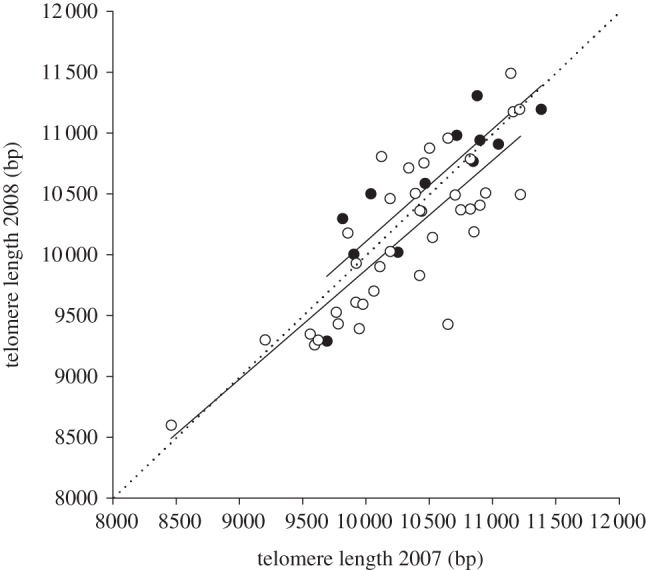
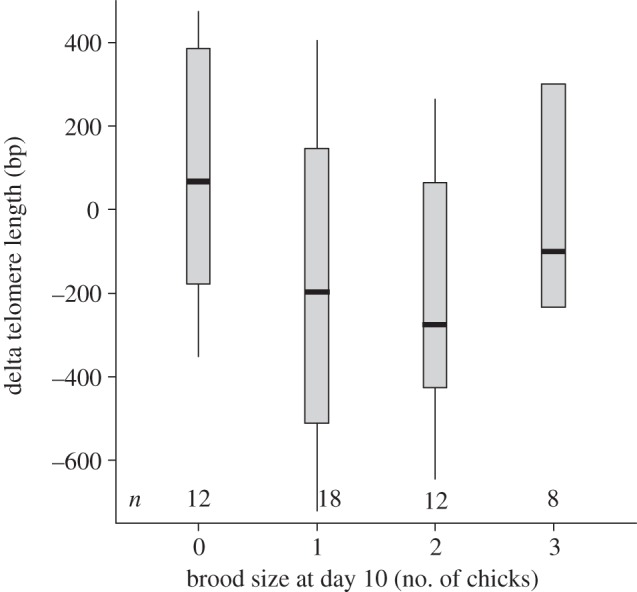
Telomere length is associated with cellular senescence, lifestyle and ageing. Short telomeres indicate poor health in humans and reduced life expectancy in several bird species, but little is known about telomeres in relation to phenotypic quality in wild animals. We investigated telomere lengths in erythrocytes of known-age common terns (Sterna hirundo), a migratory seabird, in relation to arrival date and reproductive performance. Cross-sectional data revealed that, independent of age, individuals with short telomeres performed better: they arrived and reproduced earlier in the season and had more chicks in the nest. The latter effect was stronger the older the brood and stronger in males, which do most of the chick provisioning. Longitudinal data confirmed this pattern: compared with birds that lost their brood, birds that raised chicks beyond the 10th nestling day experienced higher telomere attrition from one year to the next. However, more detailed analysis revealed that the least and most successful individuals lost the fewest base pairs compared with birds with intermediate success. Our results suggest that reproductive success is achieved at the expense of telomeres, but that individual heterogeneity in susceptibility to such detrimental effects is important, as indicated by low telomere loss in the most successful birds.
Figures
References
-
- Blackburn EH. 1991. Structure and function of telomeres. Nature 350, 569–57310.1038/350569a0 (doi:10.1038/350569a0) - DOI - DOI - PubMed
-
- Cawthon RM, Smith KR, O'Brien E, Sivatchenko A, Kerber RA. 2003. Association between telomere length in blood and mortality in people aged 60 years or older. Lancet 361, 393–39510.1016/S0140-6736(03)12384-7 (doi:10.1016/S0140-6736(03)12384-7) - DOI - DOI - PubMed
-
- Chang S, Multani AS, Cabrera NG, Naylor ML, Laud P, Lombard D, Pathak S, Guarente L, DePinho RA. 2004. Essential role of limiting telomeres in the pathogenesis of Werner syndrome. Nat. Genet. 36, 877–88210.1038/ng1389 (doi:10.1038/ng1389) - DOI - DOI - PubMed
-
- Hofer AC, Tran RT, Aziz OZ, Wright W, Novelli G, Shay J, Lewis M. 2005. Shared phenotypes among segmental progeroid syndromes suggest underlying pathways of aging. J. Gerontol. A Biol. Sci. Med. Sci. 60, 10–2010.1093/gerona/60.1.10 (doi:10.1093/gerona/60.1.10) - DOI - DOI - PubMed
-
- Monaghan P. 2010. Telomeres and life histories: the long and the short of it. Ann. NY Acad. Sci. 1206, 130–14210.1111/j.1749-6632.2010.05705.x (doi:10.1111/j.1749-6632.2010.05705.x) - DOI - DOI - PubMed
Publication types
MeSH terms
Substances
LinkOut - more resources
Full Text Sources
Other Literature Sources
