. 2013 Feb;195(4):844-54.
doi: 10.1128/JB.01492-12. Epub 2012 Dec 7.

Proline-dependent regulation of Clostridium difficile Stickland metabolism

Affiliations

Proline-dependent regulation of Clostridium difficile Stickland metabolism

Laurent Bouillaut et al. J Bacteriol. 2013 Feb.

Abstract

Clostridium difficile, a proteolytic Gram-positive anaerobe, has emerged as a significant nosocomial pathogen. Stickland fermentation reactions are thought to be important for growth of C. difficile and appear to influence toxin production. In Stickland reactions, pairs of amino acids donate and accept electrons, generating ATP and reducing power in the process. Reduction of the electron acceptors proline and glycine requires the d-proline reductase (PR) and the glycine reductase (GR) enzyme complexes, respectively. Addition of proline in the medium increases the level of PR protein but decreases the level of GR. We report the identification of PrdR, a protein that activates transcription of the PR-encoding genes in the presence of proline and negatively regulates the GR-encoding genes. The results suggest that PrdR is a central metabolism regulator that controls preferential utilization of proline and glycine to produce energy via the Stickland reactions.


Figures
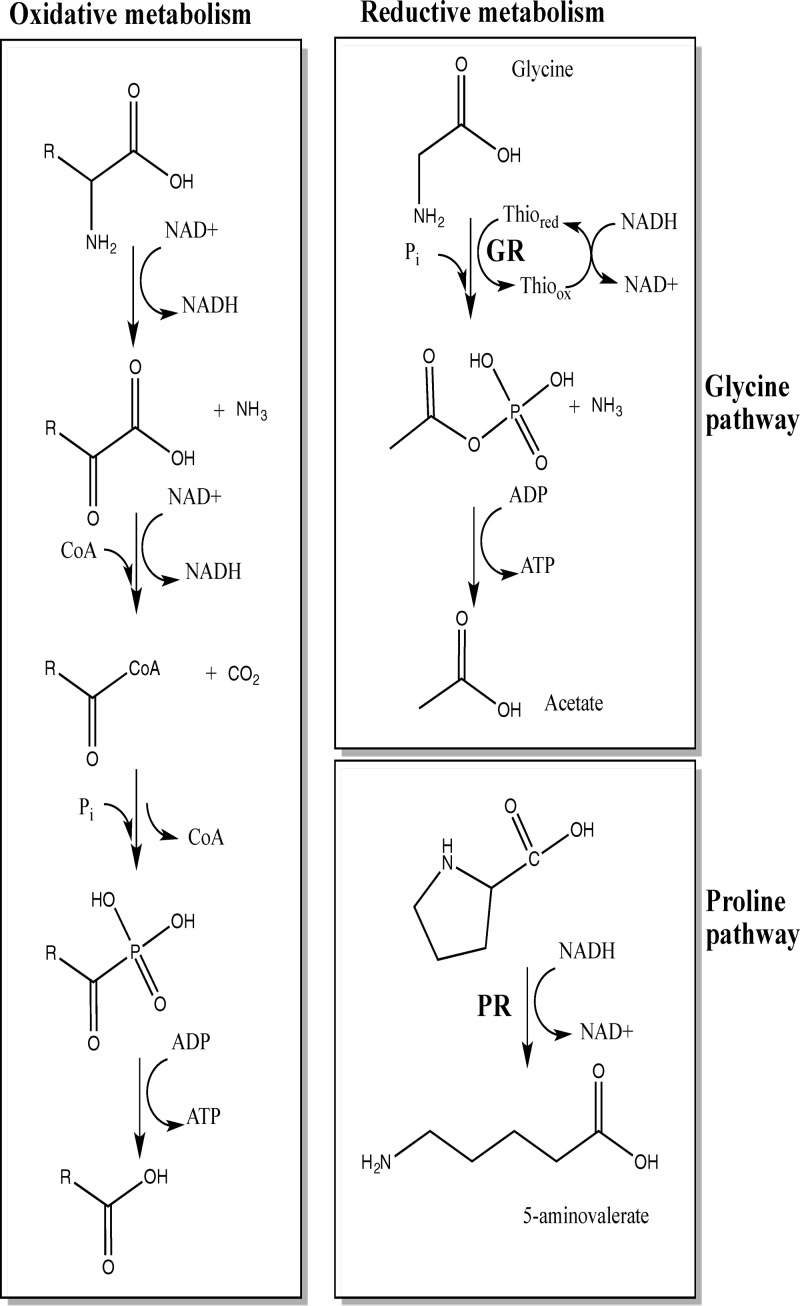
Fig 1
Fig 1
Overview of Stickland metabolism. Stickland reactions couple oxidation and reduction of amino acid pairs. d-Proline reductase catalyzes the reductive cleavage of the d-proline ring to yield δ-aminovaleric acid. Glycine reductase catalyzes the reductive deamination of glycine to acetyl phosphate to generate ATP via substrate-level phosphorylation through acetate kinase.
Fig 2
Fig 2
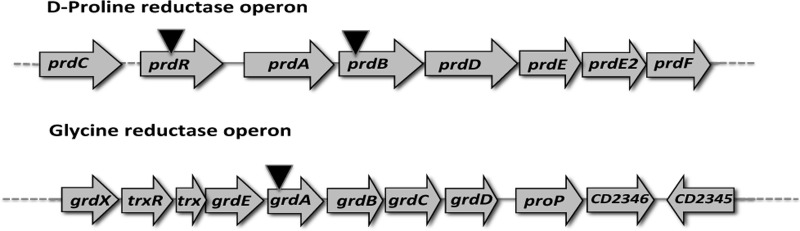
Organization of the d-proline reductase and glycine reductase gene clusters. Arrows indicate the locations of group II intron insertions in various mutant strains. The coordinates refer to the positions of the gene clusters in the genome of C. difficile strain 630.
Fig 3
Fig 3
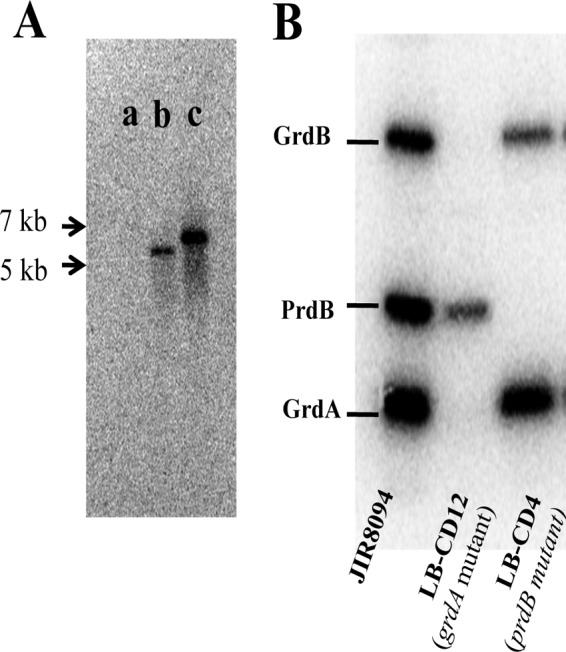
Mutant characterization. (A) Southern blot analysis of HindIII-digested genomic DNA from wild-type (JIR8094) (a), prdB mutant (LB-CD4) (b), and grdA mutant (LB-CD12) (c) strains with an intron probe. (B) Radiolabeling (75Se) of C. difficile wild-type and mutant strains. Wild-type (JIR8094), grdA mutant (LB-CD12), and prdB mutant (LB-CD4) strains were grown in TY medium with 75Se (4 μCi) for 24 h, harvested, and lysed by sonication. The extracts were subjected to SDS-15% polyacrylamide gel electrophoresis.
Fig 4
Fig 4
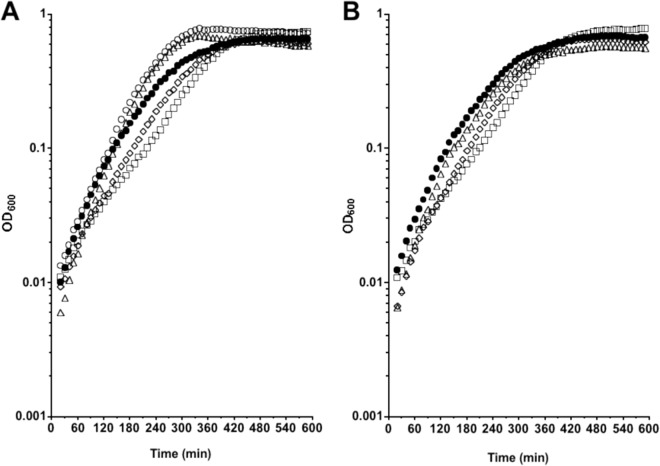
Growth of C. difficile wild-type and mutant strains supplemented with l-proline or glycine. C. difficile wild-type (JIR8094 [○]), LB-CD4 (prdB::ermB [◇]), and LB-CD12 (grdA::ermB [△]) strains were grown in TY medium alone or supplemented with 30 mM l-proline (A) or 30 mM glycine (B). The C. difficile wild type (JIR8094 [●]) was grown in TY medium alone. Cultures were grown anaerobically in a microtiter plate format at 37°C, and OD600 measurements were taken every 10 min using a plate reader (Bio-Tek).
Fig 5
Fig 5
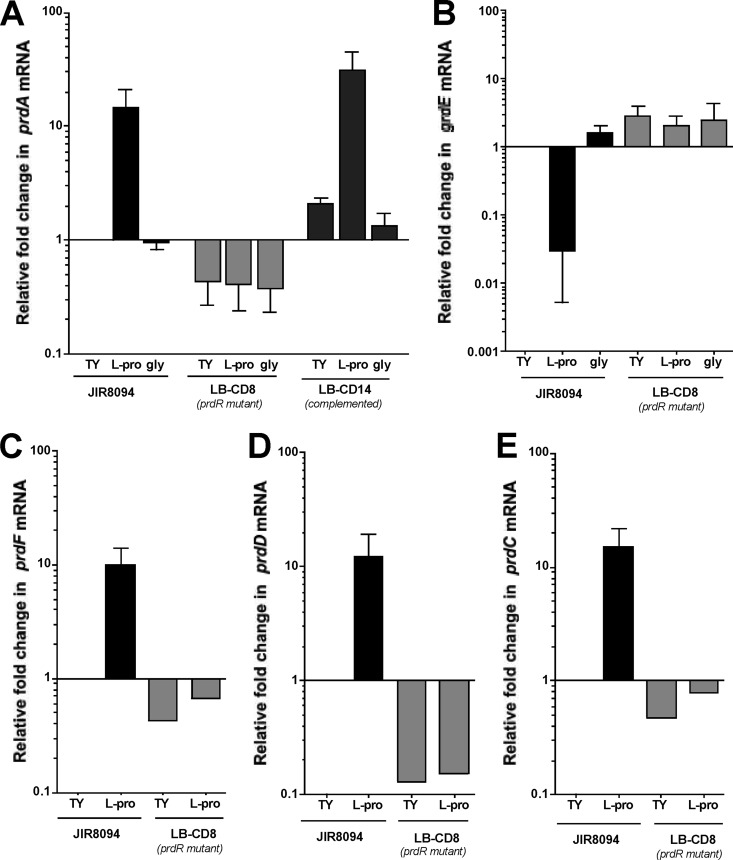
Expression of the prd and grd genes of wild-type and prdR mutant strains in the presence of l-proline or glycine. C. difficile wild-type (JIR8094), LB-CD8 (prdR::ermB), and LB-CD14 (prdR::ermB, prdR+) strains were grown to mid-exponential phase in TY medium alone or supplemented with 30 mM l-proline or 30 mM glycine. RNA was harvested, cDNA was synthesized, and qPCR was performed using gene-specific primers for prdA (A), grdE (B), prdF (C), prdD (D), and prdC (E). Results were normalized to an internal control gene (rpoC) and are presented as the ratio of each transcript level to that of wild-type cells grown in TY medium. The means and standard deviations of at least three biological replicates, each assayed in triplicate, are shown, with the exception of LB-CD8 samples in panels C, D, and E, for which data were obtained from a single biological replicate performed in triplicate.
Fig 6
Fig 6
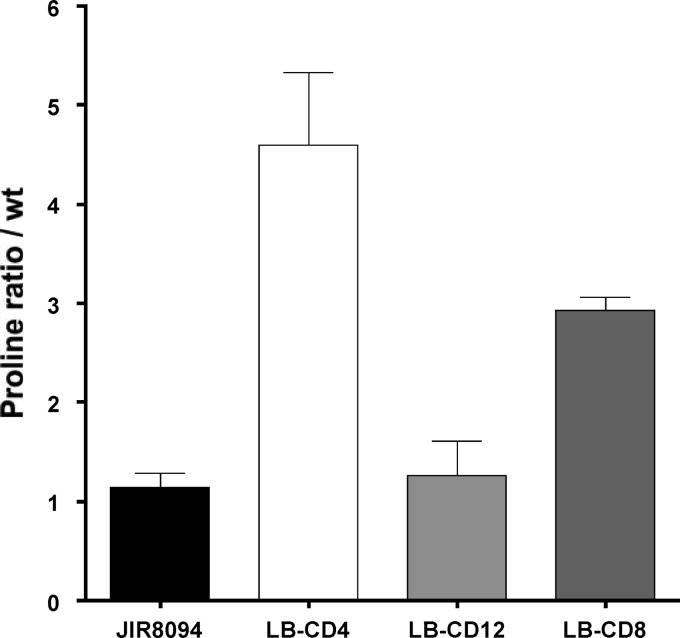
Analysis of proline content in C. difficile cells. Extracts from C. difficile wild-type (JIR8094), LB-CD4 (prdA::ermB), LB-CD12 (grdA::ermB), and LB-CD8 (prdR::ermB) strains harvested after growth to mid-exponential phase in TY medium were assayed for free proline using a published procedure (48), and the results were expressed relative to those for the wild-type strain. Results represent the means and standard deviations of three biological replicates.
Fig 7
Fig 7
Expression of the prdA and grdE genes of wild-type and mutant strains in the presence of l-proline or glycine. C. difficile wild-type (JIR8094), LB-CD4 (prdB::ermB), and LB-CD12 (grdA::ermB) strains were grown to mid-exponential phase in TY medium alone or supplemented with 30 mM l-proline or 30 mM glycine. RNA was harvested, cDNA was synthesized, and qPCR was performed using gene-specific primers for prdA (A) and grdE (B). Results were normalized to an internal control gene (rpoC) and are presented as the ratio of each transcript level to that of wild-type cells grown in BHIS. The means and standard deviations of at least three biological replicates, each assayed in triplicate, are shown.
Fig 8
Fig 8
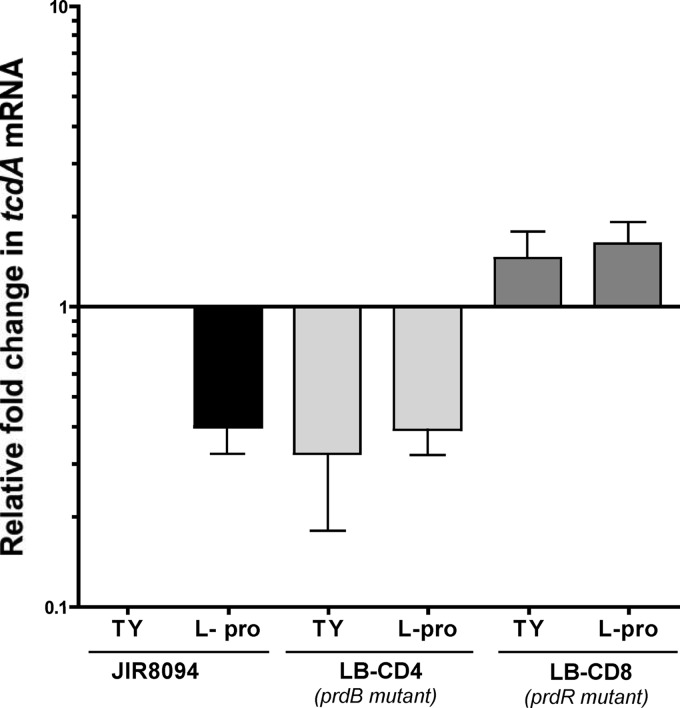
Expression of the tcdA gene of wild-type and mutant strains in the presence of l-proline. C. difficile wild-type (JIR8094), LB-CD4 (prdB::ermB), and LB-CD8 (prdR::ermB) strains were grown for 7 h to stationary phase in TY medium alone or supplemented with 30 mM l-proline. RNA was harvested, cDNA was synthesized, and qPCR was performed using gene-specific primers for tcdA. Results were normalized to an internal control gene (rpoC) and are presented as the ratio of each transcript level to that of wild-type cells grown in TY medium. The means and standard deviations of biological replicates are shown.

References

    1. Lyerly DM, Krivan HC, Wilkins TD. 1988. Clostridium difficile: its disease and toxins. Clin. Microbiol. Rev. 1:1–18 - PMC - PubMed
    1. Johnson S, Clabots CR, Linn FV, Olson MM, Peterson LR, Gerding DN. 1990. Nosocomial Clostridium difficile colonisation and disease. Lancet 336:97–100 - PubMed
    1. Pépin J, Valiquette L, Alary ME, Villemure P, Pelletier A, Forget K, Pepin K, Chouinard D. 2004. Clostridium difficile-associated diarrhea in a region of Quebec from 1991 to 2003: a changing pattern of disease severity. CMAJ 171:466–472 - PMC - PubMed
    1. Kelly CP, LaMont JT. 2008. Clostridium difficile—more difficult than ever. N. Engl. J. Med. 359:1932–1940 - PubMed
    1. Warny M, Pepin J, Fang A, Killgore G, Thompson A, Brazier J, Frost E, McDonald LC. 2005. Toxin production by an emerging strain of Clostridium difficile associated with outbreaks of severe disease in North America and Europe. Lancet 366:1079–1084 - PubMed

Publication types

MeSH terms

LinkOut - more resources