


Strategies used and data obtained during treatment fidelity monitoring
- PMID: 23222844
- PMCID: PMC3523275
- DOI: 10.1097/NNR.0b013e31827614fd
Strategies used and data obtained during treatment fidelity monitoring
Abstract
Background: Treatment fidelity, also called intervention fidelity, is an important component of testing treatment efficacy. Although examples of strategies needed to address treatment fidelity have been provided in several published reports, data describing variations that might compromise efficacy testing have been omitted.
Objectives: The aim of this study is to describe treatment fidelity monitoring strategies and data within the context of a nursing clinical trial.
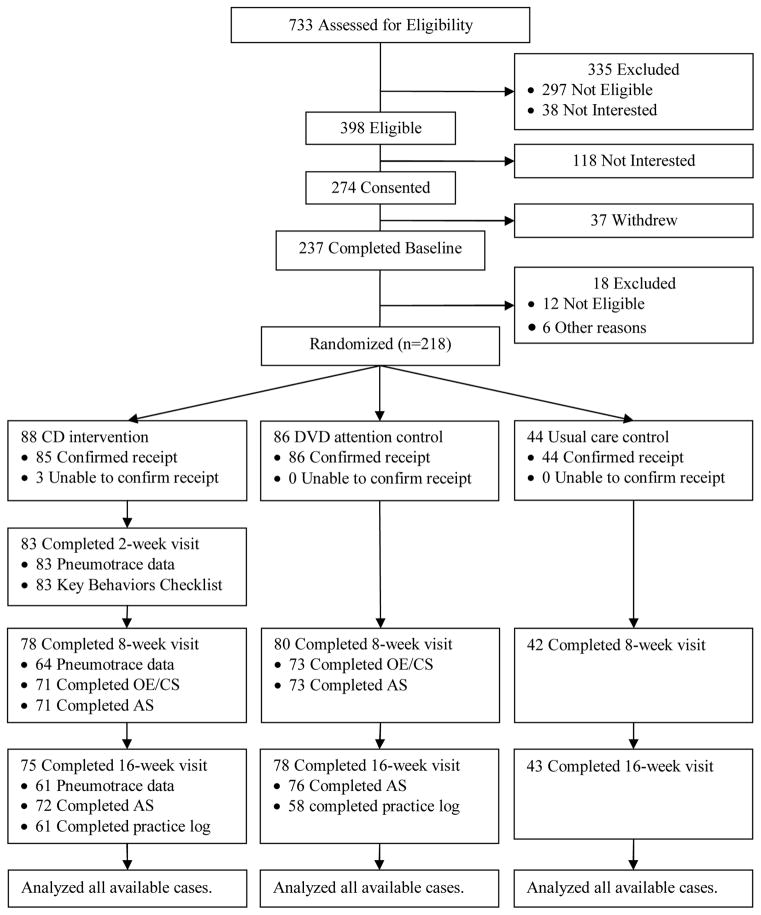
Methods: A three-group, randomized, controlled trial compared intervention (paced respiration) to attention control (fast, shallow breathing) to usual care for management of hot flashes and other menopausal symptoms. Data from both staff and participants were collected to assess treatment fidelity.
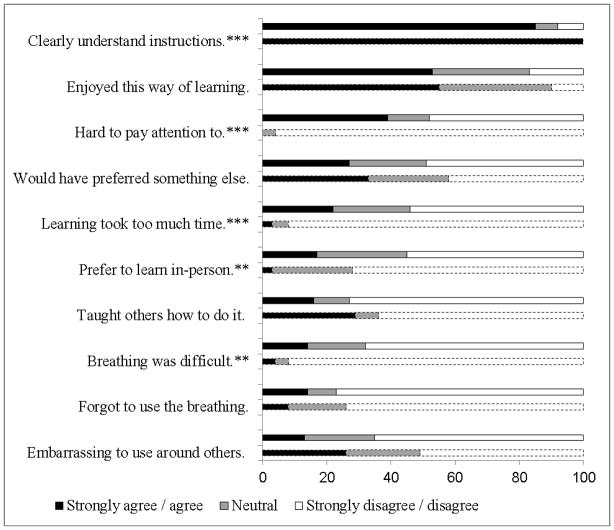
Results: Staff measures for treatment delivery indicated good adherence to protocols. Participant ratings of expectancy and credibility were not statistically different between intervention and attention control; however, the attention control was significantly more acceptable (p < .05). Intervention participant data indicated good treatment receipt and enactment with mean breath rates at each time point falling within the target range. Practice log data for both intervention and attention control indicated lower adherence of once-daily rather than twice-daily practice.
Discussion: Despite strengths in fidelity monitoring, some challenges were identified that have implications for other similar intervention studies.
Figures
References
-
- Bellg AJ, Borrelli B, Resnick B, Hecht J, Minicucci DS, Ory M, Czajkowski S. Enhancing treatment fidelity in health behavior change studies: Best practices and recommendations from the NIH Behavior Change Consortium. Health Psychology. 2004;23:443–451. - PubMed
-
- Borkovec TD, Nau SD. Credibility of analogue therapy rationales. Journal of Behavior Therapy and Experimental Psychiatry. 1972;3:257–260.
-
- Borrelli B, Sepinwall D, Ernst D, Bellg AJ, Czajkowski S, Breger R, Orwig D. A new tool to assess treatment fidelity and evaluation of treatment fidelity across 10 years of health behavior research. Journal of Consulting and Clinical Psychology. 2005;73:852–860. - PubMed
-
- Carpenter JS, Neal JG, Payne J, Kimmick G, Storniolo AM. Cognitive-behavioral intervention for hot flashes. Oncology Nursing Forum. 2007;34:37. - PubMed
Publication types
MeSH terms
Grants and funding
LinkOut - more resources
Full Text Sources
Other Literature Sources
