


Mapping a research agenda for the science of team science
- PMID: 23223093
- PMCID: PMC3513779
- DOI: 10.3152/095820211X12941371876580
Mapping a research agenda for the science of team science
Abstract
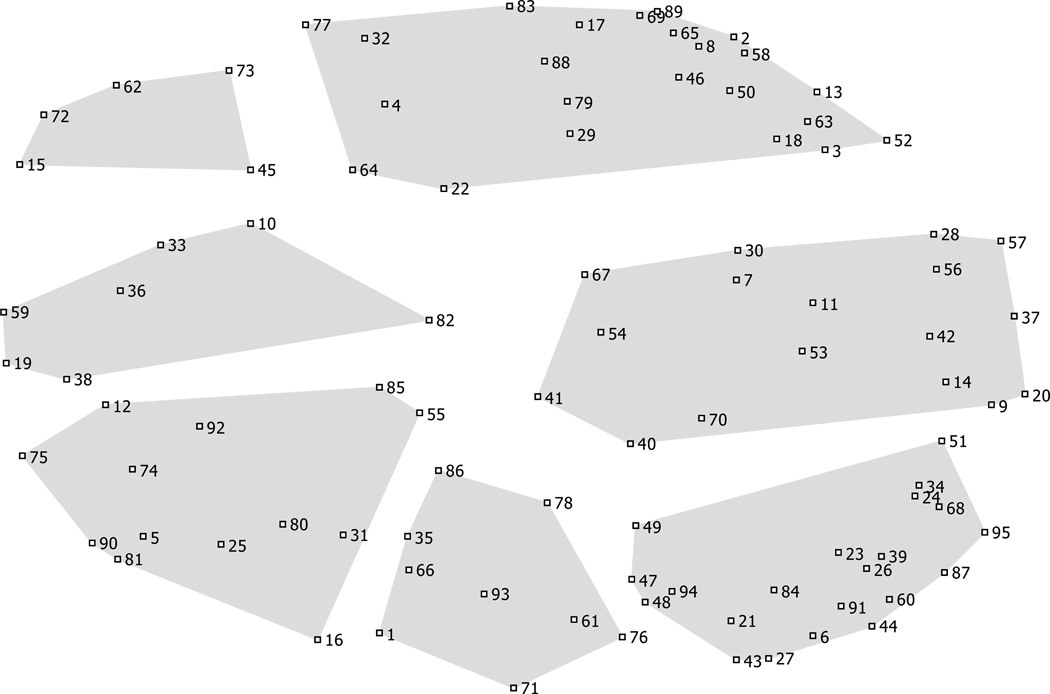
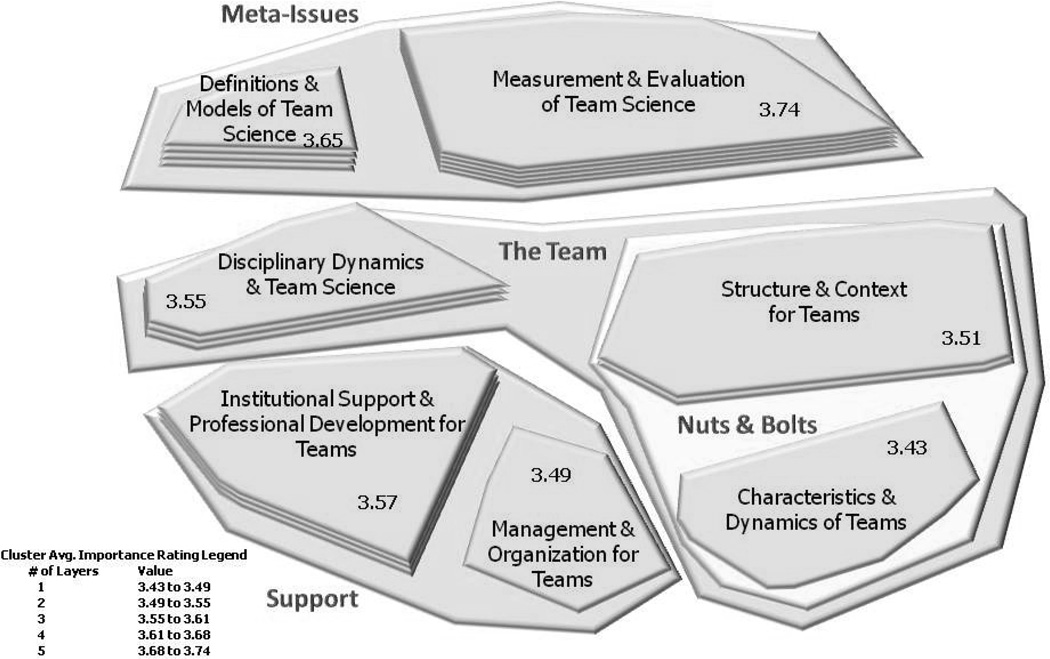
An increase in cross-disciplinary, collaborative team science initiatives over the last few decades has spurred interest by multiple stakeholder groups in empirical research on scientific teams, giving rise to an emergent field referred to as the science of team science (SciTS). This study employed a collaborative team science concept-mapping evaluation methodology to develop a comprehensive research agenda for the SciTS field. Its integrative mixed-methods approach combined group process with statistical analysis to derive a conceptual framework that identifies research areas of team science and their relative importance to the emerging SciTS field. The findings from this concept-mapping project constitute a lever for moving SciTS forward at theoretical, empirical, and translational levels.
Figures
References
-
- Aboelela SW, Merrill JA, Carley KM, Larson E. Social network analysis to evaluate an interdisciplinary research center. Journal of Research Administration. 2007;38:97–108.
-
- Adamopoulos J. The perception of interpersonal-behavior: dimensionality and importance of the social-environment. Environment and Behavior. 1982;14:29–44.
-
- Adler NE, Stewart J. Using team science to address health disparities: MacArthur network as case example. Annals of the New York Academy of Sciences. 2010;1186:252–260. - PubMed
-
- Anderberg MR. Cluster Analysis for Applications. New York, NY: Academic Press; 1973.
