


Determinants of hepatitis C virus treatment completion and efficacy in drug users assessed by meta-analysis
- PMID: 23223596
- PMCID: PMC3582354
- DOI: 10.1093/cid/cis1007
Determinants of hepatitis C virus treatment completion and efficacy in drug users assessed by meta-analysis
Abstract
Background: Hepatitis C virus (HCV)-infected drug users (DUs) have largely been excluded from HCV care. We conducted a systematic review and meta-analysis of the literature on treatment completion and sustained virologic response (SVR) rates in DUs. We assessed the effects of different treatment approaches and services to promote HCV care among DUs as well as demographic and viral characteristics.
Methods: Studies of at least 10 DUs treated with pegylated interferon/ribavirin that reported SVR were analyzed. Heterogeneity was assessed (Cochran test) and investigated (meta-regression), and pooled rates were estimated (random effects).
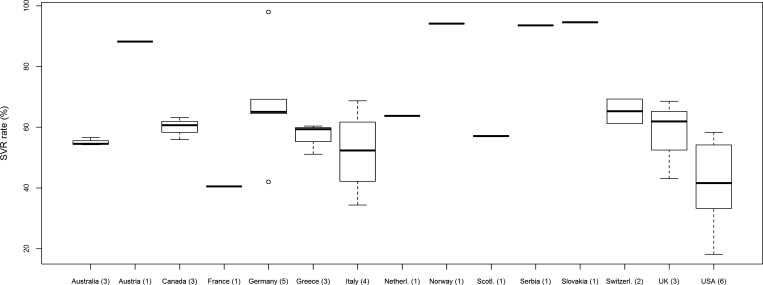
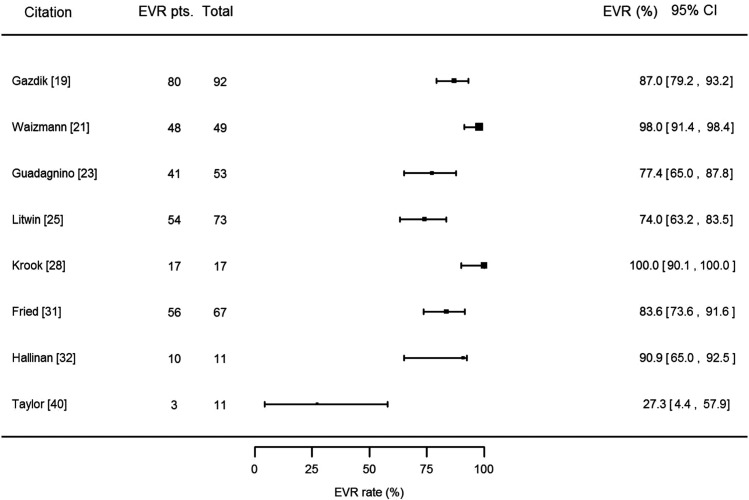
Results: Thirty-six studies comprising 2866 patients were retrieved. The treatment completion rate among DUs was 83.4% (95% confidence interval [CI], 77.1%-88.9%). Among studies that included addiction-treated and untreated patients during HCV therapy, the higher the proportion of addiction-treated patients, the higher the HCV treatment completion rate (P < .0001). After adjusting for human immunodeficiency virus (HIV)/HCV coinfection, sex, and treatment of addiction, support services during antiviral therapy increased treatment completion (P < .0001). The pooled SVR rate was 55.5% (95% CI, 50.6%-60.3%). Genotype 1/4 (P = .0012) and the proportion of HIV-coinfected DUs (P = .0173) influenced the SVR rate. After adjusting for HCV genotype 1/4 and HIV/HCV coinfection, the SVR rate was positively correlated with involvement of a multidisciplinary team (P < .0001).
Conclusions: Treatment of addiction during HCV therapy results in higher treatment completion. Our pooled SVR rate is similar to that obtained in registration trials in the general population. Treatment of addiction during HCV therapy will likely be important for HCV-infected DUs undergoing treatment with more complex regimens including direct-acting antivirals.
Figures
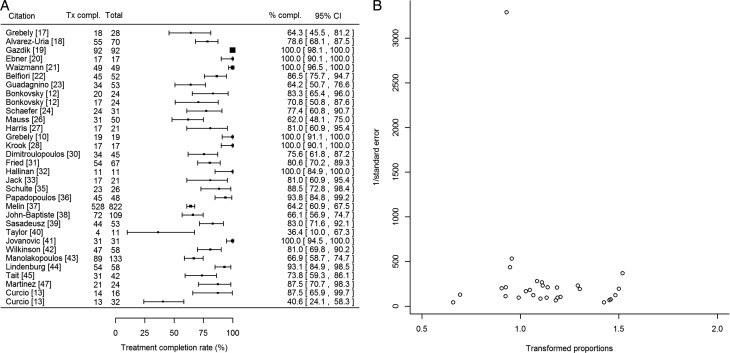
 . Abbreviation: CI, confidence interval.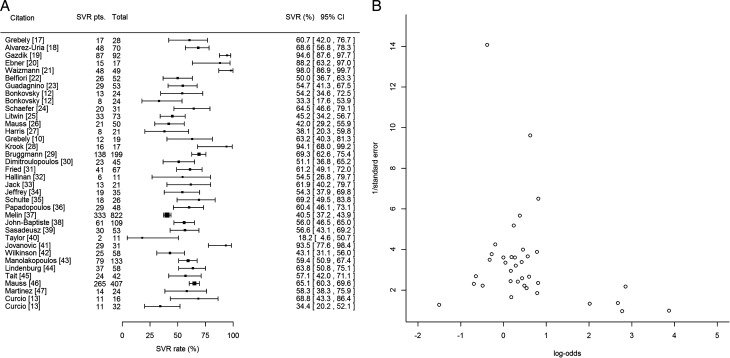
References
-
- Chak E, Talal AH, Sherman KE, Schiff ER, Saab S. Hepatitis C virus infection in USA: an estimate of true prevalence. Liver Int. 2011;31:1090–101. - PubMed
-
- Afdhal NH. The natural history of hepatitis C. Semin Liver Dis. 2004;24(suppl 2):3–8. - PubMed
-
- Manns MP, McHutchison JG, Gordon SC, et al. Peginterferon alfa-2b plus ribavirin compared with interferon alfa-2b plus ribavirin for initial treatment of chronic hepatitis C: a randomised trial. Lancet. 2001;358:958–65. - PubMed
-
- Fried MW, Shiffman ML, Reddy KR, et al. Peginterferon alfa-2a plus ribavirin for chronic hepatitis C virus infection. N Engl J Med. 2002;347:975–82. - PubMed
Publication types
MeSH terms
Substances
Grants and funding
LinkOut - more resources
Full Text Sources
Other Literature Sources
Medical
