


Mortality of IgA nephropathy patients: a single center experience over 30 years
- PMID: 23226568
- PMCID: PMC3514188
- DOI: 10.1371/journal.pone.0051225
Mortality of IgA nephropathy patients: a single center experience over 30 years
Abstract
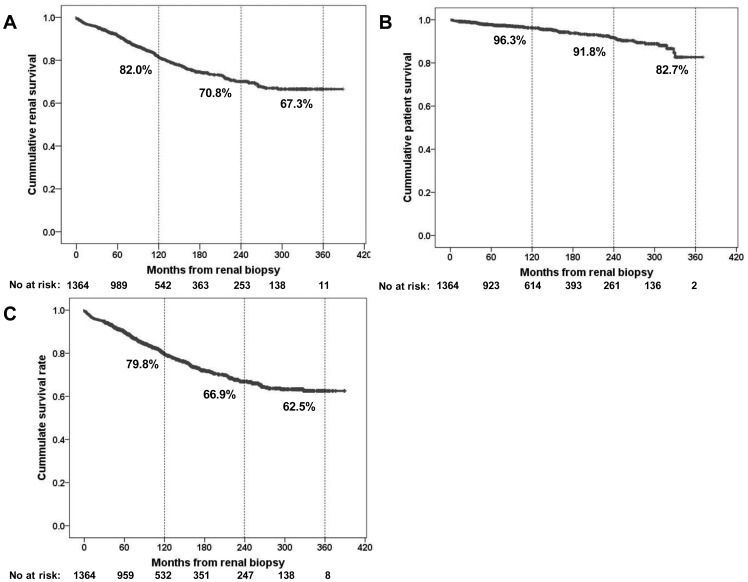
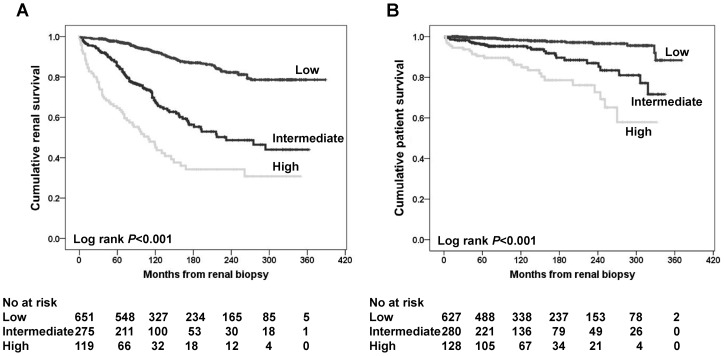
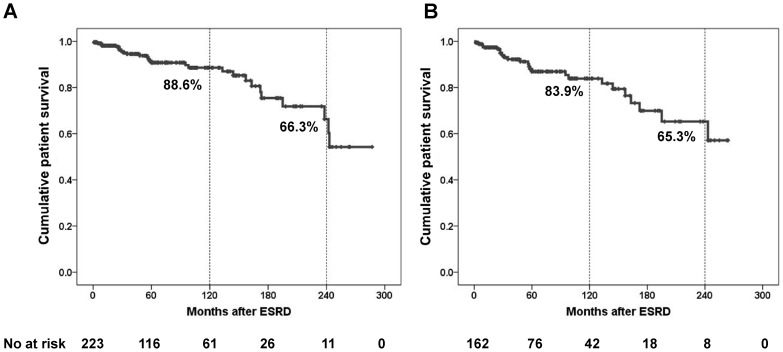
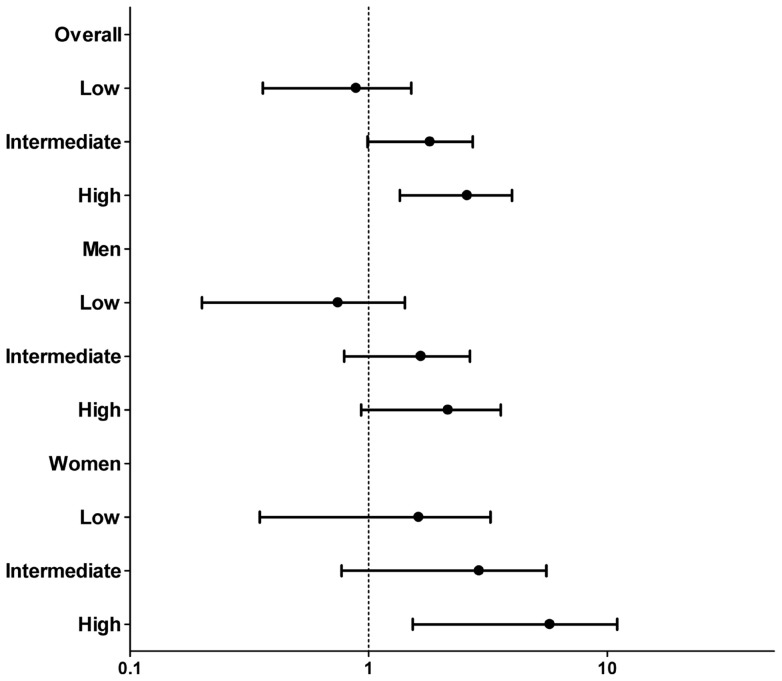
Research on the prognosis of IgA nephropathy (IgAN) has focused on renal survival, with little information being available on patient survival. Hence, this investigation aimed to explore long-term patient outcome in IgAN patients. Clinical and pathological characteristics at the time of renal biopsy were reviewed in 1,364 IgAN patients from 1979 to 2008. The outcomes were patient death and end stage renal disease (ESRD) progression. Overall, 71 deaths (5.3%) and 277 cases of ESRD (20.6%) occurred during 13,916 person-years. Ten-, 20-, and 30-year patient survival rates were 96.3%, 91.8%, and 82.7%, respectively. More than 50% patient deaths occurred without ESRD progression. Overall mortality was elevated by 43% from an age/sex-matched general population (GP) (standardized mortality ratio [SMR], 1.43; 95% confidence interval [CI], 1.04-1.92). Men had comparable mortality to GP (SMR, 1.22; 95% CI, 0.82-1.75), but, in women, the mortality rate was double (SMR, 2.17; 95% CI, 1.21-3.57). Patients with renal risk factors such as initial renal dysfunction (estimated glomerular filgration rate <60 ml/min per 1.73 m(2); SMR, 1.70; 95% CI, 1.13-2.46), systolic blood pressure ≥ 140 mmHg (SMR, 1.88; 95% CI, 1.19-2.82) or proteinuria ≥ 1 g/day (SMR, 1.66; 95% CI, 1.16-2.29) had an elevated mortality rate. Patients with preserved renal function, normotension, and proteinuria <1 g/day, however, had a similar mortality rate to GP. When risk stratification was performed by counting the number of major risk factors present at diagnosis, low-risk IgAN patients had a mortality rate equal to that of GP, whereas high-risk patients had a mortality rate higher than that of GP. This investigation demonstrated that overall mortality in IgAN patients was higher than that of GP. Women and patients with renal risk factors had a higher mortality than that of GP, Therefore, strategies optimized to alleviate major renal risk factors are warranted to reduce patient mortality.
Conflict of interest statement
Figures
References
-
- Donadio JV, Grande JP (2002) IgA nephropathy. N Engl J Med 347: 738–748. - PubMed
-
- Chang JH, Kim DK, Kim HW, Park SY, Yoo TH, et al. (2009) Changing prevalence of glomerular diseases in Korean adults: a review of 20 years of experience. Nephrol Dial Transplant 24: 2406–2410. - PubMed
-
- Radford MG, Donadio JV, Bergstralh EJ, Grande JP (1997) Predicting renal outcome in IgA nephropathy. J Am Soc Nephrol 8: 199–207. - PubMed
-
- Bartosik LP, Lajoie G, Sugar L, Cattran DC (2001) Predicting progression in IgA nephropathy. Am J Kidney Dis 38: 728–735. - PubMed
-
- Beukhof JR, Kardaun O, Schaafsma W, Poortema K, Donker AJ, et al. (1986) Toward individual prognosis of IgA nephropathy. Kidney Int 29: 549–556. - PubMed
MeSH terms
Substances
LinkOut - more resources
Full Text Sources
Miscellaneous
