


Integrating next-generation sequencing and traditional tongue diagnosis to determine tongue coating microbiome
- PMID: 23226834
- PMCID: PMC3515809
- DOI: 10.1038/srep00936
Integrating next-generation sequencing and traditional tongue diagnosis to determine tongue coating microbiome
Erratum in
- Sci Rep. 2012;2:1019
Abstract
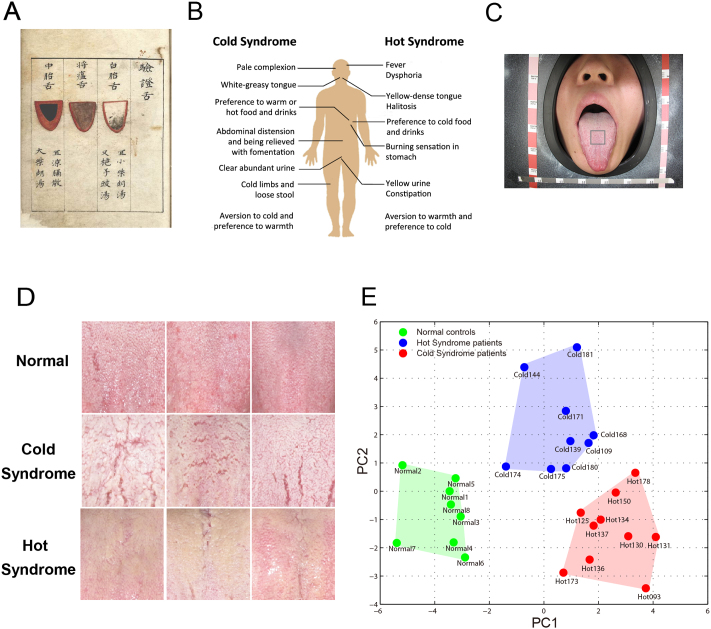
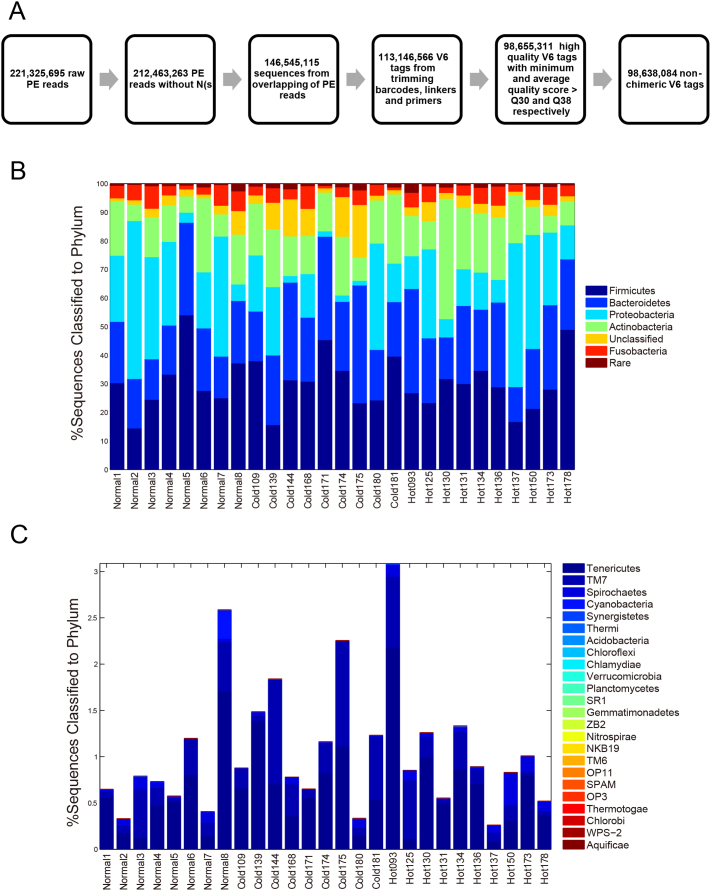
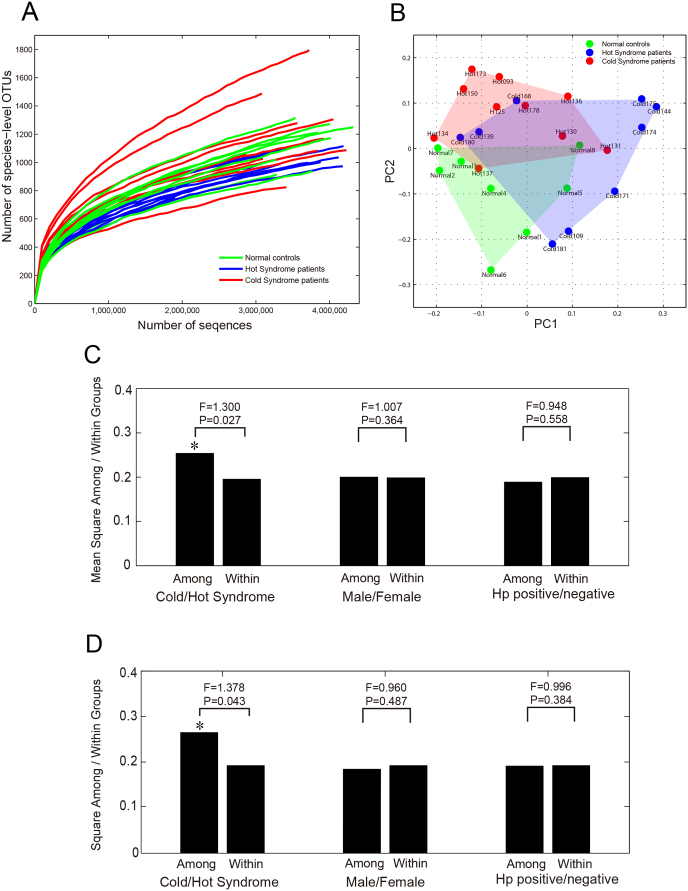
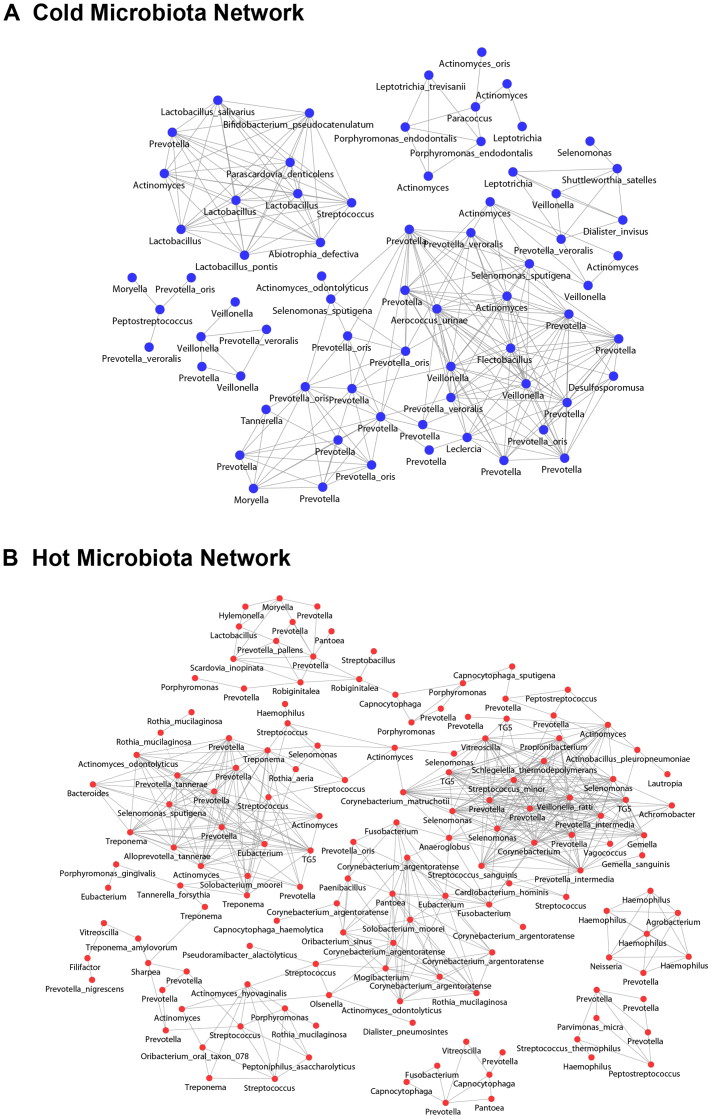
Tongue diagnosis is a unique method in traditional Chinese medicine (TCM). This is the first investigation on the association between traditional tongue diagnosis and the tongue coating microbiome using next-generation sequencing. The study included 19 gastritis patients with a typical white-greasy or yellow-dense tongue coating corresponding to TCM Cold or Hot Syndrome respectively, as well as eight healthy volunteers. An Illumina paired-end, double-barcode 16S rRNA sequencing protocol was designed to profile the tongue-coating microbiome, from which approximately 3.7 million V6 tags for each sample were obtained. We identified 123 and 258 species-level OTUs that were enriched in patients with Cold/Hot Syndromes, respectively, representing "Cold Microbiota" and "Hot Microbiota". We further constructed the tongue microbiota-imbalanced networks associated with Cold/Hot Syndromes. The results reveal an important connection between the tongue-coating microbiome and traditional tongue diagnosis, and illustrate the potential of the tongue-coating microbiome as a novel holistic biomarker for characterizing patient subtypes.
Figures
References
-
- Chiu C. C. A novel approach based on computerized image analysis for traditional Chinese medical diagnosis of the tongue. Comput. Methods Programs Biomed. 61, 77–89 (2000). - PubMed
-
- State Administration of Traditional Chinese Medicine (SATCM) of The People's Republic of China. The Criteria of Diagnosis and Therapeutic Effect of Diseases and Zhengs in TCM. Nanjing University Press (1994) (in Chinese).
-
- Hsu C. H., Yu M. C., Lee C. H., Lee T. C. & Yang S. Y. High eosinophil cationic protein level in asthmatic patients with Heat Zheng. Am. J. Chin. Med. 31, 277–283 (2003). - PubMed
-
- Li S. et al. Understanding ZHENG in traditional Chinese medicine in the context of neuro-endocrine-immune network. IET Syst. Biol. 1, 51–60 (2007). - PubMed
-
- Ma T. et al. Bridging the gap between traditional Chinese medicine and systems biology: the connection of Cold Syndrome and NEI network. Molecular BioSystems 6, 613–619 (2010). - PubMed
Publication types
MeSH terms
Substances
LinkOut - more resources
Full Text Sources
