A comparative study of caregiver burden in psychiatric illness and chronic medical illness
- PMID: 23226847
- PMCID: PMC3512360
- DOI: 10.4103/0019-5545.102423
A comparative study of caregiver burden in psychiatric illness and chronic medical illness
Abstract
Background: Caregivers of individuals suffering from psychiatric illness are at risk of being subjected to mental health consequences such as depression, anxiety and burnout. Community-based studies proved that 18-47% of caregivers land in depression. The caregiver burden can be quantified into objective, subjective and demand burdens. There is paucity of data comparing the caregiver burden of psychiatric patients and that of chronic medical illness patients.
Aims and objectives: (1) To compare the caregiver burden in psychiatric illness and chronic medical illness. (2) To study the association of caregiver burden with demographic factors like age, gender, duration of caregiving.
Materials and methods: The study included two groups of caregivers, each of 50 members. Group 1 consisted of caregivers of psychiatric patients and group 2 consisted of caregivers of chronic medical illness patients. The Montgomery Borgatta Caregiver Burden scale was used to assess the burden in terms of objective, subjective and demand burdens.
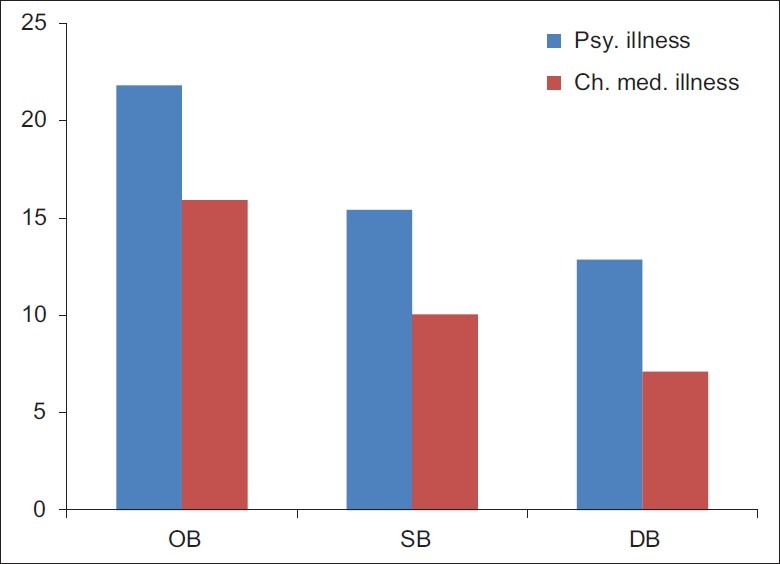
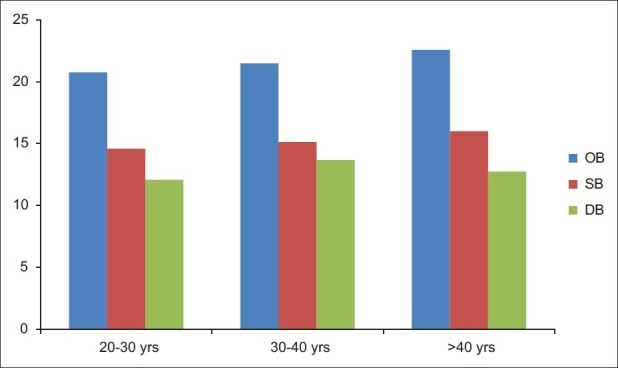
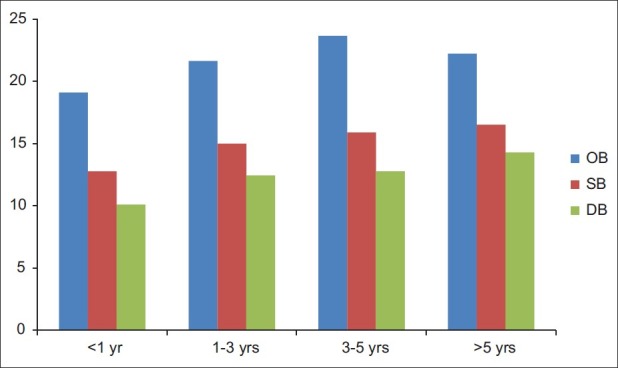
Results and conclusion: The caregiver burden scores in the caregivers of psychiatric patients were significantly higher than that of chronic medical illness (P<0.0001). The caregiver burden was found to increase with the duration of illness as well as with the age of caregiver. The caregiver burden in the sample population was less as the objective and demand burden did not cross the reference higher value in the given scale, whereas the emotional impact given by the subjective burden was on higher side.
Keywords: Burden; Illness; caregiver; psychiatric.
Conflict of interest statement
Figures
References
-
- Krupnik Y, Pilling S, Killaspy H, Dalton J. A study of family contact with clients and staff of community mental health teams. Psychiatric Bull. 2005;29:174–6.
-
- Muscroft J, Bowl R. The impact of depression on caregivers and other family members: Implications for professional support. Couns Psychol Q. 2000;13:117–34.
-
- Karlikay G, Yukse G, Varlibas F, Tireli H. Caregiver Burden In Dementia: A Study In The Turkish Population. Internet J Neurol. 2005;4:2.
-
- Caregiver burden and psychotic patients’ perception of social support in a Nigerian setting by Ohaeri JU, Nigeria: University of Ibadan; Social Psychiatry and Psychiatric Epidemiology. 36:86–93. - PubMed
-
- Erie County Department OF University Health and Nutrition Letter: A case presentation by Miriam R. Callahan, Lisa M. Rood March 2004.