


Episodic memory and appetite regulation in humans
- PMID: 23227200
- PMCID: PMC3515570
- DOI: 10.1371/journal.pone.0050707
Episodic memory and appetite regulation in humans
Abstract
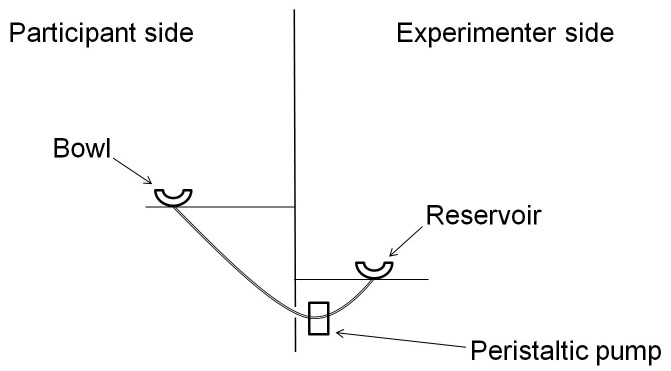
Psychological and neurobiological evidence implicates hippocampal-dependent memory processes in the control of hunger and food intake. In humans, these have been revealed in the hyperphagia that is associated with amnesia. However, it remains unclear whether 'memory for recent eating' plays a significant role in neurologically intact humans. In this study we isolated the extent to which memory for a recently consumed meal influences hunger and fullness over a three-hour period. Before lunch, half of our volunteers were shown 300 ml of soup and half were shown 500 ml. Orthogonal to this, half consumed 300 ml and half consumed 500 ml. This process yielded four separate groups (25 volunteers in each). Independent manipulation of the 'actual' and 'perceived' soup portion was achieved using a computer-controlled peristaltic pump. This was designed to either refill or draw soup from a soup bowl in a covert manner. Immediately after lunch, self-reported hunger was influenced by the actual and not the perceived amount of soup consumed. However, two and three hours after meal termination this pattern was reversed - hunger was predicted by the perceived amount and not the actual amount. Participants who thought they had consumed the larger 500-ml portion reported significantly less hunger. This was also associated with an increase in the 'expected satiation' of the soup 24-hours later. For the first time, this manipulation exposes the independent and important contribution of memory processes to satiety. Opportunities exist to capitalise on this finding to reduce energy intake in humans.
Conflict of interest statement
Figures


References
-
- Woods SC (2004) Gastrointestinal Satiety Signals - I. An overview of gastrointestinal signals that influence food intake. Am J Physiol-Gastr L 286(1): G7–G13. - PubMed
-
- Berthoud H-R (2004) Mind versus metabolism in the control of food intake and energy balance. Physiol Behav 81(5): 781–793. - PubMed
-
- Farr SA, Banks WA, Morley JE (2006) Effects of leptin on memory processing. (Translated from English). Peptides 27(6): 1420–1425 (in English).. - PubMed
-
- Zhao WQ, Chen H, Quon MJ, Alkon DL (2004) Insulin and the insulin receptor in experimental models of learning and memory. (Translated from English). Eur J Pharmacol 490(1–3): 71–81 (in English).. - PubMed
Publication types
MeSH terms
Grants and funding
LinkOut - more resources
Full Text Sources
