Review
doi: 10.2174/1573403x10666140214121152.
Out-of-hospital cardiac arrest -optimal management
Affiliations
- PMID: 23228073
- PMCID: PMC3941096
- DOI: 10.2174/1573403x10666140214121152
Item in Clipboard
Review
Out-of-hospital cardiac arrest -optimal management
Curr Cardiol Rev.
2013 Nov.
Abstract
Out-of-hospital cardiac arrest (OHCA) has attracted increasing attention over the past years because outcomes have improved impressively lately. The changes for neurological intact outcomes has been poor but several areas have achieved improving survival rates after adjusting their cardiac arrest care. The pre-hospital management is certainly key and decides whether a cardiac arrest patient can be brought back into a spontaneous circulation. However, the whole chain of resuscitation including the in-hospital care have improved also. This review describes aetiologies of OHCA, risk and potential protective factors and recent advances in the pre-hospital and in-hospital management of these patients.
Figures
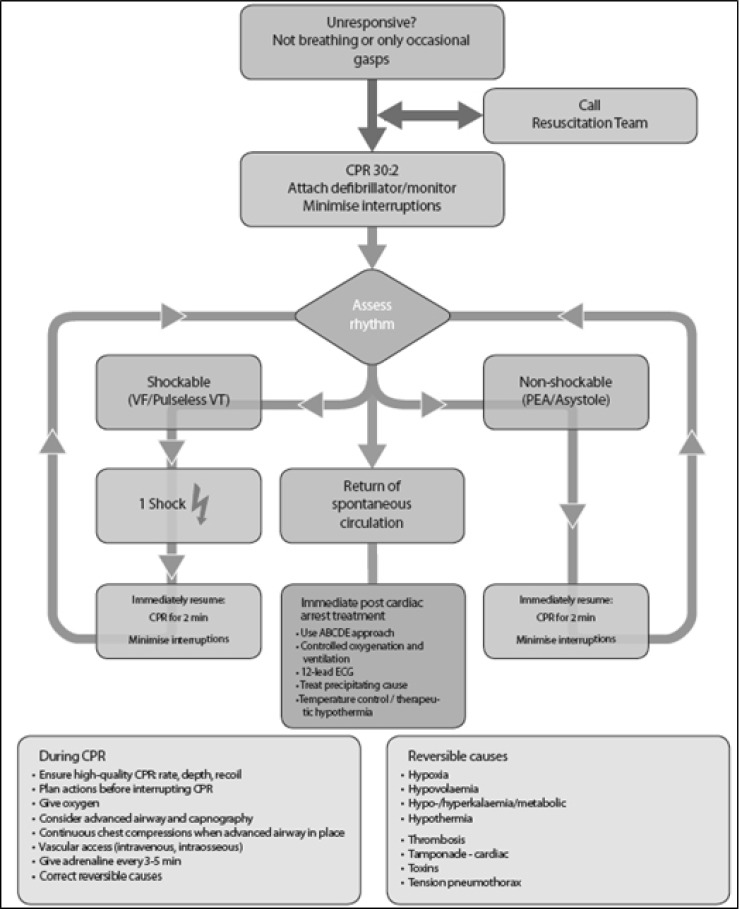
Algorithm for Advanced Life Support (ALS) [21].
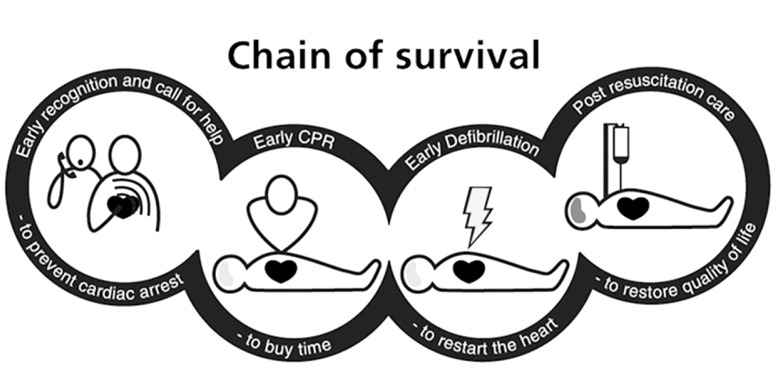
The chain of survival.
References
-
- Buxton AE, Calkins H, Callans DJ , et al. ACC/AHA/HRS 2006 key data elements and definitions for electrophysiological studies and procedures: a report of the American College of Cardiology/American Heart Association Task Force on Clinical Data Standards (ACC/AHA/HRS Writing Committee to Develop Data Standards on Electrophysiology). Circulation. 2006;114(23):2534–70. - PubMed
-
- Sasson C, Rogers MA, Dahl J, Kellermann AL. Predictors of survival from out-of-hospital cardiac arrest: a systematic review and meta-analysis. Circ Cardiovasc Qual Outcomes. 2010;3(1):63–81. - PubMed
-
- Demirovic J, Myerburg RJ. Epidemiology of sudden coronary death: an overview. Prog Cardiovasc Dis. 1994;37(1):39–48. - PubMed
Publication types
MeSH terms
LinkOut - more resources
Full Text Sources
Other Literature Sources
Medical
Miscellaneous