


The effect of luminal content and rate of occlusion on the interpretation of colonic manometry
- PMID: 23228077
- PMCID: PMC3539177
- DOI: 10.1111/nmo.12051
The effect of luminal content and rate of occlusion on the interpretation of colonic manometry
Abstract
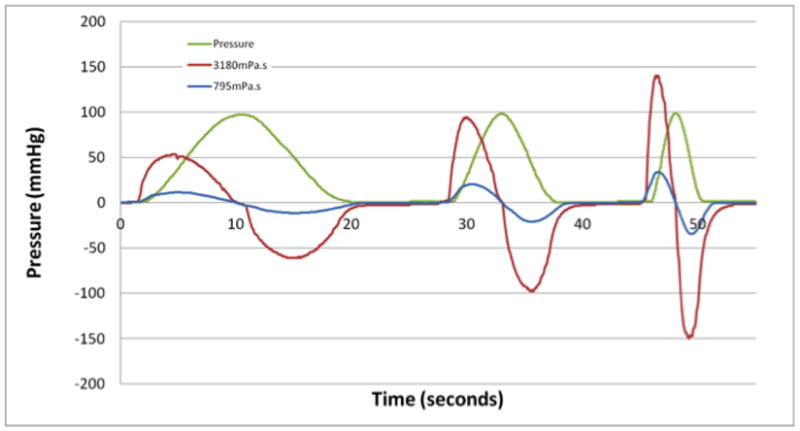
Background: Manometry is commonly used for diagnosis of esophageal and anorectal motility disorders. In the colon, manometry is a useful tool, but clinical application remains uncertain. This uncertainty is partly based on the belief that manometry cannot reliably detect non-occluding colonic contractions and, therefore, cannot identify reliable markers of dysmotility. This study tests the ability of manometry to record pressure signals in response to non-lumen-occluding changes in diameter, at different rates of wall movement and with content of different viscosities.
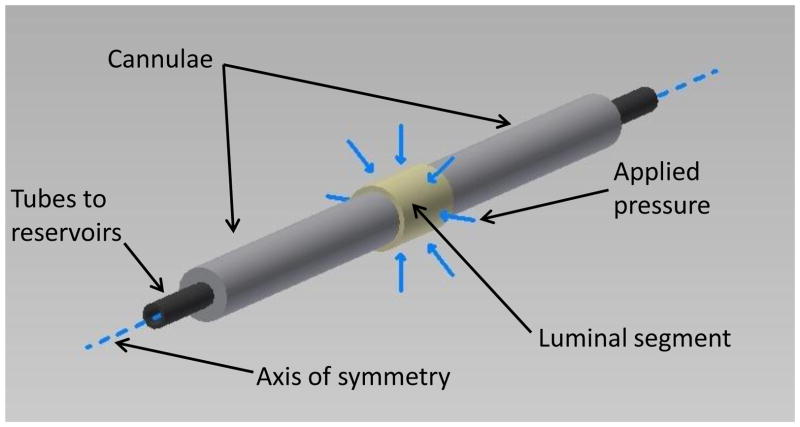
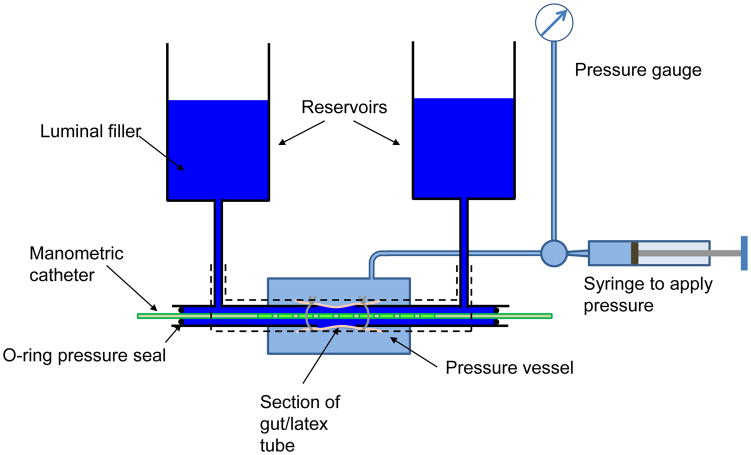
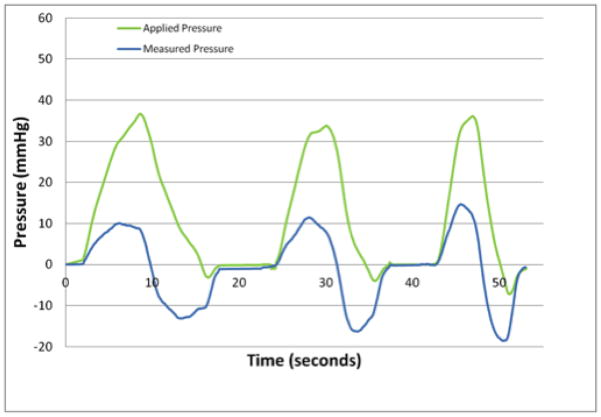
Methods: A numerical model was built to investigate pressure changes caused by localized, non-lumen-occluding reductions in diameter, similar to those caused by contraction of the gut wall. A mechanical model, consisting of a sealed pressure vessel which could produce localized reductions in luminal diameter, was used to validate the model using luminal segments formed from; (i) natural latex; and (ii) sections of rabbit proximal colon. Fluids with viscosities ranging from 1 to 6800 mPa s(-1) and luminal contraction rates over the range 5-20 mmHg s(-1) were studied.
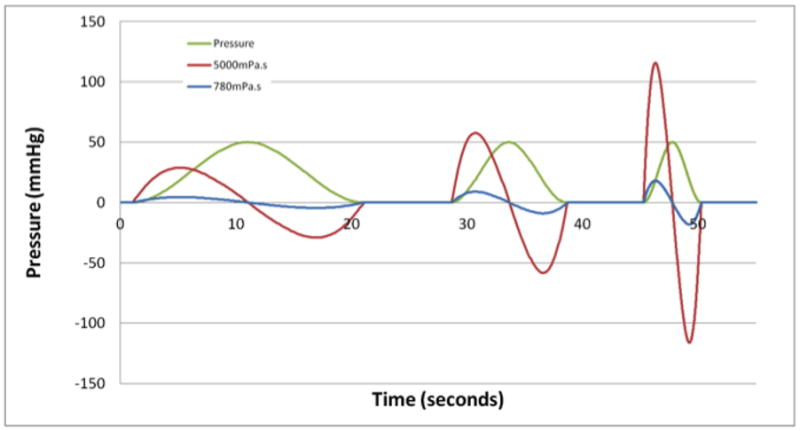
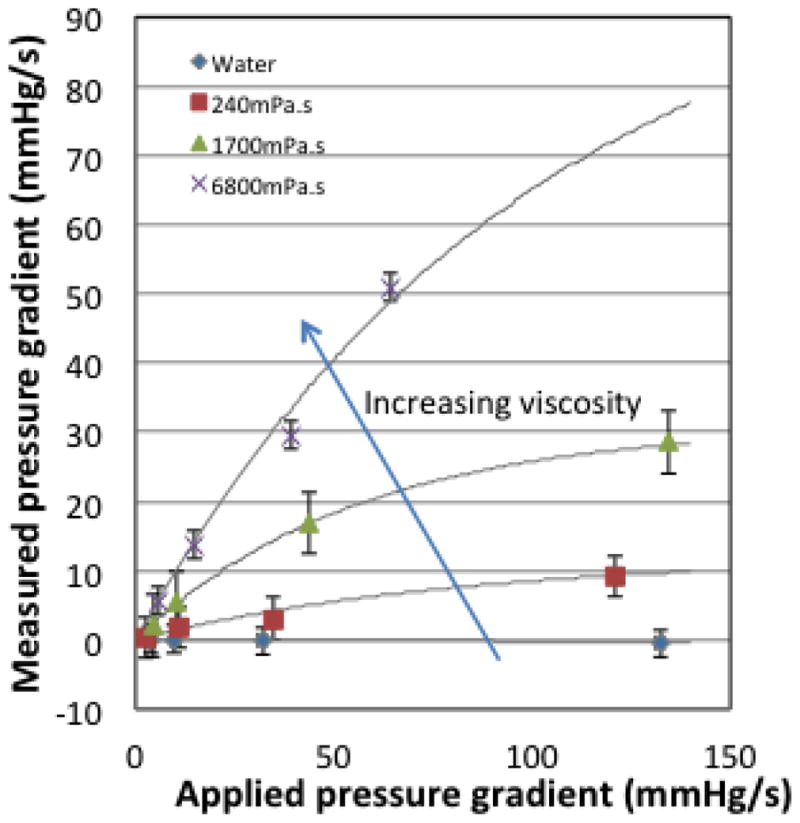
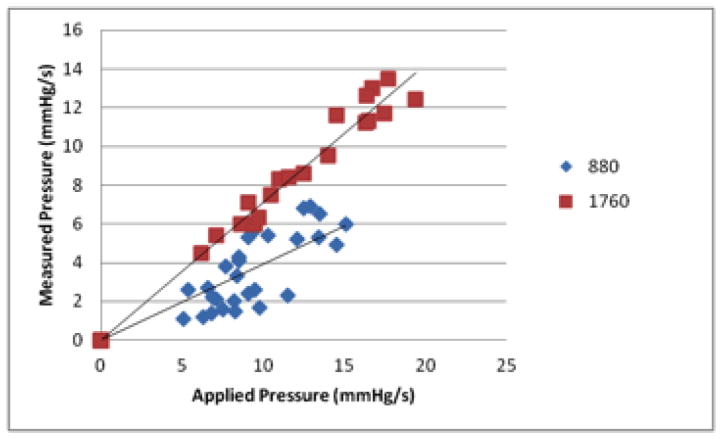
Key results: Manometry recorded non-occluding reductions in diameter, provided that they occurred with sufficiently viscous content. The measured signal was linearly dependent on the rate of reduction in luminal diameter and also increased with increasing viscosity of content (R(2) = 0.62 and 0.96 for 880 and 1760 mPa s(-1), respectively).
Conclusions & inferences: Manometry reliably registers non-occluding contractions in the presence of viscous content, and is therefore a viable tool for measuring colonic motility. Interpretation of colonic manometric data, and definitions based on manometric results, must consider the viscosity of luminal content.
© 2012 Blackwell Publishing Ltd.
Conflict of interest statement
Competing Interests: the authors have no competing interests.
Figures
References
-
- Jones MP, Post J, Crowell MD. High-resolution manometry in the evaluation of anorectal disorders: a simultaneous comparison with water-perfused manometry. Am J Gastroenterol. 2007;102:850–855. - PubMed
-
- Pandolfino JE, Ghosh SK, Rice J, Clarke JO, Kwiatek MA, Kahrilas PJ. Classifying esophageal motility by pressure topography characteristics: a study of 400 patients and 75 controls. The American Journal of Gastroenterology. 2008;103:27–37. - PubMed
-
- Smout AJPM. Recent developments in gastrointestinal motility. Scand J Gastroenterol Suppl. 2006;41:25–31. - PubMed
-
- Sarna SK. Colonic Motility: From Bench Side to Bedside. 2011/04/01. Morgan & Claypool Life Sciences; 2010. - PubMed
-
- von der Ohe MR, Hanson RB, Camilleri M. Comparison of simultaneous recordings of human colonic contractions by manometry and a barostat. Neurogastroenterol Mot. 1994;6:213–222.
Publication types
MeSH terms
Grants and funding
LinkOut - more resources
Full Text Sources
