


Reduced reward learning predicts outcome in major depressive disorder
- PMID: 23228328
- PMCID: PMC3602158
- DOI: 10.1016/j.biopsych.2012.10.014
Reduced reward learning predicts outcome in major depressive disorder
Abstract
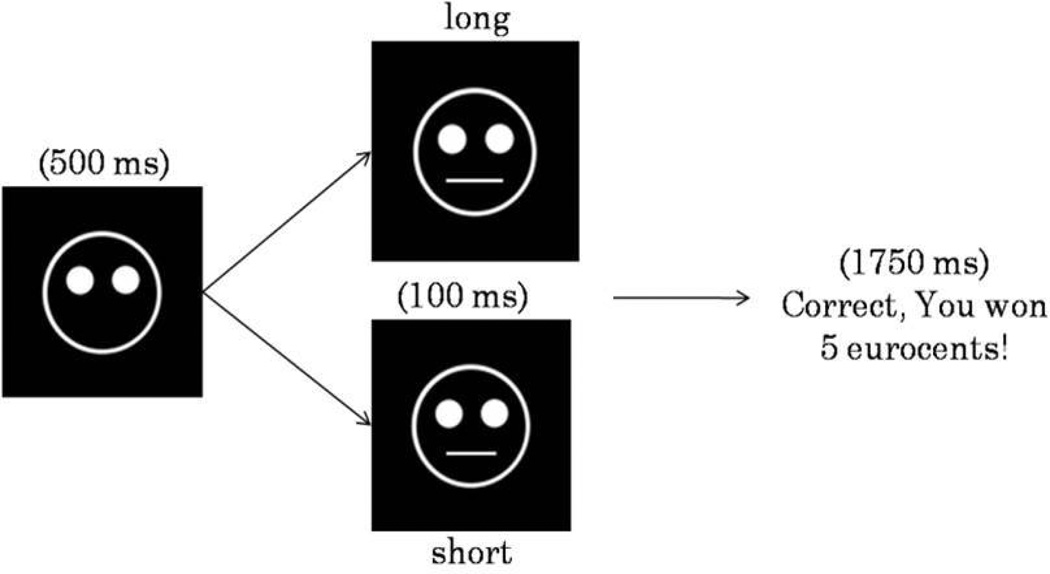
Background: Reduced reward learning might contribute to the onset and maintenance of major depressive disorder (MDD). In particular, the inability to utilize rewards to guide behavior is hypothesized to be associated with anhedonia, a core feature and potential trait marker of MDD. Few studies have investigated whether reduced reward learning normalizes with treatment and/or reward learning predicts clinical outcome. Our goal was to test whether MDD is characterized by reduced reward learning, especially in the presence of anhedonic symptoms, and to investigate the relationship between reward learning and MDD diagnosis after 8 weeks of treatment.
Methods: Seventy-nine inpatients and 63 healthy control subjects performed a probabilistic reward task yielding an objective measure of participants' ability to modulate behavior as a function of reward. We compared reward responsiveness between depressed patients and control subjects, as well as high- versus low-anhedonic MDD patients. We also evaluated whether reward-learning deficits predicted persistence of MDD after 8 weeks of treatment.
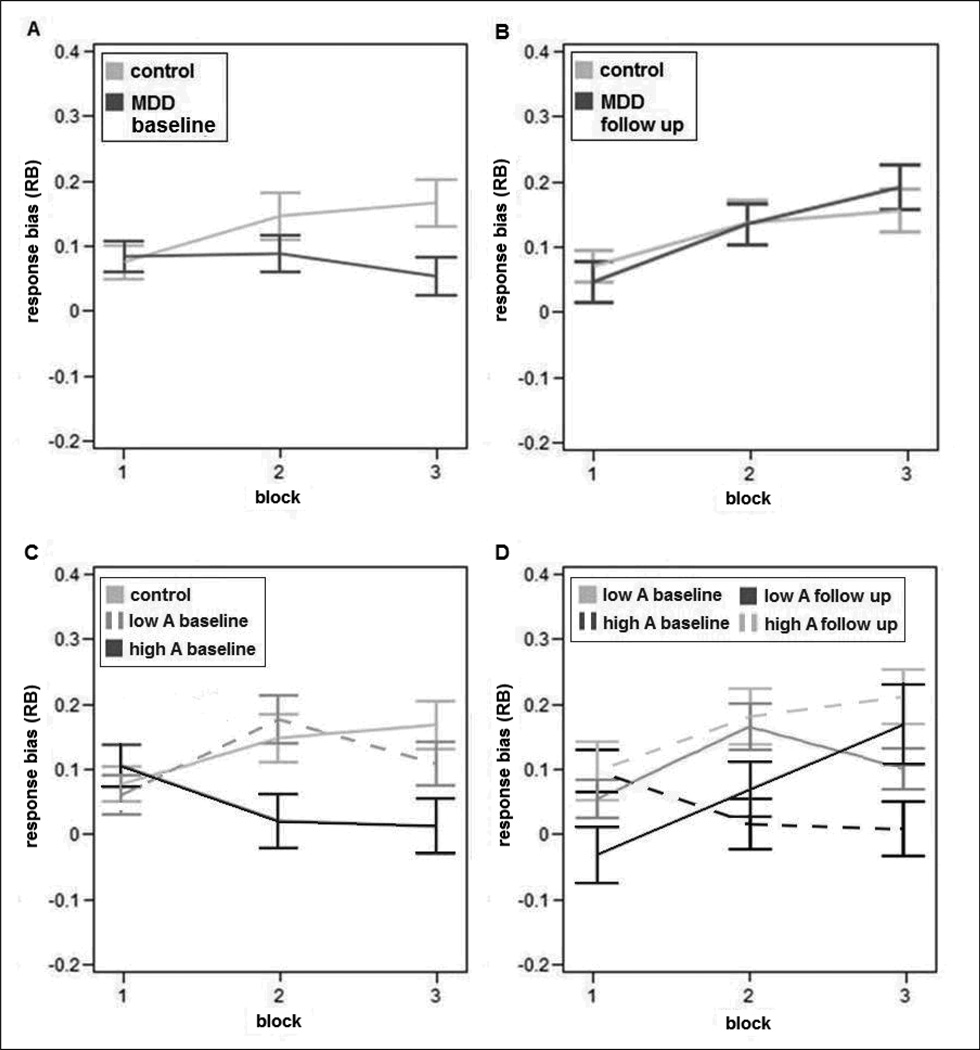
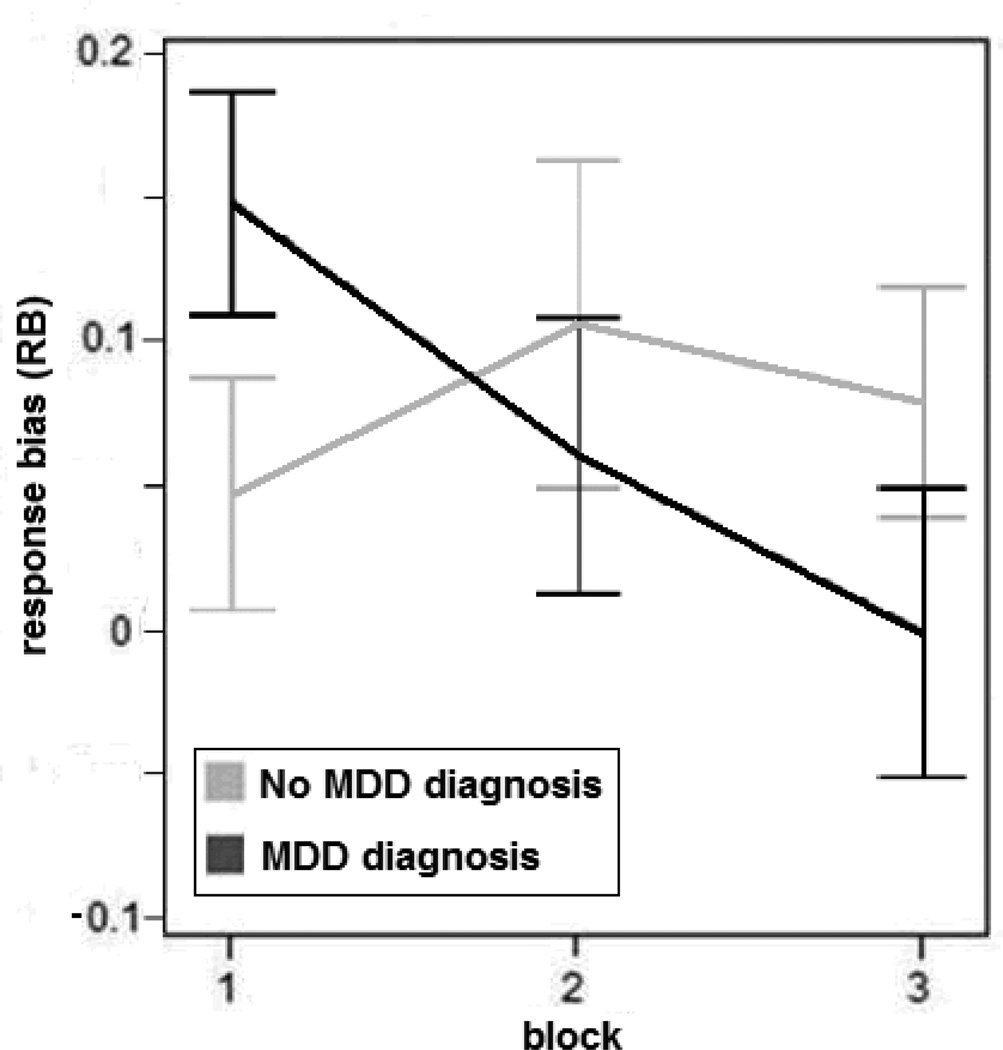
Results: Relative to control subjects, MDD patients showed reduced reward learning. Moreover, patients with high anhedonia showed diminished reward learning compared with patients with low anhedonia. Reduced reward learning at study entry increased the odds of a persisting diagnosis of MDD after 8 weeks of treatment (odds ratio 7.84).
Conclusions: Our findings indicate that depressed patients, especially those with anhedonic features, are characterized by an impaired ability to modulate behavior as a function of reward. Moreover, reduced reward learning increased the odds for the diagnosis of MDD to persist after 8 weeks of treatment.
Copyright © 2013 Society of Biological Psychiatry. Published by Elsevier Inc. All rights reserved.
Conflict of interest statement
Dr Schmidt and de Boer are employees of Janssen Research and Development. Prof. Demytennaere reports no conflict of interest directly related to the submitted manuscript.
The other authors declare no competing financial interests.
Figures
References
-
- Clark DA, Beck AT, Beck JS. Symptom differences in major depression, dysthymia, panic disorder, and generalized anxiety disorder. Am J Psychiatry. 1994;151(2):205–209. - PubMed
-
- American Psychiatric Association. Diagnosic and statistical manual of mental disorders. 4th ed., text revision. Washington, DC: American Psychiatric Press; 2000.
-
- Spijker J, Bijl RV, de Graaf R, Nolen WA. Determinants of poor 1-year outcome of DSM-III-R major depression in the general population: results of the Netherlands Mental Health Survey and Incidence Study (NEMESIS) Acta Psychiatr Scand. 2001;103(2):122–130. - PubMed
-
- Davidson RJ. Affective neuroscience and psychophysiology: toward a synthesis. Psychophysiology. 2003;40(5):655–665. - PubMed
Publication types
MeSH terms
Substances
Grants and funding
LinkOut - more resources
Full Text Sources
Other Literature Sources
Medical
