


Quality of life among patients with severe aortic stenosis
- PMID: 23229811
- PMCID: PMC3528854
- DOI: 10.1007/s12471-012-0364-9
Quality of life among patients with severe aortic stenosis
Abstract
Background: The disease burden of patients with severe aortic stenosis is not often explored, while the incidence is increasing and many patients who have an indication for aortic valve replacement are not referred for surgery. We studied the quality of life of 191 patients with severe aortic stenosis, hypothesising that symptomatic patients have a far worse quality of life than the general population, which could enforce the indication for surgery.
Methods: The SF-36v2 Health Survey was completed by 191 consecutive patients with symptomatic or asymptomatic severe aortic stenosis.
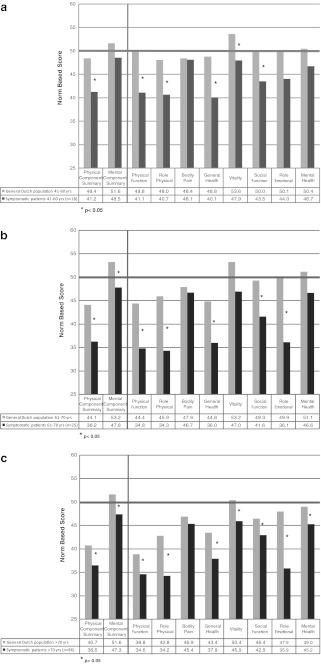
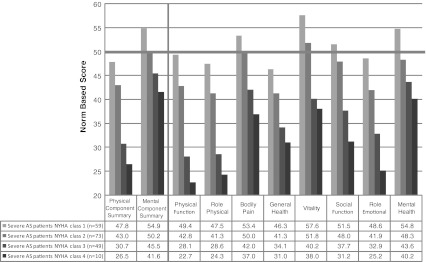
Results: Asymptomatic patients (n = 59) had health scores comparable with the general Dutch population but symptomatic patients (n = 132) scored significantly lower across different age categories. Physical functioning, general health and vitality were impaired, as well as social functioning and emotional well-being. There was no relation between degree of stenosis and physical or mental health scores.
Conclusions: Both physical and emotional problems have a major impact on normal daily life and social functioning of symptomatic patients with severe aortic stenosis, regardless of age. If the aortic stenosis is above the 'severe' threshold, the degree of stenosis does not predict disease burden. These results encourage to reconsider a conservative approach in symptomatic patients with severe aortic stenosis. Using the SF-36v2 Health Survey together with this study, an individual patient's quality of life profile can be assessed and compared with the patient group or with the general population. This can assist in decision making for the individual patient.
Figures
References
-
- Chan KL, Teo K, Dumesnil JG, et al. Effect of Lipid lowering with rosuvastatin on progression of aortic stenosis: results of the aortic stenosis progression observation: measuring effects of rosuvastatin (ASTRONOMER) trial. Circulation. 2010;121(2):306–14. doi: 10.1161/CIRCULATIONAHA.109.900027. - DOI - PubMed
LinkOut - more resources
Full Text Sources
Medical
