


Frontal plane alignment after total knee arthroplasty using patient-specific instruments
- PMID: 23232654
- PMCID: PMC3532632
- DOI: 10.1007/s00264-012-1732-1
Frontal plane alignment after total knee arthroplasty using patient-specific instruments
Abstract
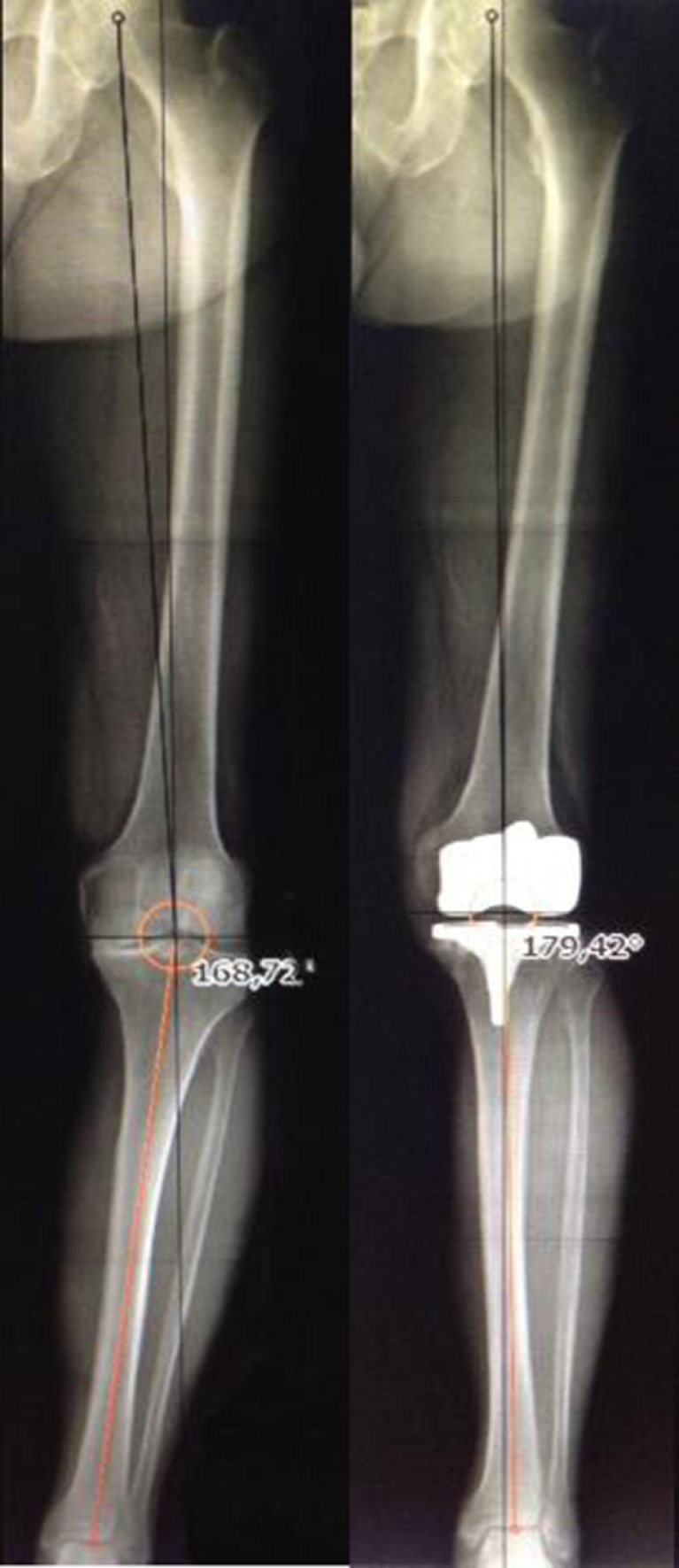
Purpose: Although total knee arthroplasty (TKA) is regularly associated with favorable outcomes, considerable research efforts are still underway to improve its ability to achieve a neutral postoperative mechanical axis. Patient-specific instrumentation (PSI) was introduced with this and other goals in mind. The current retrospective study was designed to determine whether PSI would lead to a hip-knee-ankle angle (HKA) within ±3° of the ideal alignment of 180°.
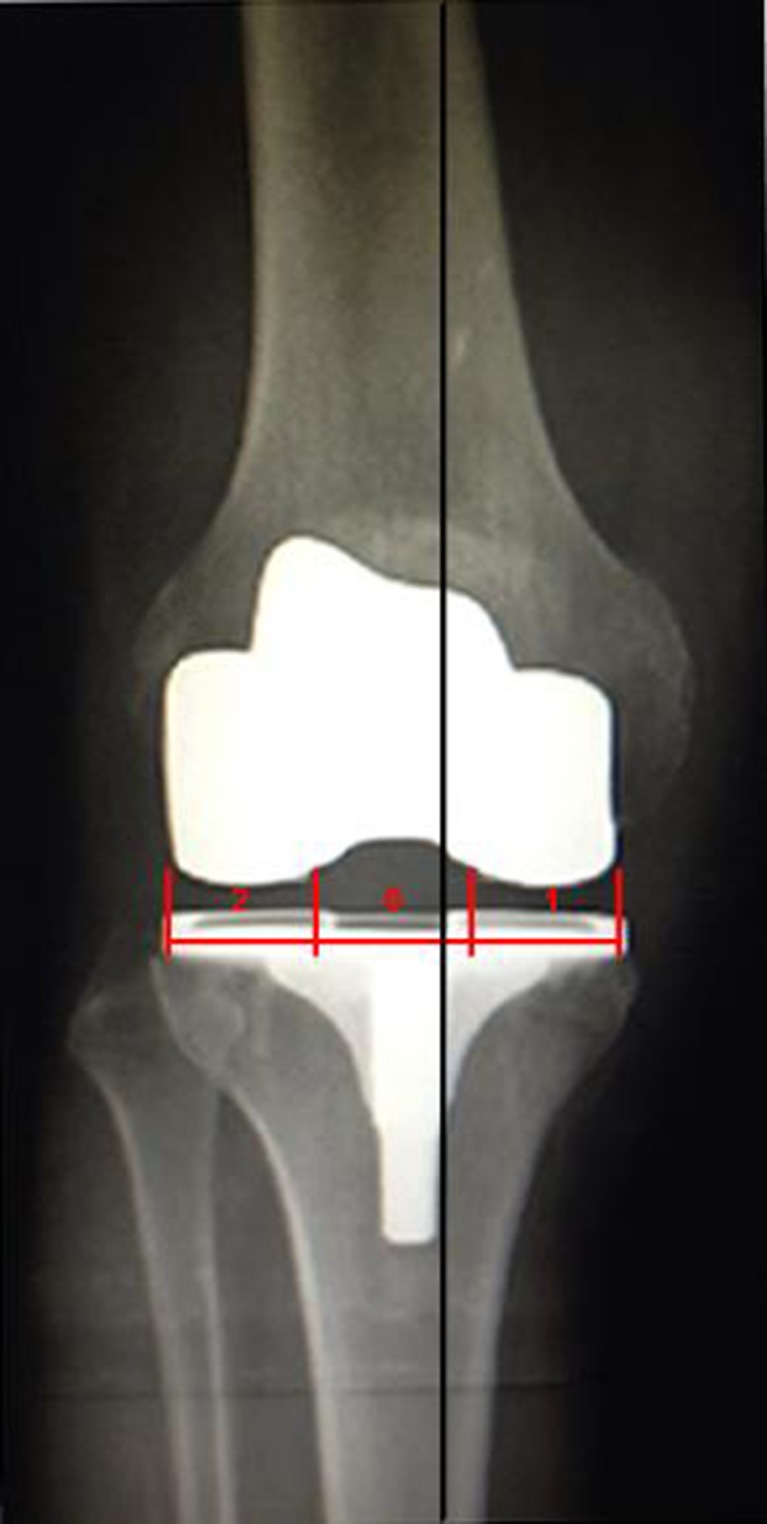
Methods: A long-leg x-ray of the knee was performed after an average of 3.5 months (SD, three to four months), following 124 TKAs performed by a single surgeon using PSI technology (VISIONAIRE; Smith & Nephew). In addition to HKA, the zone of the mechanical axis (ZMA; zone of the tibial base plate where the mechanical axis of the limb intersects with the tibial base plate) was analysed, with the ideal intersection occurring centrally.
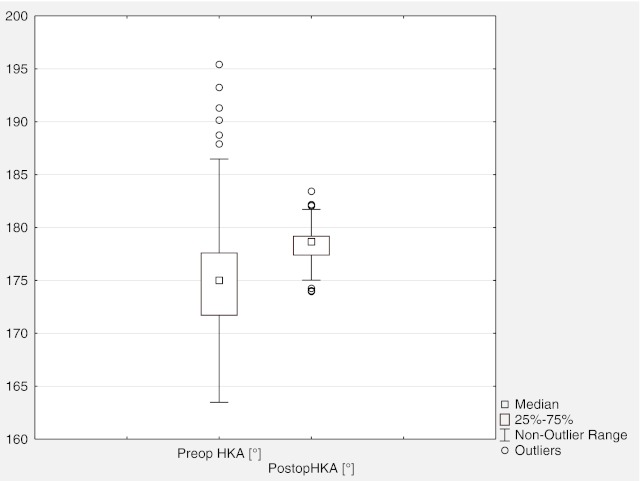
Results: There were 100 knees (average age, 66.8 years) with follow-up data available. The average HKA changed from 175.5±5.6° preoperatively to 178.5±1.7° postoperatively. The rate of ±3° and ±5° HKA outliers was 11 % and 3 %, respectively. In terms of ZMA, the mechanical axis passed through the central third of the knee in the majority of cases (93 knees, 93 %). There were no intra-operative complications with the use of PSI.
Conclusions: The use of PSI technology was able to achieve a neutral mechanical axis on average in patients undergoing TKA. Further follow-up will be needed to ascertain the long-term impact of these findings.
Figures
References
MeSH terms
LinkOut - more resources
Full Text Sources
Medical
