


Early results of sarcomeric gene screening from the Egyptian National BA-HCM Program
- PMID: 23233322
- PMCID: PMC3546296
- DOI: 10.1007/s12265-012-9425-0
Early results of sarcomeric gene screening from the Egyptian National BA-HCM Program
Erratum in
- J Cardiovasc Transl Res. 2013 Aug;6(4):663. Ayad, Maha S [corrected to Saber-Ayad, Maha]
Abstract
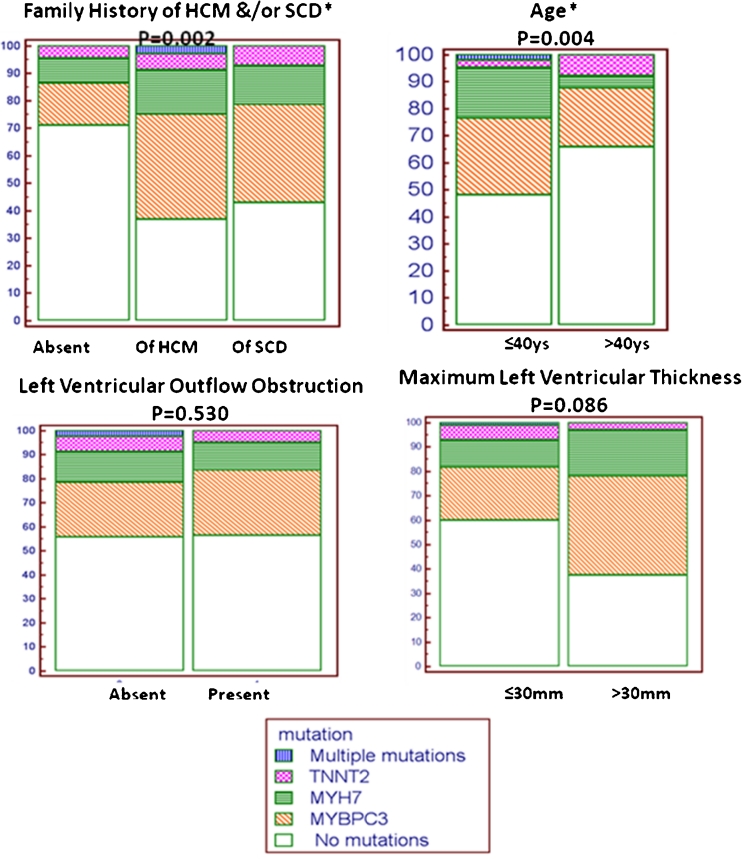
The present study comprised sarcomeric genotyping of the three most commonly involved sarcomeric genes: MYBPC3, MYH7, and TNNT2 in 192 unrelated Egyptian hypertrophic cardiomyopathy (HCM) index patients. Mutations were detected in 40 % of cases. Presence of positive family history was significantly (p=0.002) associated with a higher genetic positive yield (49/78, 62.8 %). The majority of the detected mutations in the three sarcomeric genes were novel (40/62, 65 %) and mostly private (47/62, 77 %). Single nucleotide substitution was the most frequently detected mutation type (51/62, 82 %). Over three quarters of these substitutions (21/27, 78 %) involved CpG dinucleotide sites and resulted from C>T or G>A transition in the three analyzed genes, highlighting the significance of CpG high mutability within the sarcomeric genes examined. This study could aid in global comparative studies in different ethnic populations and constitutes an important step in the evolution of the integrated clinical, translational, and basic science HCM program.
Figures
References
-
- Maron BJ, Gardin JM, Flack JM, Gidding SS, Kurosaki TT, Bild DE. Prevalence of hypertrophic cardiomyopathy in a general population of young adults. Echocardiographic analysis of 4111 subjects in the CARDIA Study. Coronary Artery Risk Development in (Young) Adults. Circulation. 1995;92(4):785–789. doi: 10.1161/01.CIR.92.4.785. - DOI - PubMed
-
- http://www.indexmundi.com/egypt/population.html (accessed July17, 2012).
Publication types
MeSH terms
Substances
LinkOut - more resources
Full Text Sources
Medical
Research Materials
Miscellaneous
