


The effects of ambivalent fertility desires on pregnancy risk in young women in the USA
- PMID: 23234316
- PMCID: PMC3570750
- DOI: 10.1080/00324728.2012.738823
The effects of ambivalent fertility desires on pregnancy risk in young women in the USA
Abstract
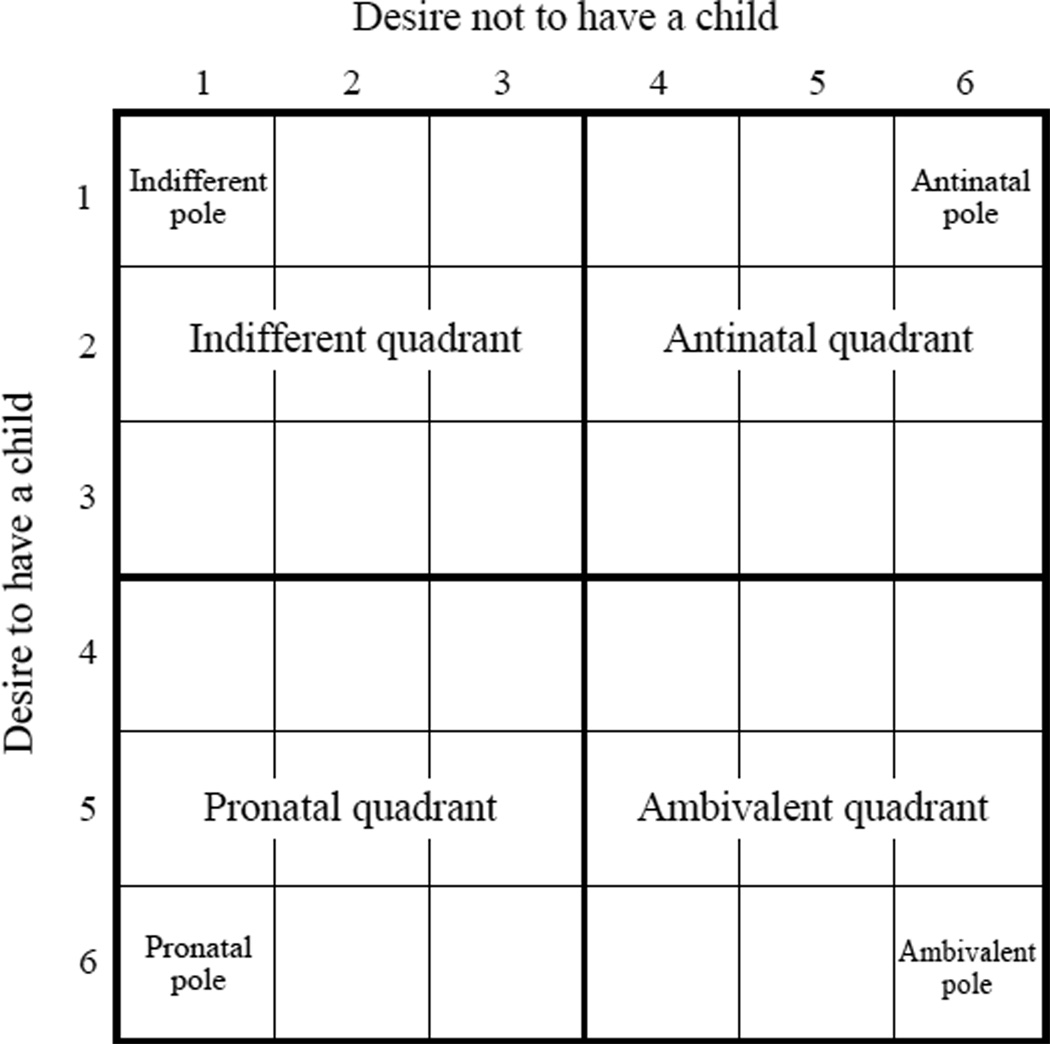
Many different definitions of the construct of motivational ambivalence have appeared in the literature on reproductive health. Using a theoretical framework in which motivational ambivalence is defined as an interaction between positive and negative pregnancy desires, we propose two hypotheses. The first is that positive and negative pregnancy desires independently predict the risk of an unplanned pregnancy. The second is that ambivalence and three related constructs that are also based on the interaction between positive and negative desires are each important predictors of pregnancy risk. We use weekly journal data collected from a US sample of 1,003 women aged 18-19 years and conduct hazard model analysis to test our hypotheses. Using both dummy and continuous predictors, we report results that confirm both hypotheses. The proposed interaction framework has demonstrated validity, compares favourably with previously reported alternative approaches, and incorporates a set of constructs that have potential importance for further research directed at the prevention of unplanned pregnancy.
Figures
References
-
- Allison Paul D. Discrete-time methods for the analysis of event histories. In: Leinhart Samuel., editor. Sociological Methodology. San Francisco, CA: Jossy-Bass; 1982. pp. 61–98.
-
- Allison Paul D. Event History Analysis: Regressional for Longitudinal Event Data. Beverly Hills, CA: Sage; 1984.
-
- Barber Jennifer S, Kusunoki Yasamin, Gatny Heather H. Design and implementation of an online weekly survey to study unintended pregnancies: Preliminary results. Paper presented at the 2010 European Population Conference; September 1–4; Vienna, Austria. 2010. [accessed: June 2010]. Available: http://www.psc.isr.umich.edu/pubs/abs/6403.
-
- Cacioppo John T, Gardner Wendi L, Berntson Gary G. The affective system has parallel and integrative processing components: Form follows function. Journal of Personality and Social Psychology. 1999;76(5):839–855.
-
- Crosby Richard A, DiClemente Ralph J, Wingood Gina M, Davies Susan L, Harrington Kathy. Adolescents’ ambivalence about becoming pregnant predicts infrequent contraceptive use: A prospective analysis of nonpregnant African American females. American Journal of Obstetrics and Gynecology. 2002;186(2):251–252. - PubMed
Publication types
MeSH terms
Grants and funding
LinkOut - more resources
Full Text Sources
Medical