Cord-blood engraftment with ex vivo mesenchymal-cell coculture
- PMID: 23234514
- PMCID: PMC3805360
- DOI: 10.1056/NEJMoa1207285
Cord-blood engraftment with ex vivo mesenchymal-cell coculture
Abstract
Background: Poor engraftment due to low cell doses restricts the usefulness of umbilical-cord-blood transplantation. We hypothesized that engraftment would be improved by transplanting cord blood that was expanded ex vivo with mesenchymal stromal cells.
Methods: We studied engraftment results in 31 adults with hematologic cancers who received transplants of 2 cord-blood units, 1 of which contained cord blood that was expanded ex vivo in cocultures with allogeneic mesenchymal stromal cells. The results in these patients were compared with those in 80 historical controls who received 2 units of unmanipulated cord blood.
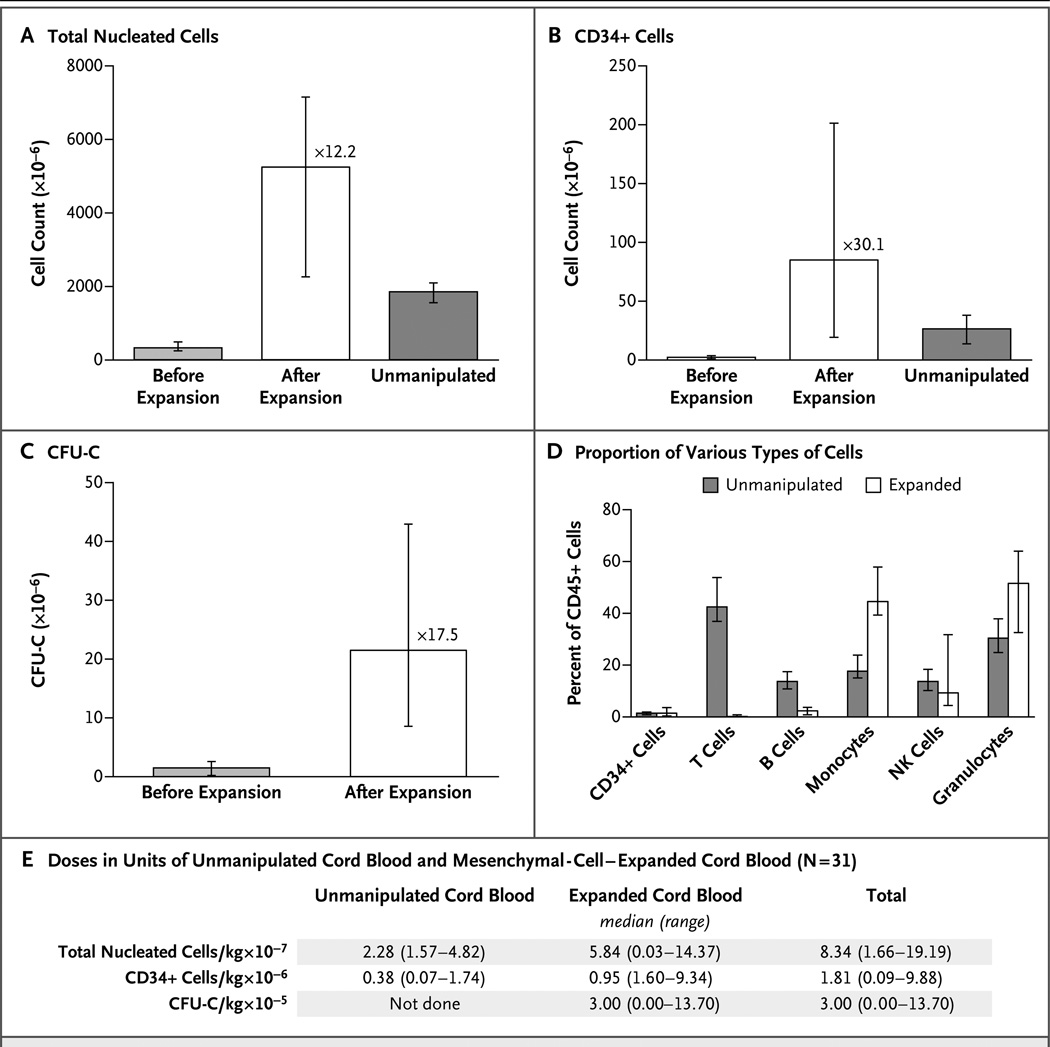
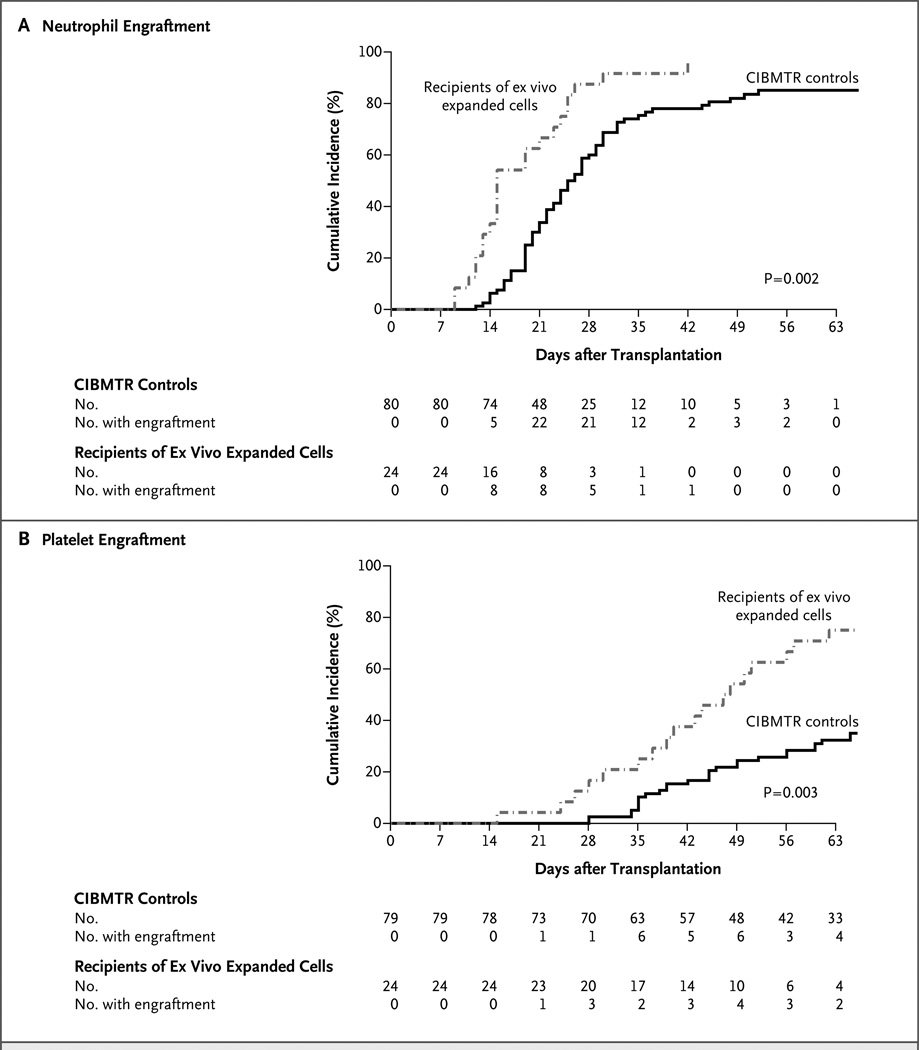
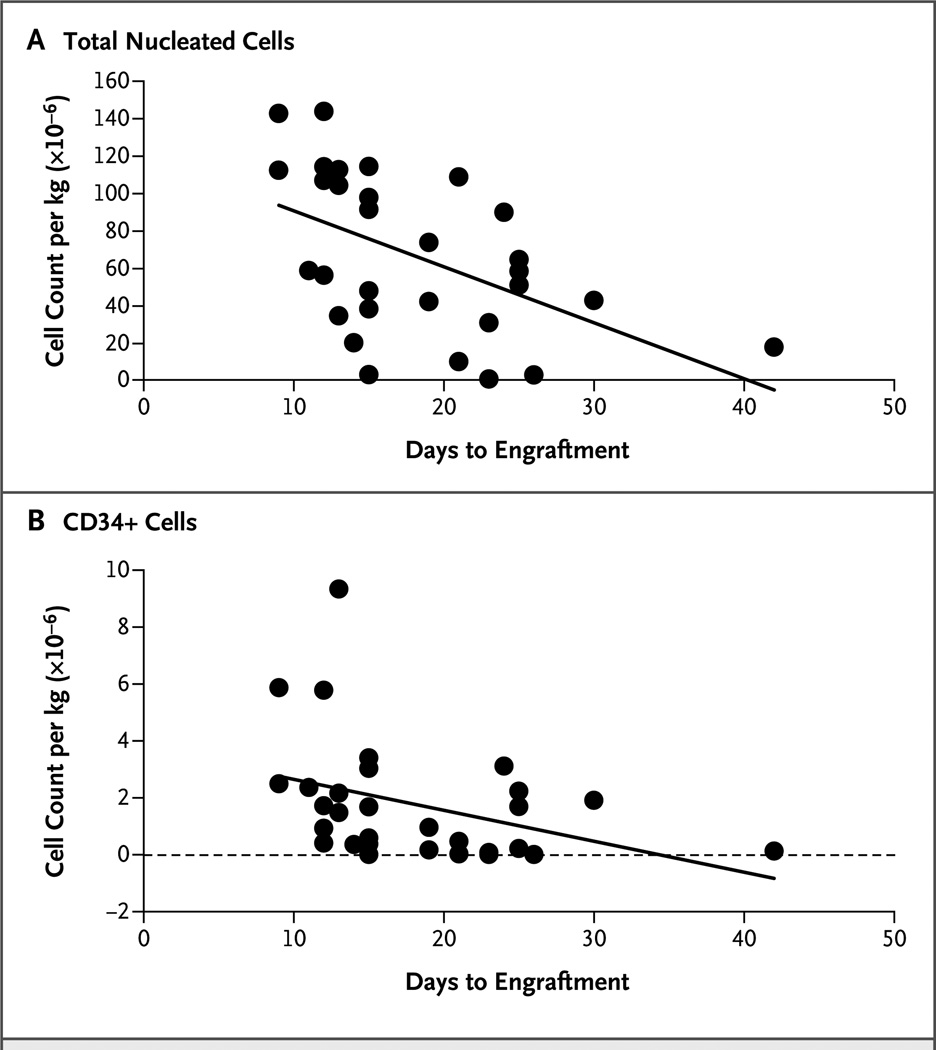
Results: Coculture with mesenchymal stromal cells led to an expansion of total nucleated cells by a median factor of 12.2 and of CD34+ cells by a median factor of 30.1. With transplantation of 1 unit each of expanded and unmanipulated cord blood, patients received a median of 8.34×10(7) total nucleated cells per kilogram of body weight and 1.81×10(6) CD34+ cells per kilogram--doses higher than in our previous transplantations of 2 units of unmanipulated cord blood. In patients in whom engraftment occurred, the median time to neutrophil engraftment was 15 days in the recipients of expanded cord blood, as compared with 24 days in controls who received unmanipulated cord blood only (P<0.001); the median time to platelet engraftment was 42 days and 49 days, respectively (P=0.03). On day 26, the cumulative incidence of neutrophil engraftment was 88% with expansion versus 53% without expansion (P<0.001); on day 60, the cumulative incidence of platelet engraftment was 71% and 31%, respectively (P<0.001).
Conclusions: Transplantation of cord-blood cells expanded with mesenchymal stromal cells appeared to be safe and effective. Expanded cord blood in combination with unmanipulated cord blood significantly improved engraftment, as compared with unmanipulated cord blood only. (Funded by the National Cancer Institute and others; ClinicalTrials.gov number, NCT00498316.).
Figures
Comment in
-
Cotransplantation of MSCs and HSCs.Transplantation. 2013 May 27;95(10):e62-3. doi: 10.1097/TP.0b013e318290b0b1. Transplantation. 2013. PMID: 23689086 No abstract available.
-
Clinical consideration for mesenchymal stem cells in hematopoietic stem cell transplantation.Transplantation. 2013 Dec 27;96(12):e86-7. doi: 10.1097/01.TP.0000437677.09211.08. Transplantation. 2013. PMID: 24342941 No abstract available.
References
-
- Rocha V, Labopin M, Sanz G, et al. Transplants of umbilical-cord blood or bone marrow from unrelated donors in adults with acute leukemia. N Engl J Med. 2004;351:2276–2285. - PubMed
-
- Bradstock K, Hertzberg M, Kerridge I, et al. Single versus double unrelated umbilical cord blood units for allogeneic transplantation in adults with advanced haematological malignancies: a retrospective comparison of outcomes. Intern Med J. 2009;39:744–751. - PubMed
-
- Barker JN. Umbilical cord blood (UCB) transplantation: an alternative to the use of unrelated volunteer donors? Hematology (Am Soc Hematol Educ Program) 2007;2007:55–61. - PubMed
-
- Rocha V, Gluckman E. Outcomes of transplantation in children with acute leukaemia. Lancet. 2007;369:1906–1908. - PubMed
-
- Gluckman E, Rocha V. History of the clinical use of umbilical cord blood hematopoietic cells. Cytotherapy. 2005;7:219–227. - PubMed
Publication types
MeSH terms
Associated data
Grants and funding
LinkOut - more resources
Full Text Sources
Other Literature Sources
Medical