


Nutrient intakes from complementary foods consumed by young children (aged 12-23 months) from North Wollo, northern Ethiopia: the need for agro-ecologically adapted interventions
- PMID: 23234764
- PMCID: PMC10271714
- DOI: 10.1017/S1368980012005277
Nutrient intakes from complementary foods consumed by young children (aged 12-23 months) from North Wollo, northern Ethiopia: the need for agro-ecologically adapted interventions
Abstract
Objective: To characterize current feeding practices and to evaluate the adequacy of energy and nutrient intakes of young children in subsistence farming rural households in North Wollo, Ethiopia.
Design: A cross-sectional study examining sociodemographic status, anthropometry, breast-feeding and complementary feeding practices using two in-home non-consecutive 24 h recalls.
Settings: Two rural villages in the highlands and lowlands of Gobalafto district, North Wollo.
Subjects: Seventy-six young children aged 12-23 months, thirty-nine from the lowlands and thirty-seven from the highlands.
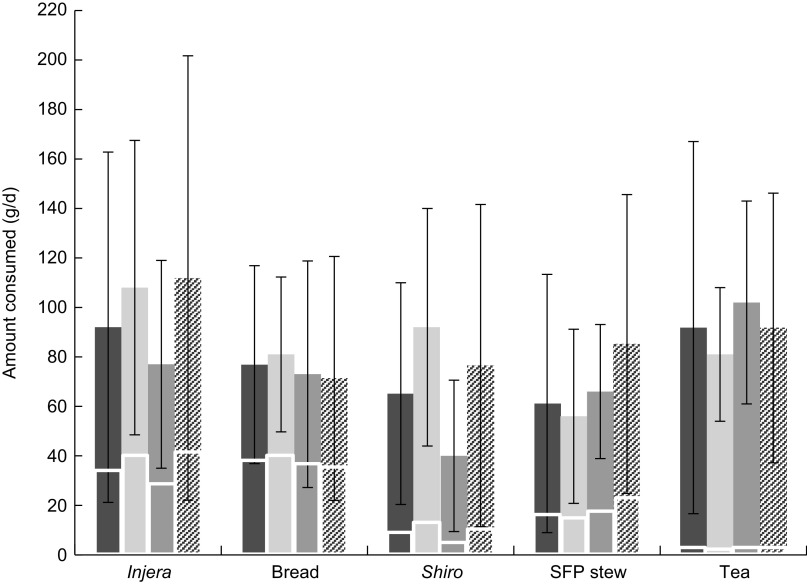
Results: About 33% of the children, ~46% in the highlands and 24% in the lowlands (P=0.05), were stunted. Complementary diets were low in animal products, fruits and vegetables. Cereals and legumes were the major sources of energy, protein, Ca, Fe, Zn and vitamin A. Legumes with potentially toxic components (grass pea, broad beans) and low nutrient-dense beverages such as tea were frequently consumed. Intakes of energy, Ca, Zn, vitamin A and vitamin C from complementary foods were below WHO recommendations assuming average breast-milk intakes. In contrast, Fe and protein intakes and densities met WHO recommendations. Although vitamin C intakes and densities were higher (P<0.05) for the lowlands, they remained far below WHO recommendations.
Conclusions: Interventions promoting the WHO guiding principles for complementary feeding practices and behaviours that take the agro-ecological contexts into account are needed here. Furthermore, specific recommendations should be formulated to discourage the consumption of grass pea, broad beans and low nutrient-dense beverages such as tea.
Figures




References
-
- Shrimpton R, Victora CG, de Onis M et al. (2001) Worldwide timing of growth faltering: implications for nutritional interventions. Pediatrics 107, e75. - PubMed
-
- Sanghvi T, Ross J & Heymann H (2007) Why is reducing vitamin and mineral deficiencies critical for development? Food Nutr Bull 28, issue 1, S167–S173. - PubMed
-
- Black RE, Allen LH, Bhutta ZA et al. (2008) Maternal and child undernutrition: global and regional exposures and health consequences. Lancet 371, 243–260. - PubMed
-
- Martorell R, Kahn LK & Schroeder DG (1994) Reversibility of stunting: epidemiological findings in children from developing countries. Eur J Clin Nutr 48, Suppl.1, S45–S57. - PubMed
-
- WHO Multicentre Growth Reference Study Group (2006) WHO Child Growth Standards based on length/height, weight and age. Acta Paediatr Suppl 450, 76–85. - PubMed
Publication types
MeSH terms
Substances
LinkOut - more resources
Full Text Sources
Medical
Miscellaneous
