


An opportunistic pathogen isolated from the gut of an obese human causes obesity in germfree mice
- PMID: 23235292
- PMCID: PMC3603399
- DOI: 10.1038/ismej.2012.153
An opportunistic pathogen isolated from the gut of an obese human causes obesity in germfree mice
Abstract
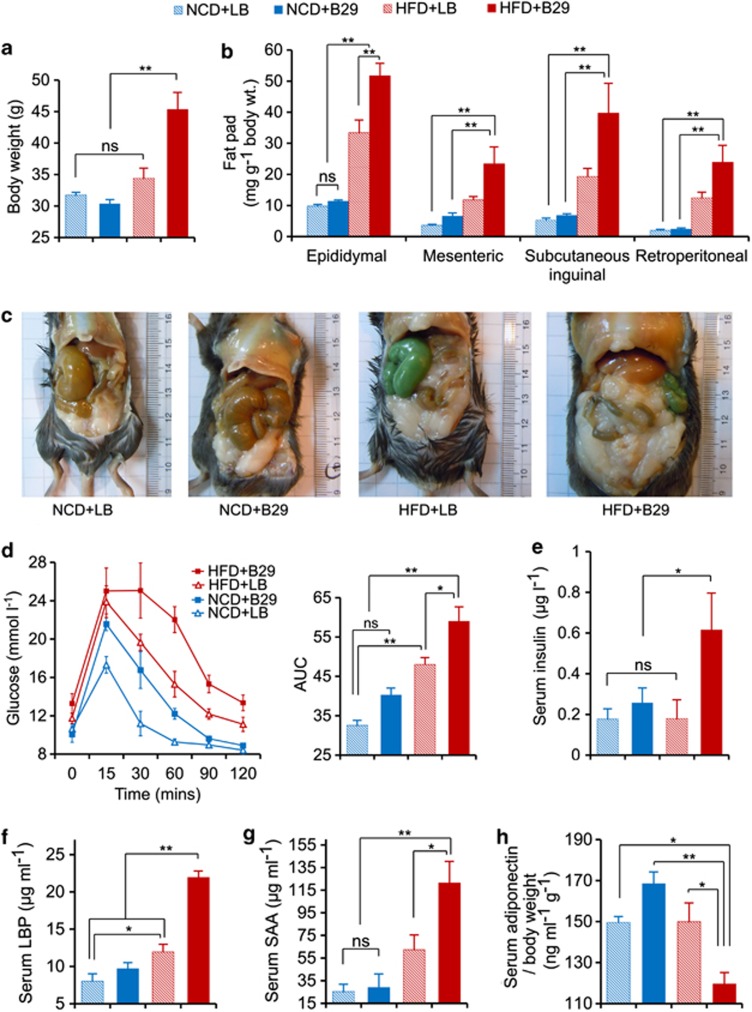
Lipopolysaccharide endotoxin is the only known bacterial product which, when subcutaneously infused into mice in its purified form, can induce obesity and insulin resistance via an inflammation-mediated pathway. Here we show that one endotoxin-producing bacterium isolated from a morbidly obese human's gut induced obesity and insulin resistance in germfree mice. The endotoxin-producing Enterobacter decreased in relative abundance from 35% of the volunteer's gut bacteria to non-detectable, during which time the volunteer lost 51.4 kg of 174.8 kg initial weight and recovered from hyperglycemia and hypertension after 23 weeks on a diet of whole grains, traditional Chinese medicinal foods and prebiotics. A decreased abundance of endotoxin biosynthetic genes in the gut of the volunteer was correlated with a decreased circulating endotoxin load and alleviated inflammation. Mono-association of germfree C57BL/6J mice with strain Enterobacter cloacae B29 isolated from the volunteer's gut induced fully developed obesity and insulin resistance on a high-fat diet but not on normal chow diet, whereas the germfree control mice on a high-fat diet did not exhibit the same disease phenotypes. The Enterobacter-induced obese mice showed increased serum endotoxin load and aggravated inflammatory conditions. The obesity-inducing capacity of this human-derived endotoxin producer in gnotobiotic mice suggests that it may causatively contribute to the development of obesity in its human host.
Figures
References
-
- Cani PD, Amar J, Iglesias MA, Poggi M, Knauf C, Bastelica D, et al. Metabolic endotoxemia initiates obesity and insulin resistance. Diabetes. 2007;56:1761–1772. - PubMed
-
- Cani PD, Bibiloni R, Knauf C, Waget A, Neyrinck AM, Delzenne NM, et al. Changes in gut microbiota control metabolic endotoxemia-induced inflammation in high-fat diet-induced obesity and diabetes in mice. Diabetes. 2008;57:1470–1481. - PubMed
Publication types
MeSH terms
Substances
LinkOut - more resources
Full Text Sources
Other Literature Sources
Molecular Biology Databases
