


Breastfeeding or breast milk for procedural pain in neonates
- PMID: 23235618
- PMCID: PMC10108374
- DOI: 10.1002/14651858.CD004950.pub3
Breastfeeding or breast milk for procedural pain in neonates
Update in
-
Breastfeeding or breast milk for procedural pain in neonates.Cochrane Database Syst Rev. 2023 Aug 29;8(8):CD004950. doi: 10.1002/14651858.CD004950.pub4. Cochrane Database Syst Rev. 2023. PMID: 37643989 Free PMC article.
Abstract
Background: Physiological changes brought about by pain may contribute to the development of morbidity in neonates. Clinical studies have shown reduction in changes in physiological parameters and pain score measurements following pre-emptive analgesic administration in situations where the neonate is experiencing pain or stress. Non-pharmacological measures (such as holding, swaddling and breastfeeding) and pharmacological measures (such as acetaminophen, sucrose and opioids) have been used for this purpose.
Objectives: The primary objective was to evaluate the effectiveness of breastfeeding or supplemental breast milk in reducing procedural pain in neonates. The secondary objective was to conduct subgroup analyses based on the type of control intervention, gestational age and the amount of supplemental breast milk given.
Search methods: We performed a literature search using the Cochrane Central Register of Controlled Trials (CENTRAL) (The Cochrane Library 2011, Issue 10), MEDLINE (1966 to February 2011), EMBASE (1980 to February 2011), CINAHL (1982 to February 2011), abstracts from the annual meetings of the Society for Pediatric Research (1994 to 2011), and major paediatric pain conference proceedings. We did not apply any language restrictions.
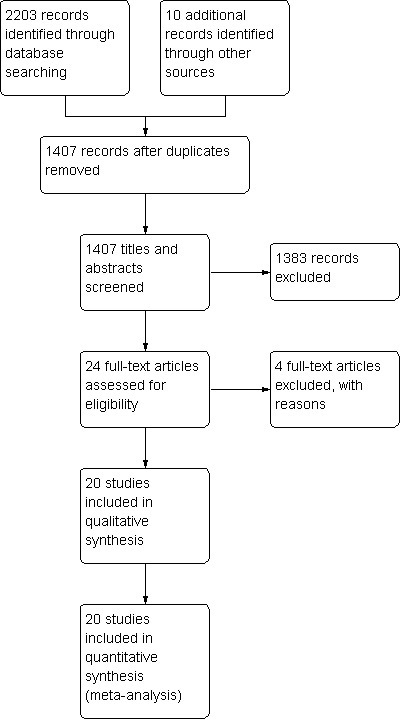
Selection criteria: Randomised controlled trials (RCTs) or quasi-RCTs of breastfeeding or supplemental breast milk versus no treatment/other measures in neonates were eligible for inclusion in this review. The study must have reported on either physiologic markers of pain or validated pain scores.
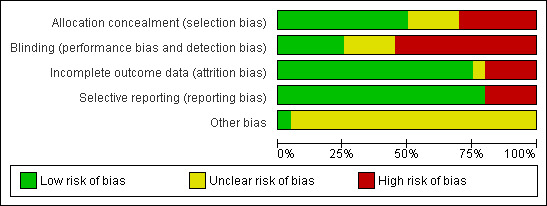
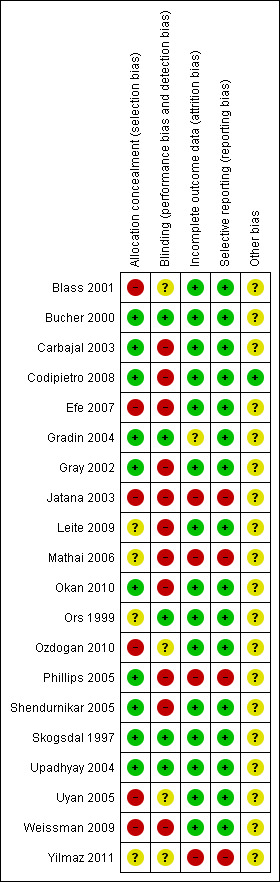
Data collection and analysis: We assessed the methodological quality of the trials using the information provided in the studies and by personal communication with the authors. We extracted data on relevant outcomes, estimated the effect size and reported this as a risk ratio (RR), risk difference (RD) and weighted mean difference (MD) as appropriate.
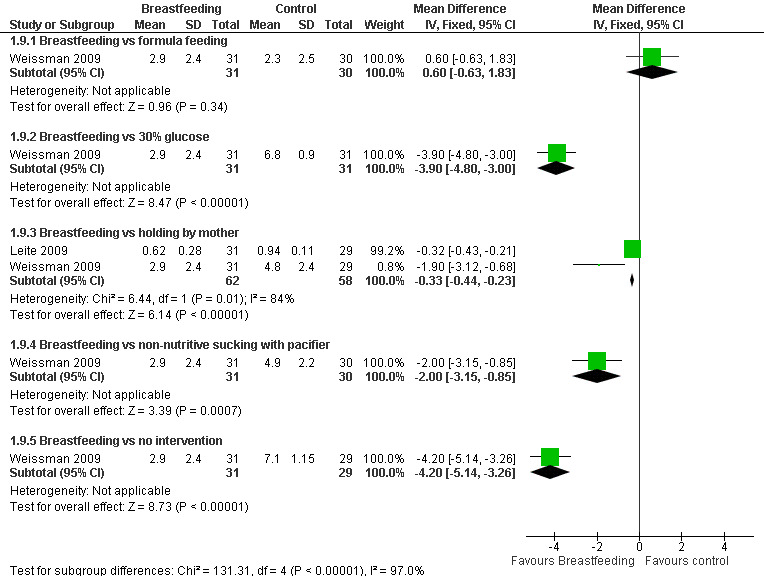
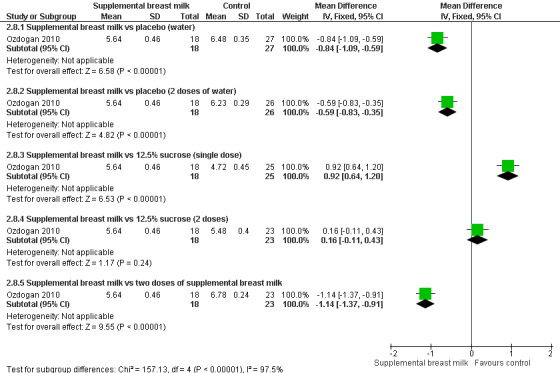
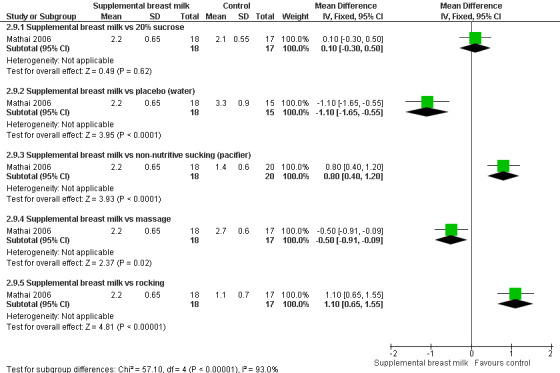
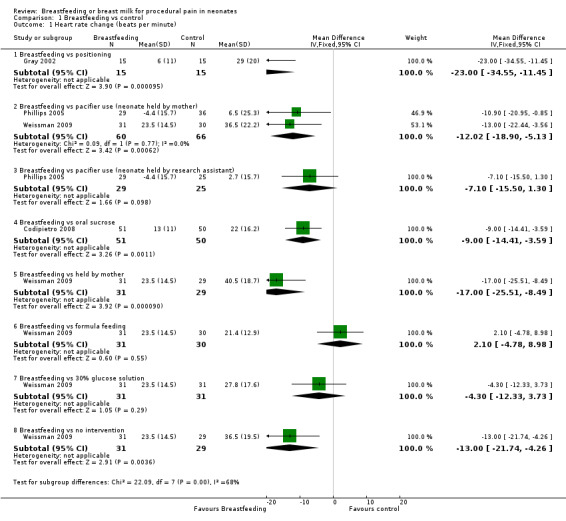
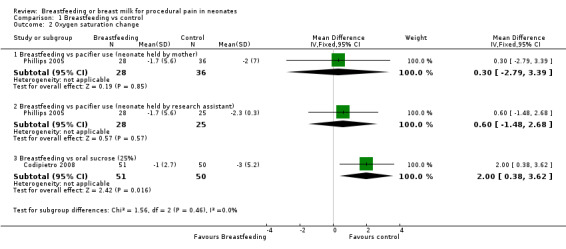
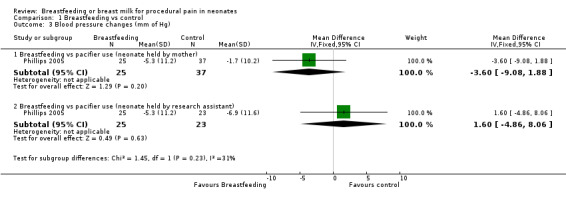
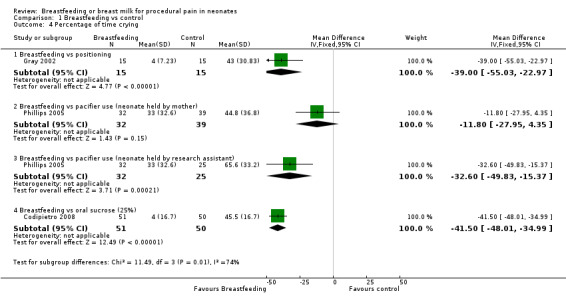
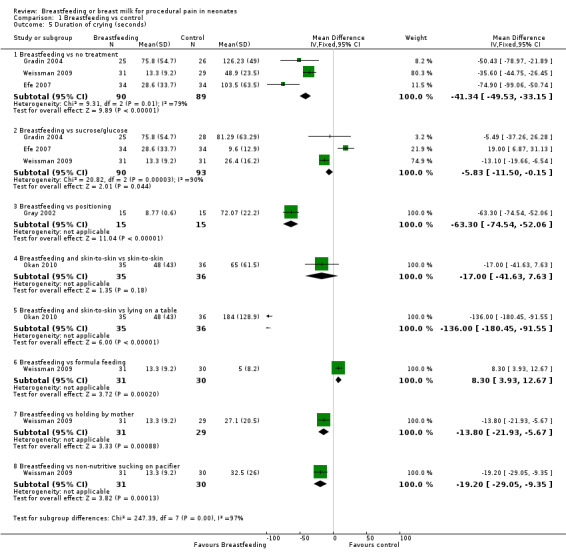
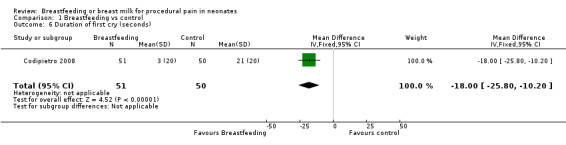
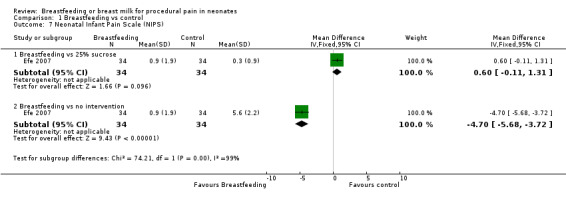
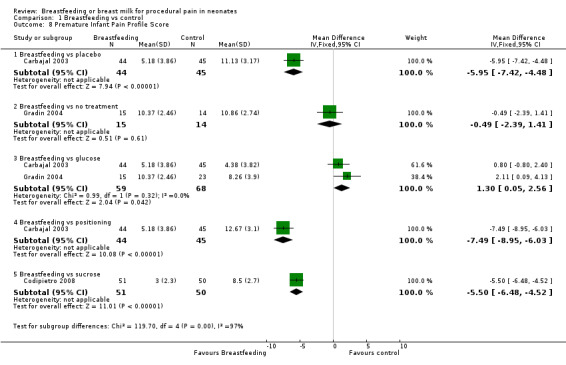
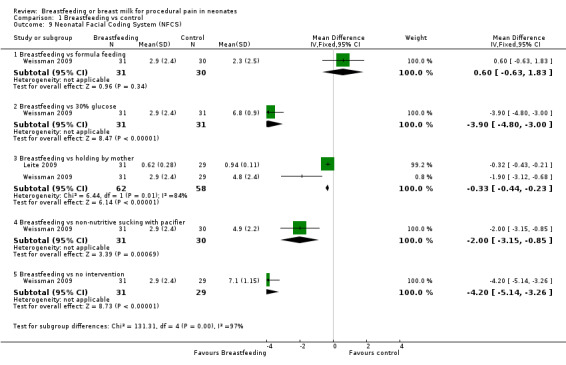
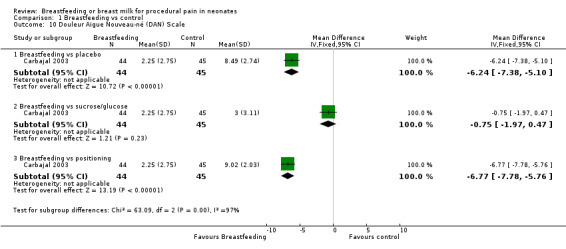
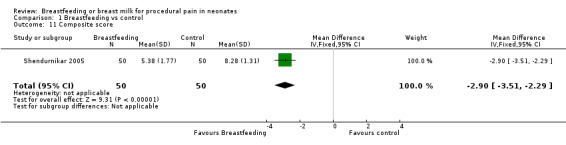
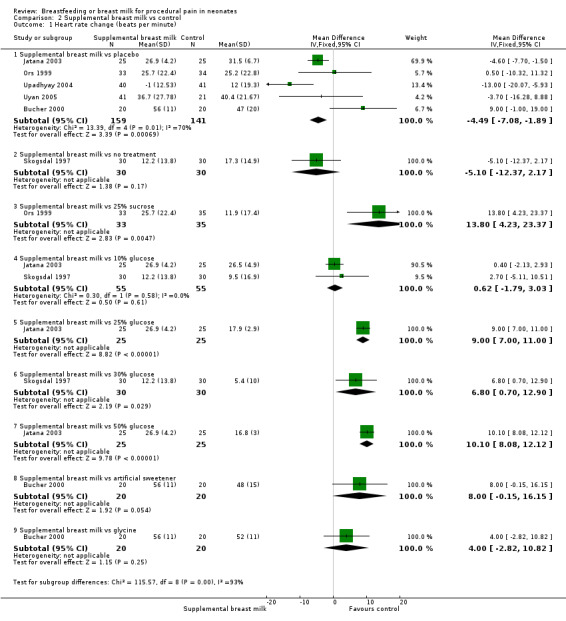
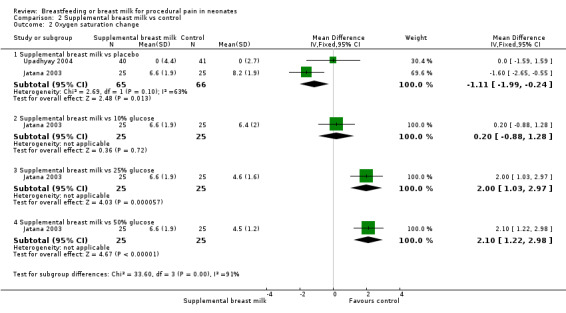
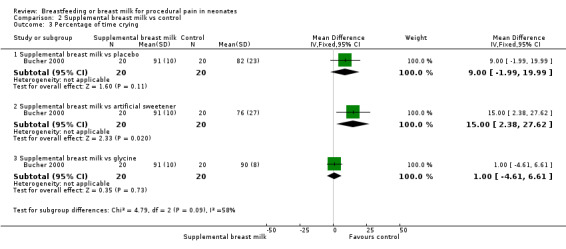
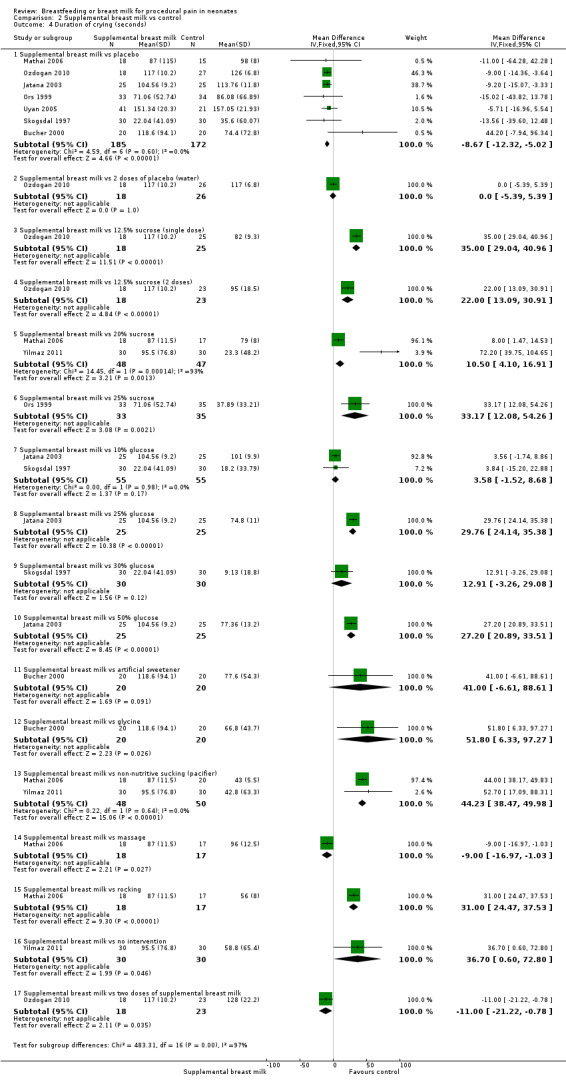
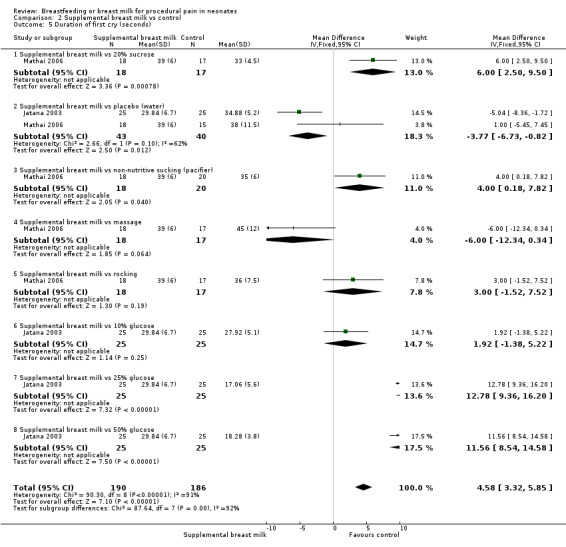
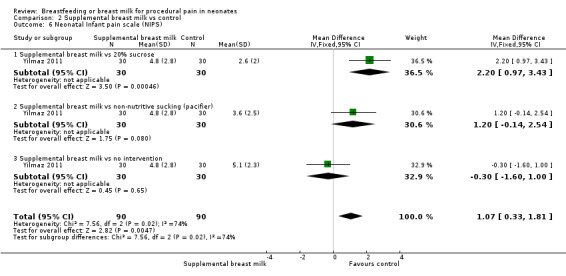
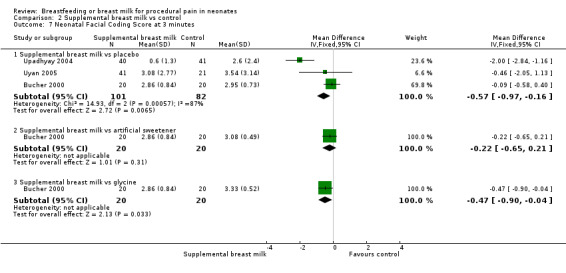
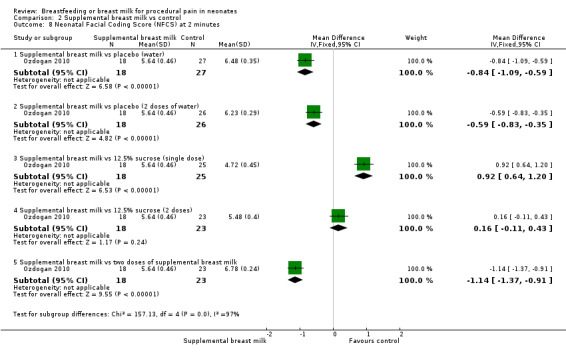
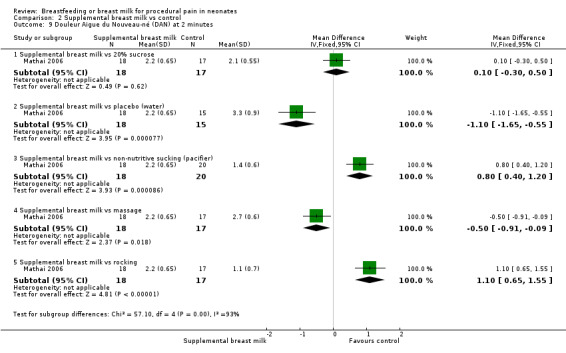
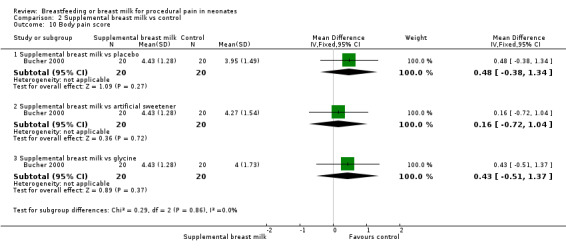
Main results: Of twenty eligible studies, ten evaluated breastfeeding and ten evaluated supplemental breast milk. Sixteen studies analysed used heel lance and four used venepuncture as procedure. We noted marked heterogeneity in control intervention and pain assessment measures among the studies. Neonates in the breastfeeding group had statistically a significantly lower increase in heart rate, reduced proportion of crying time and reduced duration of first cry and total crying time compared to positioning (swaddled and placed in a crib), holding by mother, placebo, pacifier use, no intervention or oral sucrose group, or both.Premature Infant Pain Profile (PIPP) scores were significantly lower in the breastfeeding group compared to positioning, placebo or oral sucrose group, or both. However, there was no statistically significant difference in PIPP scores when compared to no intervention. Douleur Aigue Nouveau-ne scores (DAN) were significantly lower in the breastfeeding group compared to the placebo group and the group held in mother's arms, but not when compared to the glucose group. Neonatal Infant Pain Scale (NIPS) was significantly lower in the breastfeeding group compared to the no intervention group, but there was no difference when compared to the oral sucrose group. The Neonatal Facial Coding System (NFCS) was significantly lower in the breastfeeding group when compared to oral glucose, pacifier use, holding by mother and no intervention, but no difference was found when compared to formula feeding.Supplemental breast milk yielded variable results. Neonates in the supplemental breast milk group had a significantly lower increase in heart rate, a reduction in duration of crying and a lower NFCS compared to the placebo group. Neonates in the supplemental breast milk group had a significantly higher increase in heart rate changes when compared to the sucrose group. Sucrose (in any concentration, i.e. 12.5%, 20%, 25%) was found to reduce the duration of cry when compared to breast milk, as did glycine, pacifier use, rocking, or no intervention. Breast milk was found not to be effective in reducing validated and non-validated pain scores such as NIPS, NFCS, and DAN; only being significantly better when compared to placebo (water) or massage. We did not identify any study that has evaluated safety/effectiveness of repeated administration of breastfeeding or supplemental breast milk for pain relief.
Authors' conclusions: If available, breastfeeding or breast milk should be used to alleviate procedural pain in neonates undergoing a single painful procedure rather than placebo, positioning or no intervention. Administration of glucose/sucrose had similar effectiveness as breastfeeding for reducing pain. The effectiveness of breast milk for painful procedure should be studied in the preterm population, as there are currently a limited number of studies in the literature that have assessed it's effectiveness in this population.
Conflict of interest statement
None.
Figures
Update of
-
Breastfeeding or breast milk for procedural pain in neonates.Cochrane Database Syst Rev. 2006 Jul 19;(3):CD004950. doi: 10.1002/14651858.CD004950.pub2. Cochrane Database Syst Rev. 2006. Update in: Cochrane Database Syst Rev. 2012 Dec 12;12:CD004950. doi: 10.1002/14651858.CD004950.pub3. PMID: 16856069 Updated.
References
References to studies included in this review
Blass 2001 {published data only}
-
- Blass EM, Miller LW. Effects of colostrum in newborn humans: dissociation between analgesic and cardiac effects. Journal of Developmental and Behavioral Pediatrics 2001;22:385‐90. - PubMed
Bucher 2000 {published and unpublished data}
-
- Bucher HU, Baumgartner R, Bucher N, Seiler M, Fauchere JC. Artificial sweetener reduces nociceptive reaction in term newborn infants. Early Human Development 2000;59:51‐60. - PubMed
Carbajal 2003 {published data only}
Codipietro 2008 {published data only}
-
- Codipietro L, Ceccarelli M, Ponzone A. Breastfeeding or oral sucrose solution in term neonates receiving heel lance: a randomized controlled trial. Pediatrics 2008;122:e716‐21. - PubMed
Efe 2007 {published data only}
-
- Efe E, Savaser S. The effect of two different methods used during peripheral venous blood collection on pain reduction in neonates. Agri 2007;19:49‐56. - PubMed
Gradin 2004 {published data only}
-
- Gradin M, Finnstrom O, Schollin J. Feeding and oral glucose‐additive effects on pain reduction in newborns. Early Human Development 2004;77:57‐65. - PubMed
Gray 2002 {published data only}
-
- Gray L, Miller LW, Philipp BL, Blass EM. Breastfeeding is analgesic in healthy newborns. Pediatrics 2002;109:590‐3. - PubMed
Jatana 2003 {published data only}
Leite 2009 {published data only}
-
- Leite AM, Linhares MB, Lander J, Castral TC, dos Santos CB, Silvan Scochi CG. Effects of breastfeeding on pain relief in full‐term newborns. Clinical Journal of Pain 2009;25:827‐32. - PubMed
Mathai 2006 {published data only}
-
- Mathai S, Natrajan N, Rajalakshmi NR. A comparative study of nonpharmacological methods to reduce pain in neonates. Indian Pediatrics 2006;43:1070‐5. - PubMed
Okan 2010 {published data only}
-
- Okan F, Ozdil A, Bulbul A, Yapici Z, Nuhoglu A. Analgesic effects of skin‐to‐skin contact and breastfeeding in procedural pain in healthy term neonates. Annals of Tropical Paediatrics 2010;30:119‐28. - PubMed
Ors 1999 {published data only}
-
- Ors R, Ozek E, Baysoy G, Cebeci D, Bilgen H, Turkuner M, et al. Comparison of sucrose and human milk on pain response in newborns. European Journal of Pediatrics 1999;158:63‐6. - PubMed
Ozdogan 2010 {published data only}
-
- Ozdogan T, Akman I, Cebeci D, Bilgen H, Ozek E. Comparison of two doses of breast milk and sucrose during neonatal heel prick. Pediatrics International 2010;52:175‐9. - PubMed
Phillips 2005 {published data only}
-
- Philips RM, Chantry CJ, Gallagher MP. Analgesic effects of breast‐feeding or pacifier use with maternal holding in term infants. Ambulatory Pediatrics 2005;5:359‐64. - PubMed
Shendurnikar 2005 {published and unpublished data}
-
- Shendurnikar N, Gandhi K. Analgesic effects of breastfeeding on heel lancing. Indian Pediatrics 2005;42:730‐2. - PubMed
Skogsdal 1997 {published and unpublished data}
-
- Skogsdal Y, Eriksson M, Schollin J. Analgesia in newborns given oral glucose. Acta Paediatrica 1997;86:217‐20. - PubMed
Upadhyay 2004 {published data only}
-
- Upadhyay A, Aggarwal R, Narayan S, Joshi M, Paul VK, Deorari AK. Analgesic effect of expressed breast milk in procedural pain in term neonates: a randomized, placebo‐controlled, double‐blind trial. Acta Paediatrica 2004;93:518‐22. - PubMed
Uyan 2005 {published data only}
-
- Uyan ZS, Ozek E, Bilgen H, Cebeci D, Akman I. Effect of foremilk and hindmilk on simple procedural pain in newborns. Pediatrics International 2005;47:252‐7. - PubMed
Weissman 2009 {published data only}
-
- Weissman A, Aranovitch M, Blazer S, Zimmer EZ. Heel‐lancing in newborns: behavioral and spectral analysis assessment of pain control methods. Pediatrics 2009;124(5):e921‐6. - PubMed
Yilmaz 2011 {published data only}
-
- Yilmaz F, Arikan D. The effects of various interventions to newborns on pain and duration of crying. Journal of Clinical Nursing 2011;20:1008‐17. - PubMed
References to studies excluded from this review
Bilgen 2001 {published data only}
-
- Bilgen H, Ozek E, Cebeci D, Ors R. Comparison of sucrose, expressed breast milk, and breast‐feeding on the neonatal response to heel prick. Journal of Pain 2001;2:301‐5. - PubMed
Efe 2007a {published data only}
-
- Efe E, Ozer ZC. The use of breast‐feeding for pain relief during neonatal immunization injections. Applied Nursing Research 2007;20:10‐6. - PubMed
Iturriaga 2009 {published data only}
-
- Iturriaga GS, Unceta‐Barrenechea AA, Zárate KS, Olaechea IZ, Núñez AR, Rivero MM. Analgesic effect of breastfeeding when taking blood by heel‐prick in newborns [Efecto analgesico de la lactancia materna en la toma sanguinea del talón en el recien nacido]. Anales de Pediatria 2009;71:310‐3. - PubMed
Osinaike 2007 {published data only}
-
- Osinaike BB, Oyedeji AO, Adeoye OT, Dairo MD, Aderinto DA. Effect of breastfeeding during venepuncture in neonates. Annals of Tropical Paediatrics 2007;27:201‐5. - PubMed
References to ongoing studies
NCT00175409 {unpublished data only}
-
- NCT00175409. Breast feeding analgesia in preterm infants. www.clinicaltrials.gov/ct2/show/NCT00175409?term=breastfeeding&cond=... (accessed 11 April 2011).
NCT00414258 {unpublished data only}
-
- NCT00414258. The Holding Study: feeding analgesia in preterm infants. www.clinicaltrials.gov/ct2/show/NCT00414258?term=breastfeeding&cond=... (accessed 12 April 2011).
NCT00908401 {unpublished data only}
-
- NCT00908401. Analgesic effect of breastmilk for procedural pain in preterm infants (BMoS). www.clinicaltrials.gov/ct2/show/NCT00908401?term=breast+milk&cond=pa... (accessed 22 May 2009).
NCT01276366 {unpublished data only}
-
- NCT01276366. Amphia premature infant pain study (APIP). www.clinicaltrials.gov/ct2/show/NCT01276366?term=breast+milk&cond=pa... (accessed 23 April 2010).
NCT01355640 {unpublished data only}
-
- NCT01355640. Two methods of analgesia for Chinese term infants receiving heel lance. www.clinicaltrials.gov/ct2/show/NCT01355640?term=breastfeeding&cond=... (accessed 1 June 2011).
Additional references
AAP 2000
-
- American Academy of Pediatrics. Prevention and management of pain and stress in the neonate. Pediatrics 2000;105:454‐61. - PubMed
Abdel‐Rahman 1994
-
- Abdel‐Rahman AM, Rosenberg AA. Prevention of intraventricular hemorrhage in the premature infant. Clinics in Perinatology 1994;21:505‐21. - PubMed
Abu‐Saad 1998
-
- Abu‐Saad HH, Bours GJ, Stevens B, Hamers JP. Assessment of pain in the neonate. Seminars in Perinatology 1998;22:402‐16. - PubMed
Anand 1989
-
- Anand KJ, Carr DB. The neuroanatomy, neurophysiology and neurochemistry of pain, stress and analgesia in newborns and children. Pediatric Clinics of North America 1989;36:795‐822. - PubMed
Anand 1998
-
- Anand KJ. Clinical importance of pain and stress in preterm neonates. Biology of the Neonate 1998;73:1‐9. - PubMed
Anand 2001
-
- Anand KJ, International Evidence‐Based Group for Neonatal Pain. Consensus statement for the prevention and management of pain in the newborn. Archives of Pediatric and Adolescent Medicine 2001;155:173‐80. - PubMed
Barrett 2000
-
- Barrett T, Kent S, Voudoris N. Does melatonin modulate beta‐endorphin, corticosterone, and pain threshold?. Life Sciences 2000;66:467‐76. - PubMed
Blass 1995
-
- Blass EM, Shide DJ. Mother as a shield: differential effects of contact and nursing on pain responsivity in infant rats ‐ evidence for nonopioid mediation. Behavioral Neuroscience 1995;109:342‐53. - PubMed
Blass 1997
-
- Blass EM. Milk‐induced hypoalgesia in human newborns. Pediatrics 1997;99:825‐9. - PubMed
Carbajal 1997
-
- Carbajal R, Paupe A, Hoenn E, Lenclen R, Olivier‐Martin M. APH: evaluation of behavioral scale of acute pain in newborn infants [Douleur Aigue Nouveau‐ne: une echelle comportementale d'evaluation de la douleur aigue du nouveau‐ne]. Archives of Pediatrics 1997;4:623‐8. - PubMed
Corff 1995
-
- Corff K, Seideman R, Venkataraman P, Lutes L, Yates B. Facilitated tucking: a nonpharmacologic comfort measure for pain in preterm infants. Journal of Obstetrics and Gynecological and Neonatal Nursing 1995;24:143‐7. - PubMed
Craig 1993
-
- Craig KD, Whitfield MF, Grunau RV, Linton J, Hadjistavropoulos HD. Pain in the preterm neonate: behavioral and physiological indices. Pain 1993;52:287‐99. - PubMed
Craig 1994
-
- Craig KD, Hadjistavropoulos HD, Grunau RVE, Whitfield RF. A comparison of two measures of facial activity during pain in the newborn child. Journal of Pediatric Psychology 1994;19:305‐18. - PubMed
Grunau 1987
-
- Grunau RV, Craig KD. Pain expression in neonates: facial action and cry. Pain 1987;28:395‐410. - PubMed
Gunnar 1984
-
- Gunnar M. The effects of a pacifying stimulus on behavioral and adrenocortical responses to circumcision in the newborn. Journal of the American Academy of Child and Adolescent Psychiatry 1984;23:34‐8. - PubMed
Heine 1999
-
- Heine WE. The significance of tryptophan in infant nutrition. Advances in Experimental Medicine and Biology 1999;467:705‐10. - PubMed
Higgins 2003
Higgins 2011
-
- Higgins JPT, Green S (editors). Cochrane Handbook for Systematic Reviews of Interventions. Version 5.1.0 [updated March 2011]. The Cochrane Collaboration, 2011. Available from www.cochrane‐handbook.org.
Johnston 1993
-
- Johnston CC, Stevens B, Craig RD, Grunau RV. Developmental changes in pain expression in premature, full term, two‐ and four‐months‐old infants. Pain 1993;52:201‐8. - PubMed
Johnston 2002
-
- Johnston CC, Filion F, Snider L, Majnemer A, Limperopoulos C, Walker CD, et al. Routine sucrose analgesia during the first week of life in neonates younger than 31 weeks' postconceptional age. Pediatrics 2002;110:523‐8. - PubMed
Lawrence 1993
-
- Lawrence J, Alcock D, McGrath P, Kay J, MacMurray SB, Dulberg C. The development of a tool to assess neonatal pain. Neonatal Network 1993;12:59‐66. - PubMed
Marshall 1980
-
- Marshall RE, Stratton WC, Moore JA, Boxerman SB. Circumcision I: Effects upon newborn behavior. Infant Behaviour and Development 1980;3:1‐14.
RevMan 2011 [Computer program]
-
- The Nordic Cochrane Centre, The Cochrane Collaboration. Review Manager (RevMan). Version 5.1. Copenhagen: The Nordic Cochrane Centre, The Cochrane Collaboration, 2011.
Schechter 1997
-
- Schechter NL, Blankson V, Pachter LM, Sullivan CM, Costa L. The ouchless place: no pain, children's gain. Pediatrics 1997;99:890‐4. - PubMed
Schollin 2004
-
- Schollin J. Analgesic effect of expressed breast milk in procedural pain in neonates. Acta Paediatrica 2004;93:453‐5. - PubMed
Stevens 1993
-
- Stevens BJ, Johnston CC, Horton L. Multidimensional pain assessment in premature neonates: a pilot study. Journal of Obstetric, Gynecologic, and Neonatal Nursing 1993;22:531‐41. - PubMed
Stevens 1996
-
- Stevens B, Johnson C, Petryshen P, Taddio A. Premature Infant Pain Profile: development and initial validation. Clinical Journal of Pain 1996;12:13‐22. - PubMed
Stevens 2010
Warnock 2010
-
- Warnock FF, Castral TC, Brant R, Sekilian M, Leite AM, Owens Sde L, et al. Brief report: Maternal kangaroo care for neonatal pain relief: a systematic narrative review. Journal of Pediatric Psychology 2010;35:975‐84. - PubMed
Publication types
MeSH terms
Grants and funding
LinkOut - more resources
Full Text Sources
Other Literature Sources
Medical
Miscellaneous
