


Role of gastrin-peptides in Barrett's and colorectal carcinogenesis
- PMID: 23236230
- PMCID: PMC3516208
- DOI: 10.3748/wjg.v18.i45.6560
Role of gastrin-peptides in Barrett's and colorectal carcinogenesis
Abstract
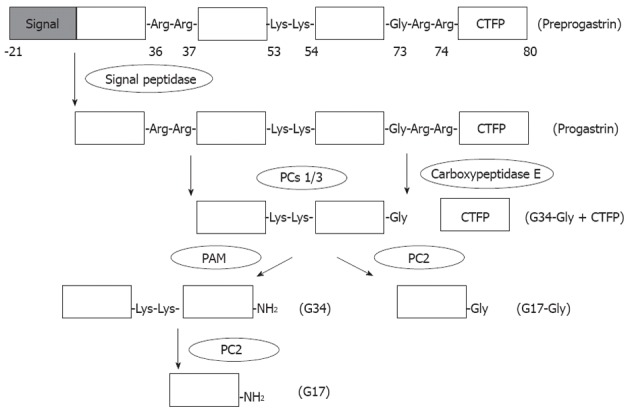
Gastrin is the main hormone responsible for the stimulation of gastric acid secretion; in addition, gastrin and its derivatives exert proliferative and antiapoptotic effects on several cell types. Gastrin synthesis and secretion are increased in certain situations, for example, when proton pump inhibitors are used. The impact of sustained hypergastrinemia is currently being investigated. In vitro experiments and animal models have shown that prolonged hypergastrinemia may be related with higher cancer rates; although, this relationship is less clear in human beings. Higher gastrin levels have been shown to cause hyperplasia of several cell types; yet, the risk for developing cancer seems to be the same in normo- and hypergastrinemic patients. Some tumors also produce their own gastrin, which can act in an autocrine manner promoting tumor growth. Certain cancers are extremely dependent on gastrin to proliferate. Initial research focused only on the effects of amidated gastrins, but there has been an interest in intermediates of gastrin in the last few decades. These intermediates aren't biologically inactive; in fact, they may exert greater effects on proliferation and apoptosis than the completely processed forms. In certain gastrin overproduction states, they are the most abundant gastrin peptides secreted. The purpose of this review is to examine the gastrin biosynthesis process and to summarize the results from different studies evaluating the production, levels, and effects of the main forms of gastrin in different overexpression states and their possible relationship with Barrett's and colorectal carcinogenesis.
Keywords: Barrett’s esophagus; C-terminal flanking peptide; Colorectal cancer; Esophageal adenocarcinoma; Gastrin; Glycine-extended gastrins; Hypergastrinemia; Progastrin; Proton pump inhibitors.
Figures
References
-
- Beales IL, Ogunwobi OO. Glycine-extended gastrin inhibits apoptosis in Barrett’s oesophageal and oesophageal adenocarcinoma cells through JAK2/STAT3 activation. J Mol Endocrinol. 2009;42:305–318. - PubMed
-
- Cobb S, Wood T, Ceci J, Varro A, Velasco M, Singh P. Intestinal expression of mutant and wild-type progastrin significantly increases colon carcinogenesis in response to azoxymethane in transgenic mice. Cancer. 2004;100:1311–1323. - PubMed
-
- Haigh CR, Attwood SE, Thompson DG, Jankowski JA, Kirton CM, Pritchard DM, Varro A, Dimaline R. Gastrin induces proliferation in Barrett’s metaplasia through activation of the CCK2 receptor. Gastroenterology. 2003;124:615–625. - PubMed
Publication types
MeSH terms
Substances
LinkOut - more resources
Full Text Sources
Other Literature Sources
Medical
