


A cluster-randomised controlled trial of a school-based fruit and vegetable intervention: Project Tomato
- PMID: 23237386
- PMCID: PMC10271632
- DOI: 10.1017/S1368980012005290
A cluster-randomised controlled trial of a school-based fruit and vegetable intervention: Project Tomato
Abstract
Objective: The present study aimed to determine whether a multi-component school-based intervention can maintain children's fruit and vegetable intake post eligibility for free school fruit and vegetables.
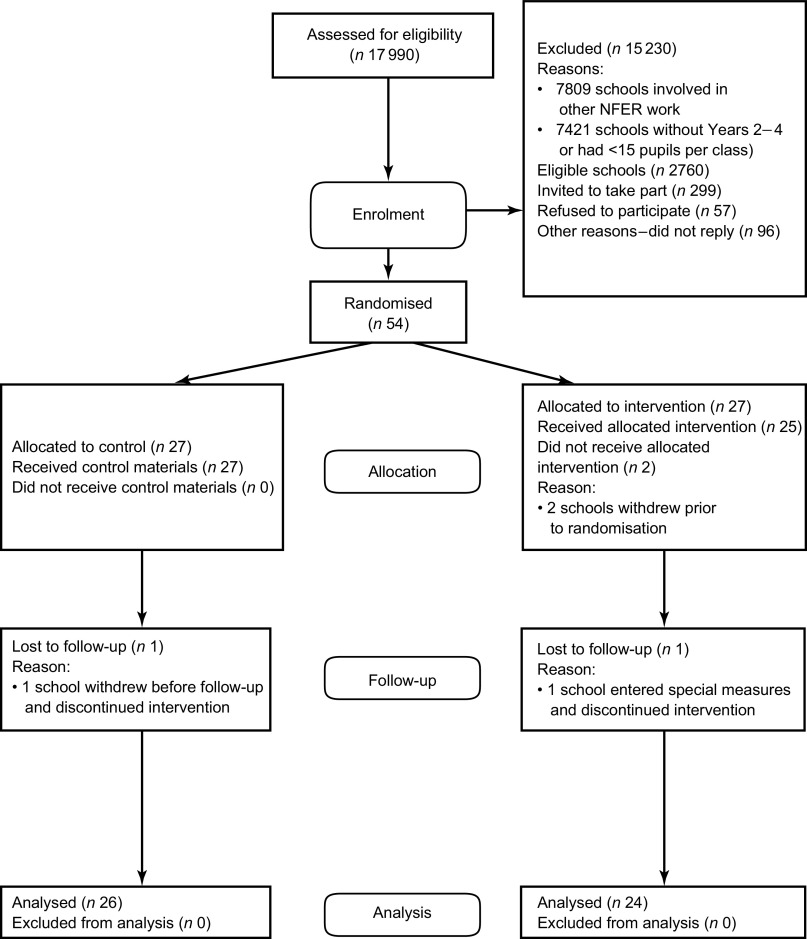
Design: A random sample of fifty-four English primary schools was randomised to receive the 10-month intervention Project Tomato, a multi-component theory-based intervention, or the control. Each group consisted of twenty-seven schools.
Setting: Children's intake of fruit and vegetables is below recommendations. The English School Fruit and Vegetable Scheme has a short-term impact on intake while children are eligible for the scheme.
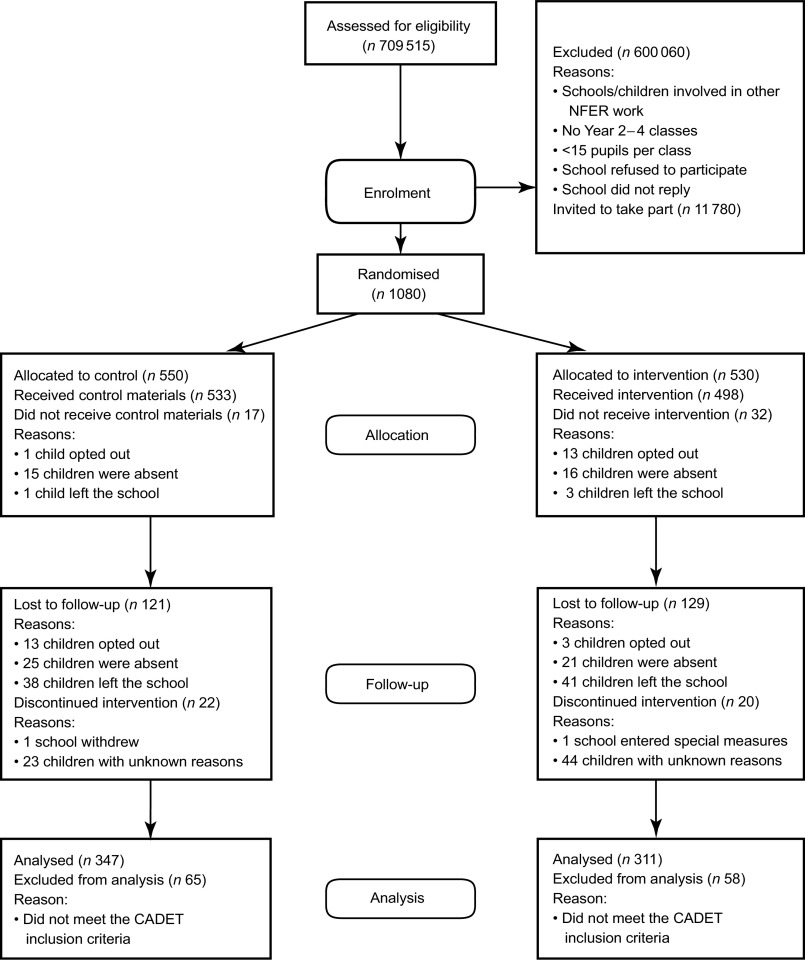
Subjects: Dietary measurements were collected from 658 Year 2 pupils aged 7-8 years at baseline and at follow-up 20 months later.
Results: Following an intention to treat analysis, the intervention as delivered compared with the control had no impact on the intake of fruit and vegetables (2 g/d, 95 % CI -23, 26 g/d) or on the number of portions of fruit (0.0 portions, 95 % CI - 0.3, 0.3) or vegetables (0.0 portions, 95 % CI - 0.2, 0.3) consumed daily by children. Intake of fruit and vegetables at school and home dropped by ≈ 100 g/d and 50 g/d, respectively, between baseline and follow-up in both the intervention and control groups.
Conclusions: Implementation of the intervention was low, with associated lack of impact on fruit and vegetable consumption in children. Alternatives to the delivery of an intervention by teachers and parents are needed to improve the dietary intake of primary-school children.
Figures
References
-
- World Health Organization (2004) Global Strategy on Diet, Physical Activity and Health. Geneva: WHO.
-
- World Cancer Research Fund & American Institute for Cancer Research (2007) Food, Nutrition and Physical Activity and the Prevention of Cancer: A Global Perpsective. Washington, DC: WCRF/AICR.
-
- Block G, Patterson B & Sumar A (1992) Fruit, vegetables, and cancer prevention: a review of the epidemiological evidence. Nutr Cancer 18, 1–29. - PubMed
