


Quality of antenatal care in Zambia: a national assessment
- PMID: 23237601
- PMCID: PMC3536568
- DOI: 10.1186/1471-2393-12-151
Quality of antenatal care in Zambia: a national assessment
Abstract
Background: Antenatal care (ANC) is one of the recommended interventions to reduce maternal and neonatal mortality. Yet in most Sub-Saharan African countries, high rates of ANC coverage coexist with high maternal and neonatal mortality. This disconnect has fueled calls to focus on the quality of ANC services. However, little conceptual or empirical work exists on the measurement of ANC quality at health facilities in low-income countries. We developed a classification tool and assessed the level of ANC service provision at health facilities in Zambia on a national scale and compared this to the quality of ANC received by expectant mothers.
Methods: We analysed two national datasets with detailed antenatal provider and user information, the 2005 Zambia Health Facility Census and the 2007 Zambia Demographic and Health Survey (DHS), to describe the level of ANC service provision at 1,299 antenatal facilities in 2005 and the quality of ANC received by 4,148 mothers between 2002 and 2007.
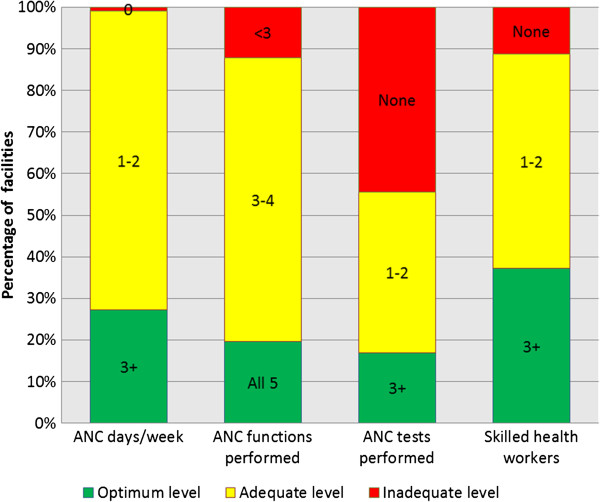
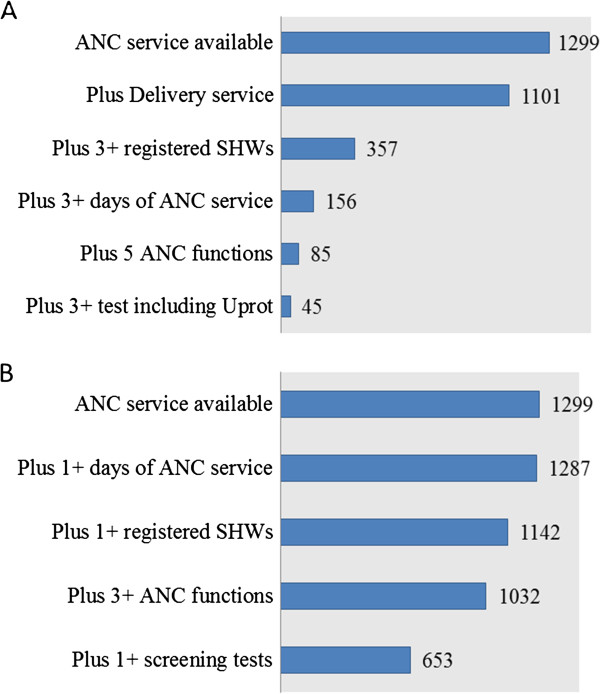
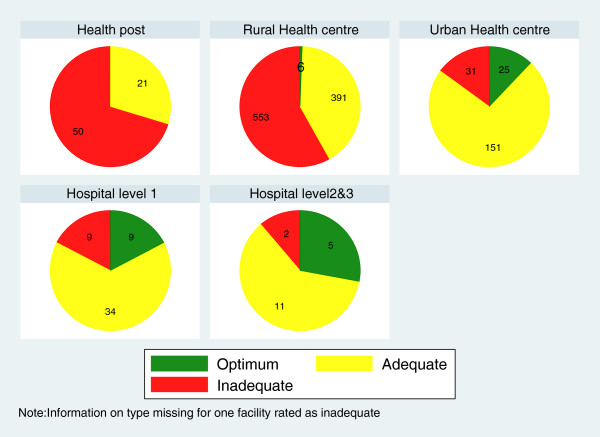
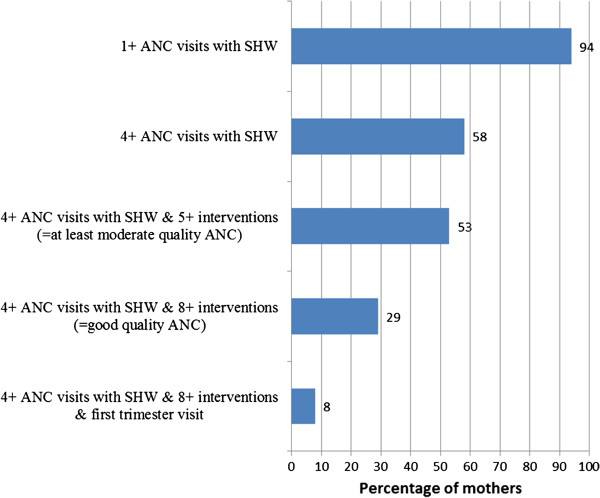
Results: We found that only 45 antenatal facilities (3%) fulfilled our developed criteria for optimum ANC service, while 47% of facilities provided adequate service, and the remaining 50% offered inadequate service. Although 94% of mothers reported at least one ANC visit with a skilled health worker and 60% attended at least four visits, only 29% of mothers received good quality ANC, and only 8% of mothers received good quality ANC and attended in the first trimester.
Conclusions: DHS data can be used to monitor "effective ANC coverage" which can be far below ANC coverage as estimated by current indicators. This "quality gap" indicates missed opportunities at ANC for delivering effective interventions. Evaluating the level of ANC provision at health facilities is an efficient way to detect where deficiencies are located in the system and could serve as a monitoring tool to evaluate country progress.
Figures
References
-
- WHO Facts Sheet: Maternal Mortality. [ http://www.who.int/mediacentre/factsheets/fs348/en/]
-
- WHO, UNICEF, UNFPA, The World Bank. Trends in maternal mortality: 1990 to 2008. Geneva: World Health Organization; 2010. http://whqlibdoc.who.int/publications/2010/9789241500265_eng.pdf.
-
- UNICEF, WHO, The World Bank, United Nations Population Division. Levels and Trends in Child Mortality. New York; 2012. http://www.childmortality.org.
Publication types
MeSH terms
LinkOut - more resources
Full Text Sources
Medical
Miscellaneous
