


Levels and correlates of non-adherence to WHO recommended inter-birth intervals in Rufiji, Tanzania
- PMID: 23237623
- PMCID: PMC3573999
- DOI: 10.1186/1471-2393-12-152
Levels and correlates of non-adherence to WHO recommended inter-birth intervals in Rufiji, Tanzania
Abstract
Background: Poorly spaced pregnancies have been documented worldwide to result in adverse maternal and child health outcomes. The World Health Organization (WHO) recommends a minimum inter-birth interval of 33 months between two consecutive live births in order to reduce the risk of adverse maternal and child health outcomes. However, birth spacing practices in many developing countries, including Tanzania, remain scantly addressed.
Methods: Longitudinal data collected in the Rufiji Health and Demographic Surveillance System (HDSS) from January 1999 to December 2010 were analyzed to investigate birth spacing practices among women of childbearing age. The outcome variable, non-adherence to the minimum inter-birth interval, constituted all inter-birth intervals <33 months long. Inter-birth intervals ≥33 months long were considered to be adherent to the recommendation. Chi-Square was used as a test of association between non-adherence and each of the explanatory variables. Factors affecting non-adherence were identified using a multilevel logistic model. Data analysis was conducted using STATA (11) statistical software.
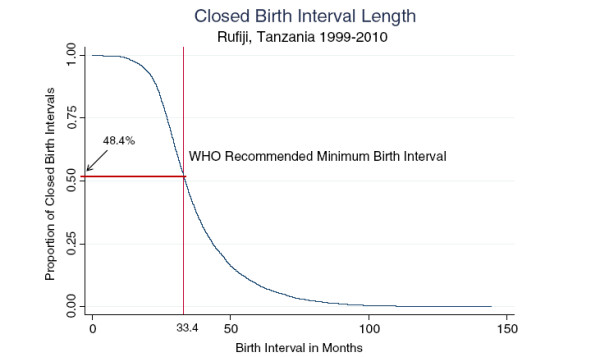
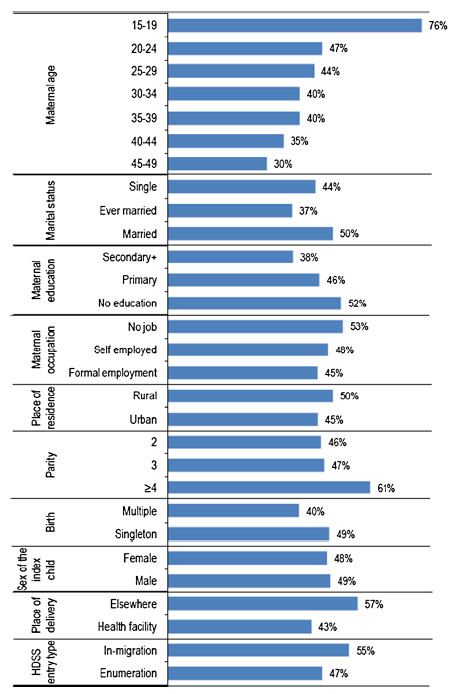
Results: A total of 15,373 inter-birth intervals were recorded from 8,980 women aged 15-49 years in Rufiji district over the follow-up period of 11 years. The median inter-birth interval was 33.4 months. Of the 15,373 inter-birth intervals, 48.4% were below the WHO recommended minimum length of 33 months between two live births. Non-adherence was associated with younger maternal age, low maternal education, multiple births from the preceding pregnancy, non-health facility delivery of the preceding birth, being an in-migrant resident, multi-parity and being married.
Conclusion: Generally, one in every two inter-birth intervals among 15-49 year-old women in Rufiji district is poorly spaced, with significant variations by socio-demographic and behavioral characteristics of mothers and newborns. Maternal, newborn and child health services should be improved with a special emphasis on community- and health facility-based optimum birth spacing education in order to enhance health outcomes of mothers and their babies, especially in rural settings.
Figures
References
-
- Davanzo J, Razzaque A, Rahman M, Hale L, Ahmed K, Khan MA, Mustafa G, Gausia K. The Effects of Birth Spacing on Infant and Child Mortality, Pregnancy Outcomes, and Maternal Morbidity and Mortality in Matlab, Bangladesh. 2004. http://pdf.usaid.gov/pdf_docs/pnadt346.pdf.
-
- UNICEF. The State of the World's Children,2004. UNICEF; 2003. http://www.unicef.org/sowc07/docs/sowc07.pdf.
MeSH terms
Grants and funding
LinkOut - more resources
Full Text Sources
