


Burn-induced cardiac dysfunction increases length of stay in pediatric burn patients
- PMID: 23237822
- PMCID: PMC3610853
- DOI: 10.1097/BCR.0b013e3182685e11
Burn-induced cardiac dysfunction increases length of stay in pediatric burn patients
Abstract
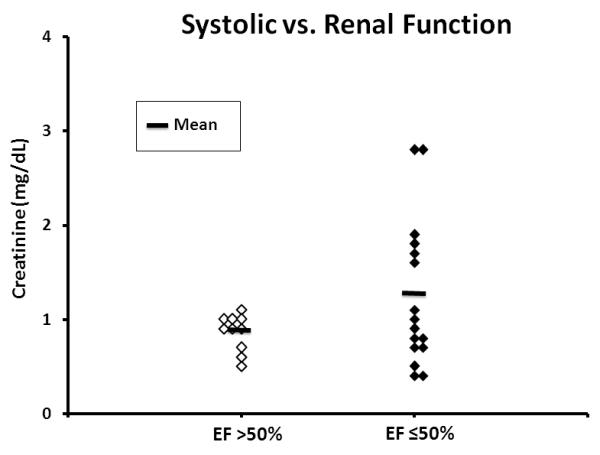
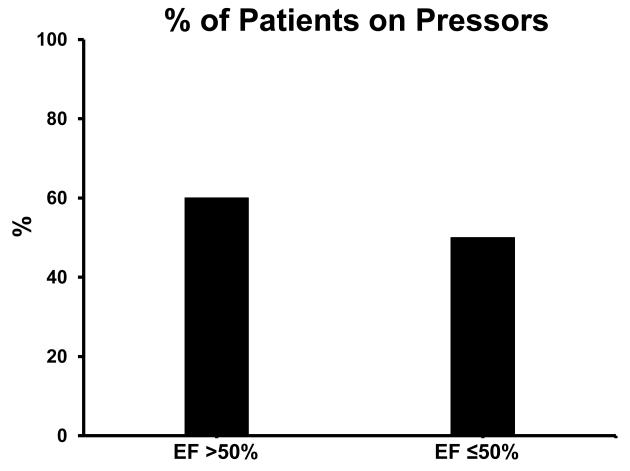
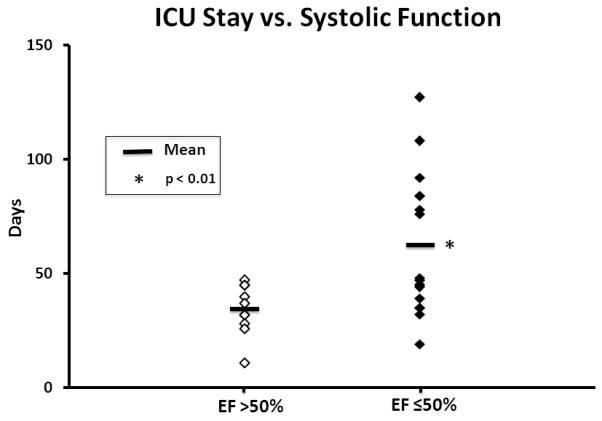
The aim of this study was to evaluate cardiac function and clinical outcomes in perioperative pediatric burn patients. Transesophageal echocardiography data were collected on 40 patients from 2004 to 2007. Of the 40 patients who received exams, a complete set of cardiac parameters and outcome variables was obtained in 26 patients. The mean age of the patients was 9.7 ± 0.9 years, and the mean TBSA burn size was 64 ± 3%. Patients were divided into two groups based on systolic function. One group represented patients with ejection fractions of >50% and the other ≤50%. Clinical variables were then compared among the groups. In our cohort, systolic dysfunction was observed in 62% of patients (EF ≤ 50%). Systolic dysfunction was associated with a statistically significant increase in number of surgeries, ventilator days, and length of stay in the intensive care unit. The length of stay in patients with preserved systolic function and those with systolic dysfunction was 34.3 ± 3.3 days and 67.2 ± 4.0 days, respectively. Diastolic function measurements were obtained in 65%, and 88% had evidence of diastolic dysfunction. Diastolic dysfunction was not associated with any statistically significant correlations. This study lends evidence to the well-supported basic science models showing cardiac dysfunction after burns. Additionally, it shows that cardiac dysfunction can have clinical consequences. To our knowledge, this is the first study that shows the clinical sequelae of systolic dysfunction in the perioperative pediatric burn population.
Figures
References
-
- Adams HR, Baxter CR, Parker JL. Contractile function of heart muscle from burned guinea pigs. Circ Shock. 1982;9:63–73. - PubMed
-
- Adams HR, Baxter CR, Izenberg SD. Decreased contractility and compliance of the left ventricle as complications of thermal trauma. Am Heart J. 1984;108:1477–1487. - PubMed
-
- Adams HR, Baxter CR, Parker JL, et al. Development of acute burn shock in unresuscitated guinea pigs. Circ Shock. 1981;8(6):613–625. - PubMed
-
- Maass DL, Hybki Peters D, White J, et al. The time course of cardiac NF-KB activation and TNF-alpha secretion by cardiac myocytes after burn injury: contribution to burn-related cardiac contractile dysfunction. Shock. 2002;17:293–299. - PubMed
-
- Garner LB, Willis MS, Carlson DL, et al. Macrophage migration inhibitory factor is a cardiac-derived myocardial depressant factor. Am J Physiol. 2003;285:2500–2509. - PubMed
Publication types
MeSH terms
Substances
Grants and funding
LinkOut - more resources
Full Text Sources
Other Literature Sources
Medical
