


Cancer cachexia prevention via physical exercise: molecular mechanisms
- PMID: 23239116
- PMCID: PMC3684702
- DOI: 10.1007/s13539-012-0096-0
Cancer cachexia prevention via physical exercise: molecular mechanisms
Abstract
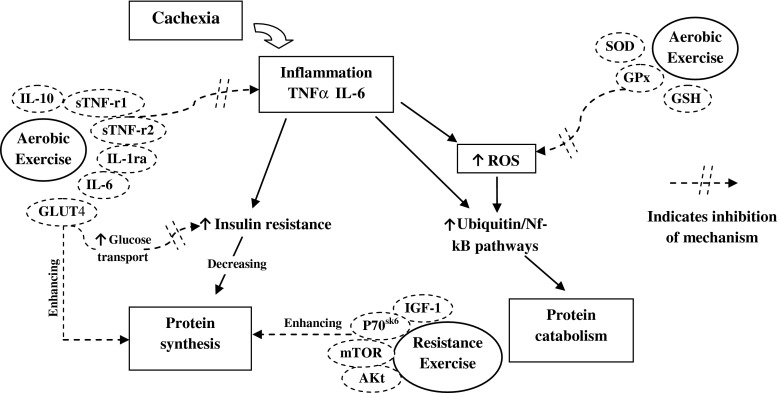
Cancer cachexia is a debilitating consequence of disease progression, characterised by the significant weight loss through the catabolism of both skeletal muscle and adipose tissue, leading to a reduced mobility and muscle function, fatigue, impaired quality of life and ultimately death occurring with 25-30 % total body weight loss. Degradation of proteins and decreased protein synthesis contributes to catabolism of skeletal muscle, while the loss of adipose tissue results mainly from enhanced lipolysis. These mechanisms appear to be at least, in part, mediated by systemic inflammation. Exercise, by virtue of its anti-inflammatory effect, is shown to be effective at counteracting the muscle catabolism by increasing protein synthesis and reducing protein degradation, thus successfully improving muscle strength, physical function and quality of life in patients with non-cancer-related cachexia. Therefore, by implementing appropriate exercise interventions upon diagnosis and at various stages of treatment, it may be possible to reverse protein degradation, while increasing protein synthesis and lean body mass, thus counteracting the wasting seen in cachexia.
Figures
References
-
- Monitto CL, Berkowitz D, Lee KM, Pin S, Li D, Breslow M, O’Malley B, Schiller M. Differential gene expression in a murine model of cancer cachexia. American Journal of Physiology - Endocrinology and Metabolism. 2001;281:E289–97. - PubMed
LinkOut - more resources
Full Text Sources
Other Literature Sources
Medical
