


Assembly and function of the botulinum neurotoxin progenitor complex
- PMID: 23239347
- PMCID: PMC3875173
- DOI: 10.1007/978-3-642-33570-9_2
Assembly and function of the botulinum neurotoxin progenitor complex
Abstract
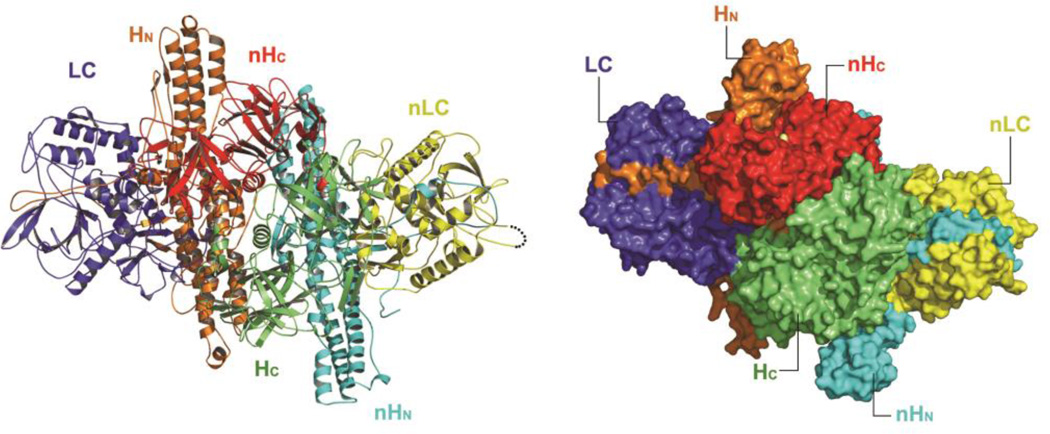
Botulinum neurotoxins (BoNTs) are among the most poisonous substances known to man, but paradoxically, BoNT-containing medicines and cosmetics have been used with great success in the clinic. Accidental BoNT poisoning mainly occurs through oral ingestion of food contaminated with Clostridium botulinum. BoNTs are naturally produced in the form of progenitor toxin complexes (PTCs), which are high molecular weight (up to ~900 kDa) multiprotein complexes composed of BoNT and several non-toxic neurotoxin-associated proteins (NAPs). NAPs protect the inherently fragile BoNTs against the hostile environment of the gastrointestinal (GI) tract and help BoNTs pass through the intestinal epithelial barrier before they are released into the general circulation. These events are essential for ingested BoNTs to gain access to motoneurons, where they inhibit neurotransmitter release and cause muscle paralysis. In this review, we discuss the structural basis for assembly of NAPs and BoNT into the PTC that protects BoNT and facilitate its delivery into the bloodstream.
Figures


References
-
- Arndt JW, Gu J, Jaroszewski L, Schwarzenbacher R, Hanson MA, Lebeda FJ, Stevens RC. The structure of the neurotoxin-associated protein HA33/A from Clostridium botulinum suggests a reoccurring beta-trefoil fold in the progenitor toxin complex. J Mol Biol. 2005;346:1083–1093. - PubMed
-
- Baldwin MR, Kim JJ, Barbieri JT. Botulinum neurotoxin B-host receptor recognition: it takes two receptors to tango. Nat Struct Mol Biol. 2007;14:9–10. - PubMed
-
- Binz T, Bade S, Rummel A, Kollewe A, Alves J. Arg(362) and Tyr(365) of the botulinum neurotoxin type a light chain are involved in transition state stabilization. Biochemistry. 2002;41:1717–1723. - PubMed
-
- Binz T, Kurazono H, Wille M, Frevert J, Wernars K, Niemann H. The complete sequence of botulinum neurotoxin type A and comparison with other clostridial neurotoxins. J Biol Chem. 1990;265:9153–9158. - PubMed
-
- Binz T, Rummel A. Cell entry strategy of clostridial neurotoxins. J Neurochem. 2009;109:1584–1595. - PubMed
Publication types
MeSH terms
Substances
Grants and funding
LinkOut - more resources
Full Text Sources
