


Vitamin D3 supplementation in patients with frequent respiratory tract infections: a randomised and double-blind intervention study
- PMID: 23242238
- PMCID: PMC3533016
- DOI: 10.1136/bmjopen-2012-001663
Vitamin D3 supplementation in patients with frequent respiratory tract infections: a randomised and double-blind intervention study
Abstract
Background: Low serum levels of 25-hydroxyvitamin D(3) are associated with an increased risk of respiratory tract infections (RTIs). Clinical trials with vitamin D(3) against various infections have been carried out but data are so far not conclusive. Thus, there is a need for additional randomised controlled trials of effects of vitamin D(3) on infections.
Objective: To investigate if supplementation with vitamin D(3) could reduce infectious symptoms and antibiotic consumption among patients with antibody deficiency or frequent RTIs.
Design: A double-blind randomised controlled trial.
Setting: Karolinska University Hospital, Huddinge.
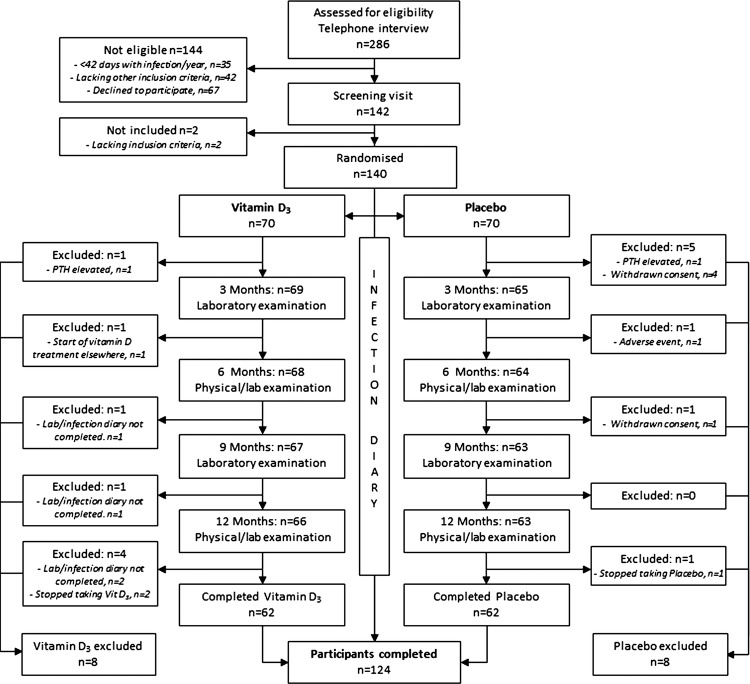
Participants: 140 patients with antibody deficiency (selective IgA subclass deficiency, IgG subclass deficiency, common variable immune disorder) and patients with increased susceptibility to RTIs (>4 bacterial RTIs/year) but without immunological diagnosis.
Intervention: Vitamin D(3) (4000 IU) or placebo was given daily for 1 year.
Primary and secondary outcome measures: The primary endpoint was an infectious score based on five parameters: symptoms from respiratory tract, ears and sinuses, malaise and antibiotic consumption. Secondary endpoints were serum levels of 25-hydroxyvitamin D(3), microbiological findings and levels of antimicrobial peptides (LL-37, HNP1-3) in nasal fluid.
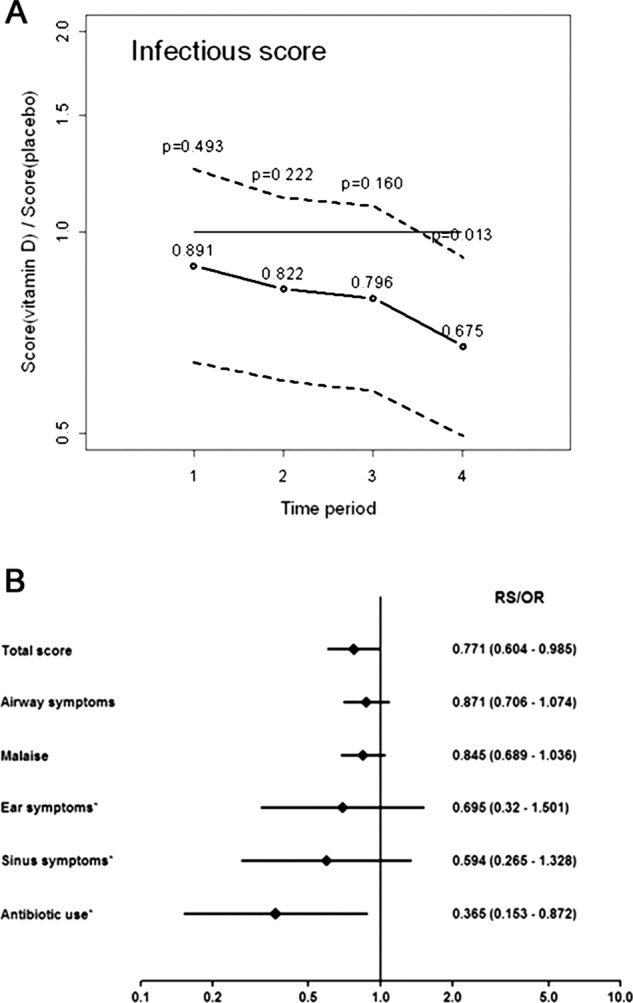
Results: The overall infectious score was significantly reduced for patients allocated to the vitamin D group (202 points) compared with the placebo group (249 points; adjusted relative score 0.771, 95% CI 0.604 to 0.985, p=0.04).
Limitations: A single study centre, small sample size and a selected group of patients. The sample size calculation was performed using p=0.02 as the significance level whereas the primary and secondary endpoints were analysed using the conventional p=0.05 as the significance level.
Conclusions: Supplementation with vitamin D(3) may reduce disease burden in patients with frequent RTIs.
Figures
References
-
- Hess AF, Unger LJ, Pappenheimer AM. Experimental rickets in rats. III. The prevention of rickets in rats by exposure to sunlight. J Biol Chem 1922;50:77–81 - PubMed
-
- Holick MF, MacLaughlin JA, Clark MB, et al. Photosynthesis of previtamin D3 in human skin and the physiologic consequences. Science 1980;210:203–5 - PubMed
-
- Holick MF. Vitamin D deficiency. N E J M 2007;357:266–81 - PubMed
-
- Hewison M. Antibacterial effects of vitamin D. Nat Rev Endocrinol 2011;7:337–45 - PubMed
LinkOut - more resources
Full Text Sources
Medical
Miscellaneous
