


High frequency of human papillomavirus detection in the vagina before first vaginal intercourse among females enrolled in a longitudinal cohort study
- PMID: 23242538
- PMCID: PMC3571440
- DOI: 10.1093/infdis/jis775
High frequency of human papillomavirus detection in the vagina before first vaginal intercourse among females enrolled in a longitudinal cohort study
Abstract
Background: Genital human papillomavirus (HPV) infection is believed to be primarily sexually transmitted. Few studies have documented the detection of HPV in the vagina before first vaginal intercourse.
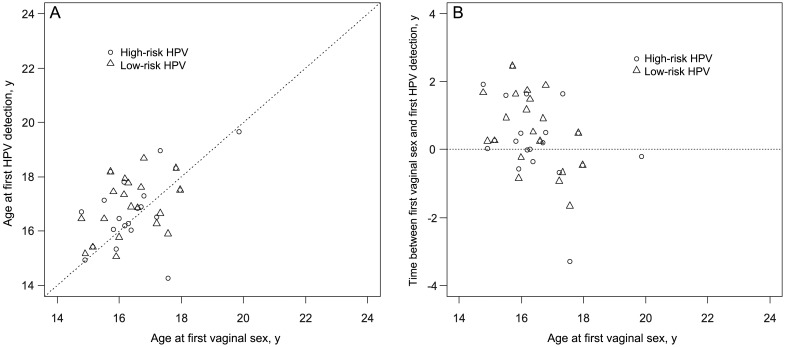
Methods: We used a longitudinally followed cohort of adolescent females without prior vaginal intercourse to examine the frequency of detection of vaginal HPV and the association between first reported HPV detection and noncoital sexual behaviors.
Results: HPV was detected in 45.5% of subjects (10 of 22) before first vaginal sex. Seven of these 10 subjects reported noncoital behaviors that, in part, might have explained genital transmission.
Conclusions: HPV can be detected in the vagina before first sexual intercourse, highlighting the need for early vaccination.
Figures
References
-
- Dunne EF, Unger ER, Sternberg M, et al. Prevalence of HPV infection among females in the United States. JAMA. 2007;297:813–9. - PubMed
-
- Manhart LE, Holmes KK, Koutsky LA, et al. Human papillomavirus infection among sexually active young women in the United States: Implications for developing a vaccination strategy. Sex Transm Dis. 2006;33:502–8. - PubMed
-
- Doerfler D, Bernhaus A, Kottmel A, Sam C, Koelle D, Joura EA. Human papilloma virus infection prior to coitarche. Am J Obstet Gynecol. 2009;200:487 e1–5. - PubMed
-
- Cason J, Mant CA. High-risk mucosal human papillomavirus infections during infancy & childhood. J Clin Virol. 2005;32(Suppl 1):S52–8. - PubMed
