ΔNp63α-mediated activation of bone morphogenetic protein signaling governs stem cell activity and plasticity in normal and malignant mammary epithelial cells
- PMID: 23243027
- PMCID: PMC3739305
- DOI: 10.1158/0008-5472.CAN-12-2862
ΔNp63α-mediated activation of bone morphogenetic protein signaling governs stem cell activity and plasticity in normal and malignant mammary epithelial cells
Abstract
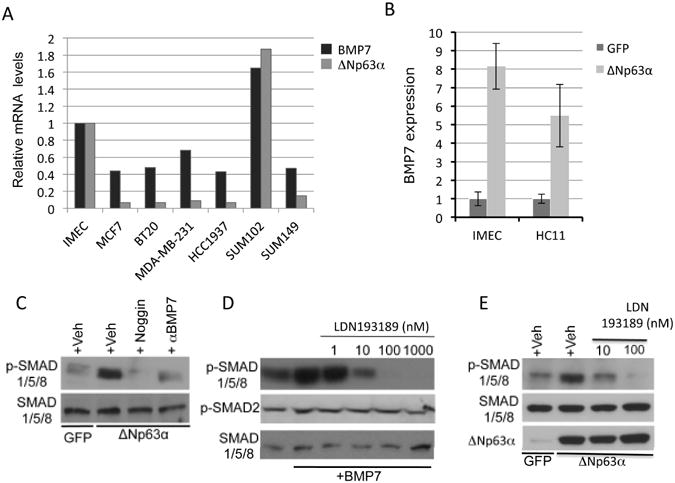
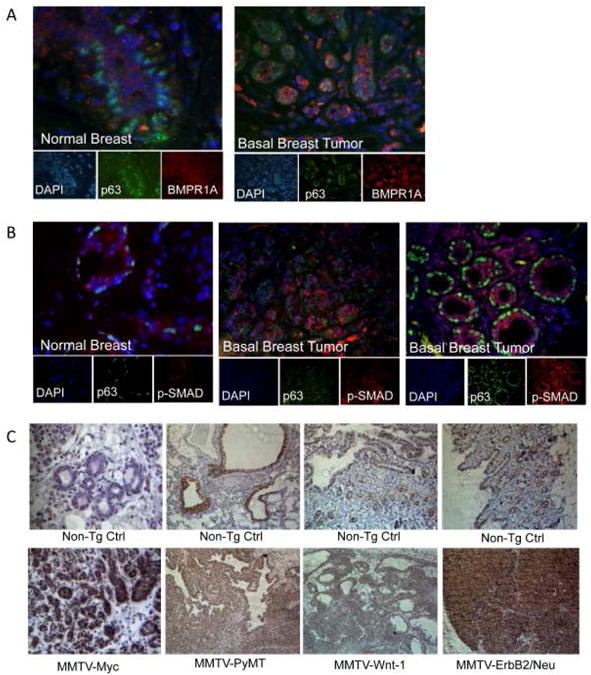
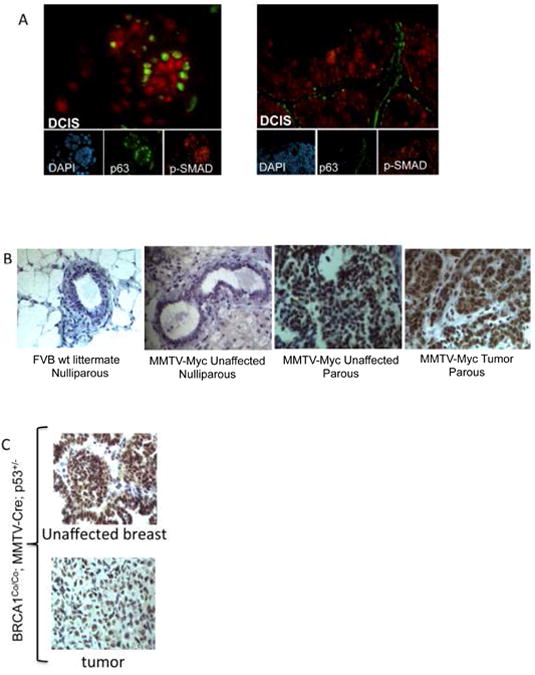
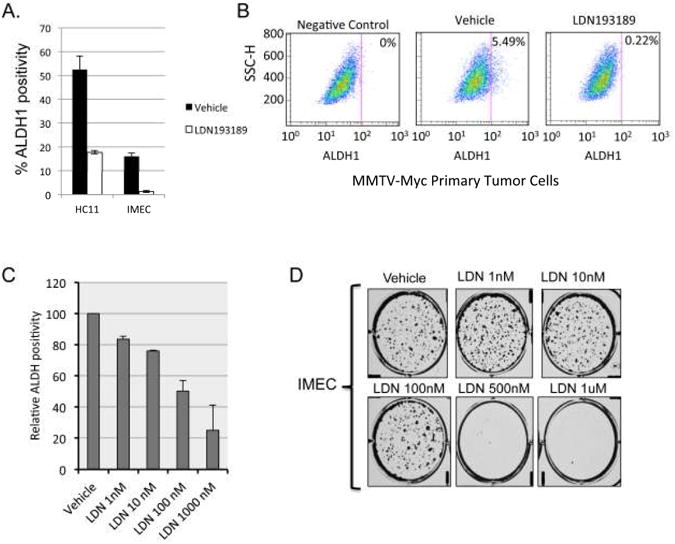
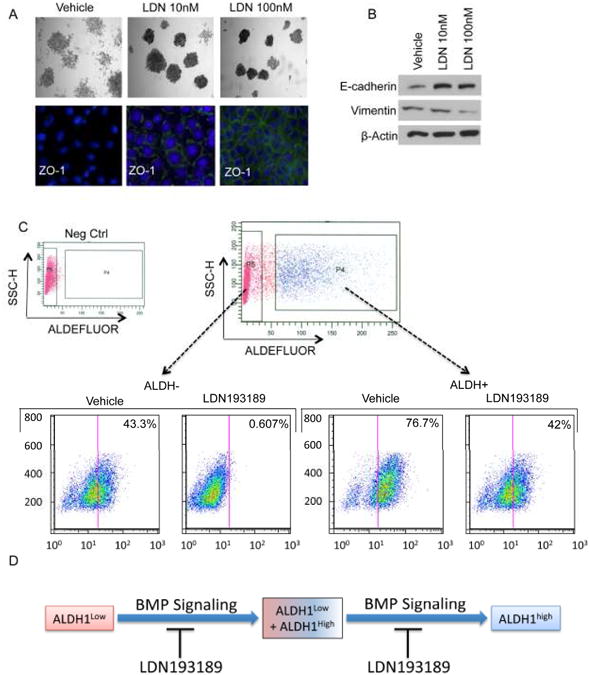
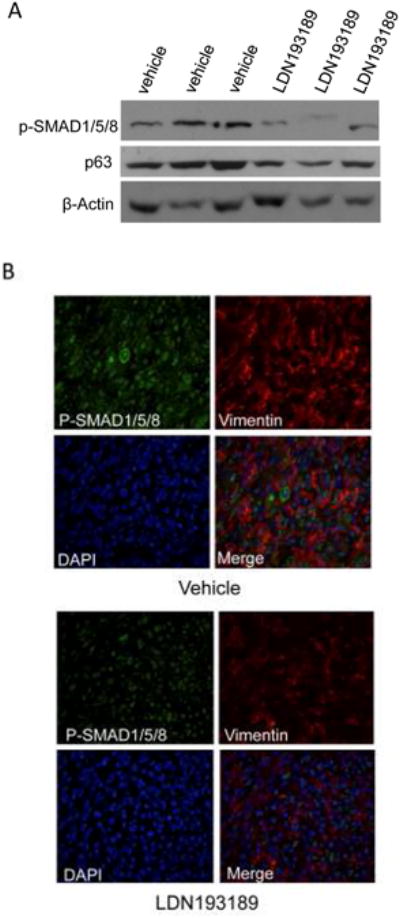
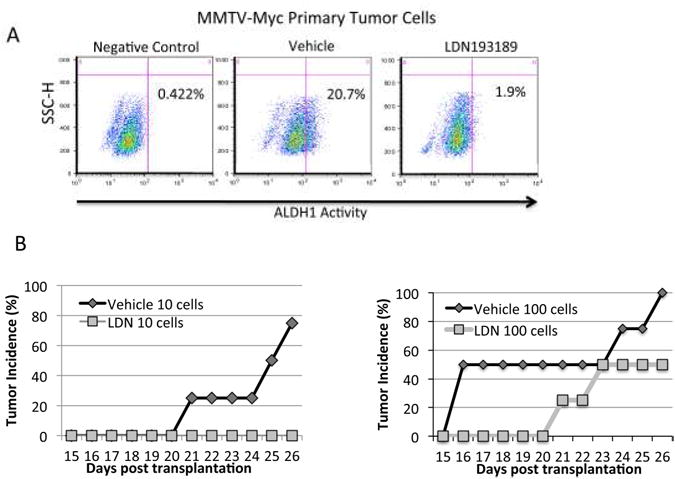
Genetic analysis of TP63 indicates that ΔNp63 isoforms are required for preservation of regenerative stasis within diverse epithelial tissues. In squamous carcinomas, TP63 is commonly amplified, and ΔNp63α confers a potent survival advantage. Genome-wide occupancy studies show that ΔNp63 promotes bidirectional target gene regulation by binding more than 5,000 sites throughout the genome; however, the subset of targets mediating discreet activities of TP63 remains unclear. We report that ΔNp63α activates bone morphogenic proteins (BMP) signaling by inducing the expression of BMP7. Immunohistochemical analysis indicates that hyperactivation of BMP signaling is common in human breast cancers, most notably in the basal molecular subtype, as well as in several mouse models of breast cancer. Suppression of BMP signaling in vitro with LDN193189, a small-molecule inhibitor of BMP type I receptor kinases, represses clonogenicity and diminishes the cancer stem cell-enriched ALDH1(+) population. Importantly, LDN193189 blocks reconstitution of mixed ALDH1(+)/ALDH1(-) cultures indicating that BMP signaling may govern aspects of cellular plasticity within tumor hierarchies. These results show that BMP signaling enables reversion of committed populations to a stem-like state, potentially supporting progression and maintenance of tumorigenesis. Treatment of a mouse model of breast cancer with LDN193189 caused reduced expression of markers associated with epithelial-to-mesenchymal transition (EMT). Furthermore, in vivo limiting dilution analysis assays revealed that LDN193189 treatment suppressed tumor-initiating capacity and increased tumor latency. These studies support a model in which ΔNp63α-mediated activation of BMP signaling governs epithelial cell plasticity, EMT, and tumorigenicity during breast cancer initiation and progression.
Conflict of interest statement
The authors declare that no conflicts of interest exist.
Figures
References
-
- Mills AA, Zheng B, Wang XJ, Vogel H, Roop DR, Bradley A. p63 is a p53 homologue required for limb and epidermal morphogenesis. Nature. 1999;398:708–13. - PubMed
-
- Yang A, Schweitzer R, Sun D, Kaghad M, Walker N, Bronson RT, et al. p63 is essential for regenerative proliferation in limb, craniofacial and epithelial development. Nature. 1999;398:714–8. - PubMed
-
- Yang A, Kaghad M, Wang Y, Gillett E, Fleming MD, Dotsch V, et al. p63, a p53 homolog at 3q27-29, encodes multiple products with transactivating, death-inducing, and dominant-negative activities. Molecular cell. 1998;2:305–16. - PubMed
Publication types
MeSH terms
Substances
Grants and funding
LinkOut - more resources
Full Text Sources
Other Literature Sources
Medical
Molecular Biology Databases
Miscellaneous