


Factors controlling benzo(a)pyrene concentration in aerosols in the urbanized coastal zone. A case study: Gdynia, Poland (Southern Baltic Sea)
- PMID: 23247515
- PMCID: PMC3646163
- DOI: 10.1007/s11356-012-1315-0
Factors controlling benzo(a)pyrene concentration in aerosols in the urbanized coastal zone. A case study: Gdynia, Poland (Southern Baltic Sea)
Abstract
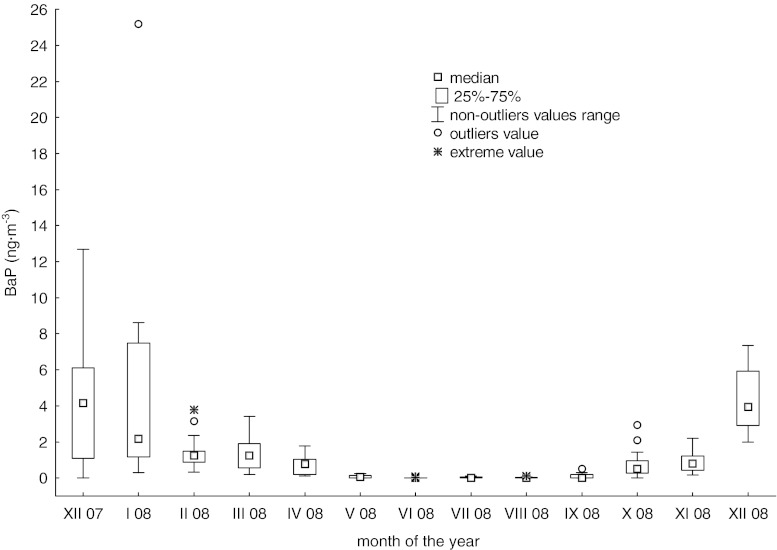
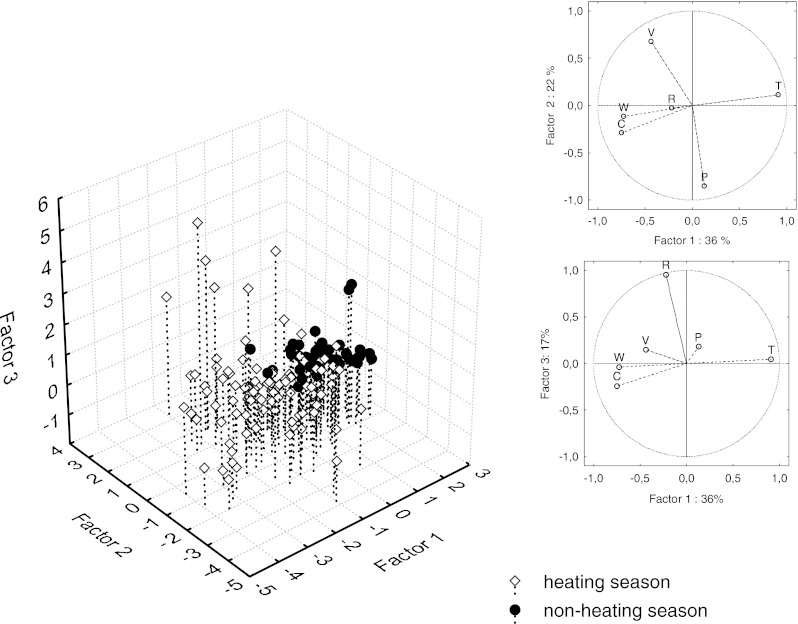
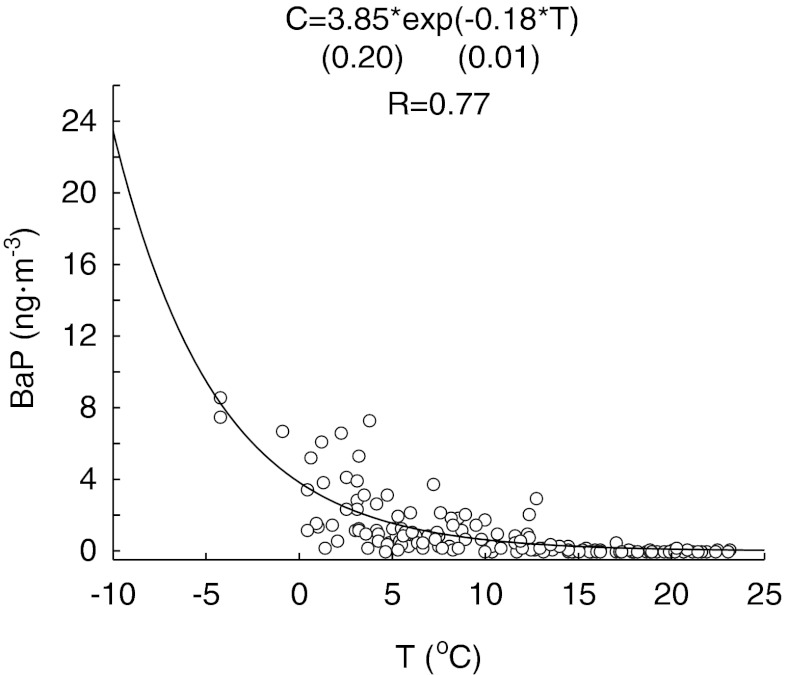
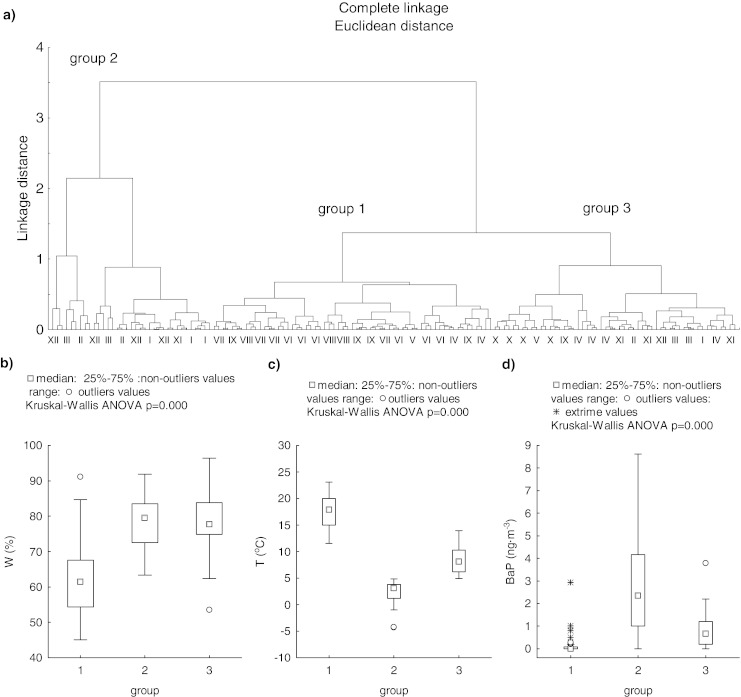
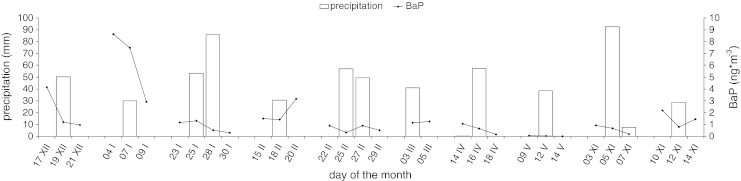
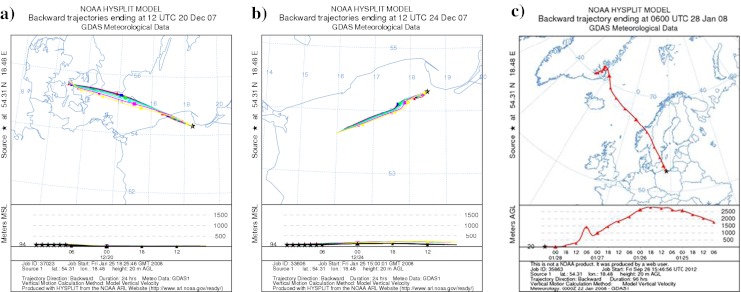
Annual study on the benzo(a)pyrene (BaP) concentration in aerosols in the coastal zone of the Gulf of Gdansk (southern Baltic) has been performed at Gdynia station. Combustion processes, especially domestic heating of both local and regional origin, were identified as the main sources of benzo(a)pyrene in this area. Concentrations observed during the heating season (mean 2.18 ng m(-3)) were significantly higher than these recorded in the non-heating season (mean 0.05 ng m(-3)). High benzo(a)pyrene concentrations were associated with low temperature and high humidity. Whereas high levels of precipitation usually decreased the BaP concentration in aerosols. The concentration of this factor in the studied area depended also on the wind direction and air masses trajectories. During heating season, continental air masses (coming from S, SE, SW) seemed to increase benzo(a)pyrene concentration, while maritime air masses (from N, NE, NW) caused its decrease. The differences in the BaP concentration resulting from potentially different emission levels of this compound during working and non-working days were not clearly pronounced.
Figures
References
-
- Bełdowska M, Saniewska D, Falkowska L, Lewandowska A. Mercury in particulate matter over Polish zone of the southern Baltic Sea. Atmos Environ. 2012;46:397–404. doi: 10.1016/j.atmosenv.2011.09.046. - DOI
-
- Bodnar E, Hlavay J. Atmospheric deposition of polycyclic aromatic hydrocarbons on the Lake Balaton, Hungary. Microc J. 2005;79:213–220. doi: 10.1016/j.microc.2004.05.002. - DOI
-
- Bogucka M. Monitoring of background air pollution in Poland for the EMEP and GAW/WMO 2008. Warsaw: Report GIOŚ; 2009. p. 51.
-
- Callen M, de la Cruz M, Lopez J, Murillo R, Navarro M, Mastral A. Long-range atmospheric transport and local pollution sources on PAH concentrations in a South European urban area. Fulfilling of the European directive. Water Air Soil Pollut. 2008;190:271–285. doi: 10.1007/s11270-007-9599-2. - DOI
-
- Chetwittayachan T, Shimazaki D, Yamamoto K. A comparison of temporal variation of particle-bound polycyclic aromatic hydrocarbons (pPAHs) concentration in different urban environments: Tokyo, Japan, and Bangkok, Thailand. Atmos Environ. 2002;36:2027–2037. doi: 10.1016/S1352-2310(02)00099-7. - DOI
MeSH terms
Substances
LinkOut - more resources
Full Text Sources
