


Exfoliation syndrome in Nigeria
- PMID: 23248543
- PMCID: PMC3519128
- DOI: 10.4103/0974-9233.102759
Exfoliation syndrome in Nigeria
Abstract
Purpose: The purpose of this study was to estimate the prevalence of exfoliation syndrome (XFS) and its association with ocular disease in patients attending the eye clinic of the University College Hospital (UCH) in Ibadan, Nigeria.
Materials and methods: A total of 448 consecutive new patients, aged 30-90 years who presented to the eye clinic of UCH between December 2009 and November 2010 were evaluated. Each patient had a complete ophthalmic examination. Patients with exfoliative material on the anterior lens surface and/or pupillary margin in either or both eyes were considered to have XFS. Means, standard deviation, and 95% confidence intervals were calculated.
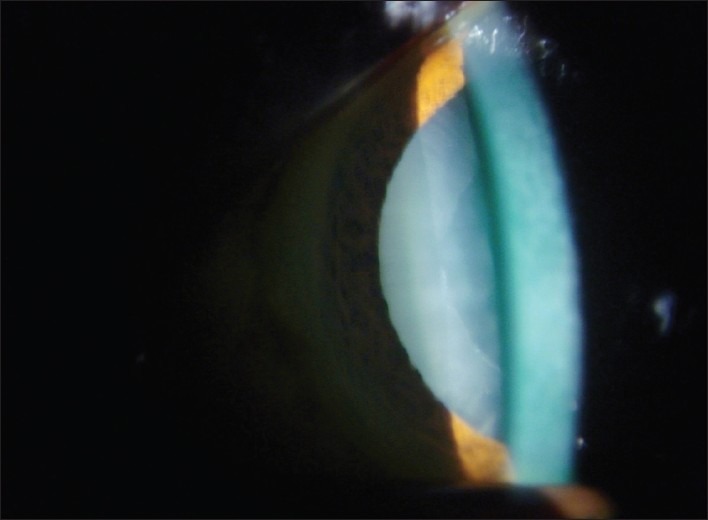
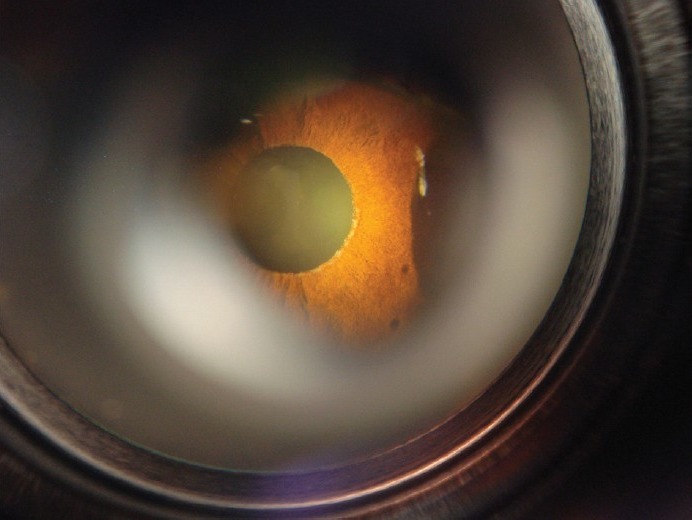
Results: All the patients examined were from the southern part of Nigeria. Majority (94.2%) were of the Yoruba tribe from southwestern Nigeria, while 5.8% were from southeastern Nigeria. The mean age of the study cohort was 58.5 ± 13.8, 54.8% were males, 12 (2.7%) had XFS. All patients with XFS were of the Yoruba tribe, with a mean age 65.6 ± 5.6 years. There was a male predilection (66.7%). All eyes with XFS had lenticular opacities. XFS was bilateral in eight patients (66.7%) of whom seven patients (87.5%) had glaucoma and lenticular opacities bilaterally.
Conclusion: This is the first report of the existence of XFS in Nigeria. Larger studies are necessary in this population to further investigate the disease.
Keywords: Exfoliation Syndrome; Glaucoma; Nigeria; Yoruba Tribe.
Conflict of interest statement
Figures
References
-
- Ritch R, Schlötzer-Schrehardt U. Exfoliation syndrome. Surv Ophthalmol. 2001;45:265–315. - PubMed
-
- Ritch R. Exfoliation syndrome - The most common identifiable cause of open-angle glaucoma. J Glaucoma. 1994;3:176–7. - PubMed
-
- Ritch R, Schlötzer-Schrehardt U, Konstas AG. Why is glaucoma associated with exfoliation syndrome? Prog Retinal Eye Res. 2003;22:253–75. - PubMed
-
- Leske MC, Heijl A, Hussein M, Bengtsson B, Hyman L, Komaroff E, et al. Factors for glaucoma progression and the effect of treatment: The early manifest glaucoma trial. Arch Ophthalmol. 2003;121:48–56. - PubMed
-
- Bedri A, Alemu B. Pseudoexfoliation syndrome in Ethiopian glaucoma patients. East Afr Med J. 1999;76:278–80. - PubMed
Publication types
MeSH terms
LinkOut - more resources
Full Text Sources
